



We’ve been doing content marketing and SEO for B2B SaaS companies for over 11 years. Through multiple algorithm updates, shifting buyer behavior, and new platforms, the fundamentals mostly stayed the same.
Until 2025.
Search changed faster in one year than it had in the previous decade. AI Overviews, large language models, zero-click results, and discovery surfaces reshaped how buyers find, evaluate, and trust SaaS products. What used to work reliably now delivers diminishing returns.
That’s why we created this guide.
It’s a clear, practical breakdown of modern B2B SaaS SEO, covering traditional foundations, AI- and LLM-driven search, and generative SEO. The goal is simple: help you adapt to how search works now and use it to accelerate growth in 2026 and beyond.
What Is B2B SaaS SEO? (And Why It’s Different)
B2B SaaS SEO influences long, complex buying decisions through search. It’s not just about traffic; it’s about showing up across research, evaluation, and validation, which makes it fundamentally harder than most SEO.
How B2B SaaS Buying Journeys Impact SEO
B2B SaaS buyers don’t move in straight lines. They research, pause, compare, and come back, often multiple times.
That behavior shapes how SEO needs to work.
- Buyers search for problems first, not products
- Multiple stakeholders influence the final decision
- Queries evolve from concepts → solutions → vendors
- Trust is built long before a demo or sales call
- The same buyer may revisit content weeks or months later
Because of this, SEO can’t focus on a single keyword or page. It has to support the entire journey, consistently, over time.
Why Traditional SEO Playbooks Fail for SaaS
Traditional SEO playbooks are built for quick intent and fast conversions. They focus on ranking for a narrow set of high-volume keywords and optimizing pages to capture demand that already exists. That works for simpler buying decisions.
But SaaS doesn’t work that way.
Most buyers aren’t ready to convert when they start searching. They’re researching problems, workflows, and alternatives. When SEO ignores this and jumps straight to bottom-funnel terms, it may drive traffic, but it rarely drives pipeline. For SaaS, SEO has to educate first and convert later.
The Role of Education, Trust & Long Sales Cycles
B2B SaaS sales cycles are long, and buyers are cautious. They need clarity before they need a product. That’s where education plays a critical role, helping buyers understand the problem, the options, and the trade-offs.
Over time, consistent education builds trust. And trust shortens sales cycles. When buyers finally reach a decision point, they don’t start from zero. They choose brands that have already helped them think clearly.
How B2B SaaS SEO Has Evolved (Pre-AI vs Post-AI Search)
SEO for B2B SaaS used to be predictable. You researched keywords, published optimized pages, built links, and waited.
That model no longer reflects how buyers search or how platforms surface information. Today, SEO is shaped by AI-driven answers, multiple discovery surfaces, and intent that shifts mid-journey.
From Keywords to Problems to Answers
Earlier SEO strategies revolved around matching exact keywords. If buyers searched “CRM software,” you created a page for it.
Now, searches start higher up the funnel and are framed as problems.
For example, a revenue leader might search “why sales teams miss follow-ups” before ever considering a CRM. Winning SEO today means mapping content to real problems and delivering clear answers, not just targeting keyword variants.
Google AI Overviews, LLMs & Zero-Click Search
AI Overviews and large language models increasingly answer questions directly on the results page. In many cases, users don’t click through at all. This changes what success looks like.
Instead of optimizing only for clicks, SaaS brands now need content that AI systems can confidently summarize and reference. Clear structure, factual depth, and strong topical authority make the difference between being cited or ignored.
What “Ranking” Means in a Multi-Surface World
Ranking is no longer limited to position one on Google. Visibility now spans AI Overviews, LLM responses, featured snippets, community threads, and traditional search results.
A B2B SaaS brand might influence a buying decision through an AI summary, a Reddit discussion, and a comparison page, without owning the top blue link. Modern SEO is about presence across surfaces, not just placement on a single page.
The Core Pillars of a High-Performing B2B SaaS SEO Strategy
Here are the core pillars of a high-performing B2B SaaS SEO strategy:
1. Content Strategy & Topic Authority
Everything starts with content strategy. For SaaS, this means choosing a small set of problems and use cases you want to be known for, then covering them deeply over time. Instead of chasing individual keywords, you build clusters of content that answer related questions from different angles.
This approach matters because both buyers and search engines look for consistency. When your content shows depth and focus, it’s easier to trust, easier to rank, and more likely to surface in AI-driven results.
2. Technical SEO Foundations for SaaS Websites
Technical SEO helps good content perform well. Clean site structure, fast load times, and proper indexing ensure your pages can be discovered and understood as your site scales.
For SaaS teams, this becomes more important over time. As content, landing pages, and product pages grow, minor technical issues can quietly limit visibility if they’re not handled early.
3. On-Page SEO for Long-Form, Educational Content
On-page SEO helps long-form content do its job. Clear headings, logical flow, internal links, and direct answers make complex topics easier to consume.
This improves reader engagement and clarity for search engines and AI systems. Well-structured pages are easier to rank, reference, and reuse across different search surfaces.
4. Off-Page SEO, Backlinks & Authority Signals
Off-page SEO is about credibility beyond your website. For SaaS, backlinks from relevant publications, communities, and industry resources signal that your content is trusted by others in the ecosystem.
These authority signals matter more in competitive categories. They reinforce topic authority, support rankings for harder keywords, and increase the likelihood of your content being cited by search engines and LLMs alike.
Content Marketing for B2B SaaS SEO (TOFU → BOFU)
B2B SaaS content works best when it maps directly to how buyers think and research. Each stage serves a different purpose, and together they move demand from awareness to decision.
TOFU Content: Capturing Problem-Aware Demand
Top-of-funnel content targets buyers who know they have a problem but aren’t looking for a tool yet. This includes educational blogs, guides, and frameworks that explain challenges and concepts.
For example, HubSpot’s early content around inbound marketing captured demand long before users searched for marketing software. TOFU content builds visibility and trust at the very start of the journey.


MOFU Content: Comparisons, Alternatives & Use Cases
Mid-funnel content supports evaluation. Buyers now understand the problem and are exploring solutions. This is where comparison pages, alternative posts, and use-case content matter.
Companies like Notion and Zapier do this well by ranking for “X vs Y” and workflow-specific searches. MOFU content helps buyers narrow choices and positions your product in context.


BOFU Content: Case Studies, Landing Pages & Pricing
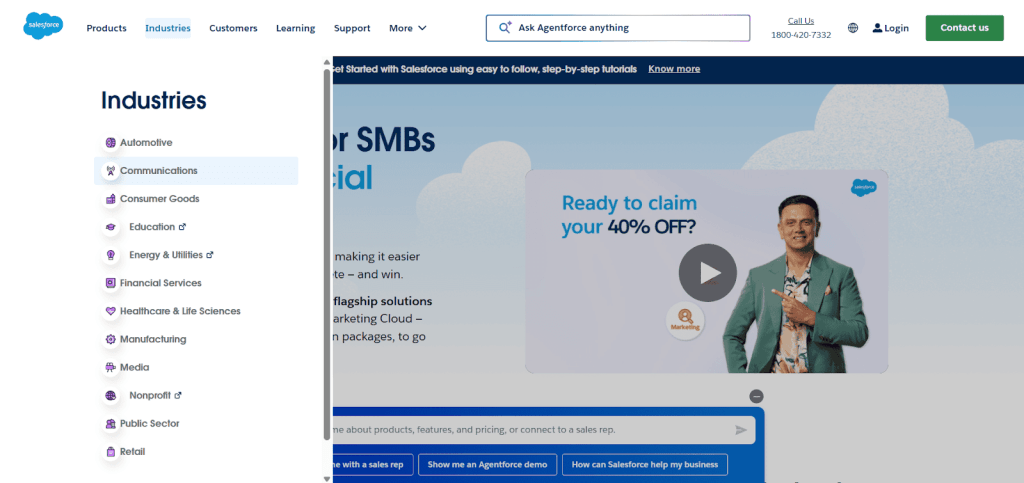
Bottom-of-funnel content addresses decision readiness. Buyers want proof, clarity, and confidence. Case studies, solution pages, and transparent pricing help remove friction. Salesforce, for example, uses industry-specific pages and customer stories to support final decisions. BOFU content doesn’t generate the most traffic, but it drives the most revenue.

How Content Clusters Drive Compounding Rankings
Because BOFU content converts best, many SaaS teams over-invest in it. The intent is right, but the outcome often isn’t. These pages rarely drive traffic on their own, so without earlier-stage content, they sit disconnected from real demand.
Content clusters fix this gap. By linking TOFU, MOFU, and BOFU content around a shared topic, you create a flow, like traffic enters at the top, gets educated in the middle, and converts at the bottom. Internal links guide users and signal depth to search engines.
As the cluster fills out, performance compounds. Rankings improve across multiple pages, authority builds faster, and BOFU pages start converting consistently because demand is finally reaching them.
AI SEO, LLM SEO & Generative Engine Optimization (GEO)
AI hasn’t replaced traditional SEO. It has changed how content is discovered, summarized, and trusted. For B2B SaaS teams, the goal isn’t to choose between SEO and AI optimization, but to make them work together.
What Is AI SEO and How It Differs from Traditional SEO
AI SEO focuses on making content easy for AI systems to understand, summarize, and reference. Instead of optimizing only for rankings and clicks, it optimizes for clarity, accuracy, and usefulness in AI-generated answers.
In practice, AI SEO involves:
- Writing clear, factual explanations
- Structuring content around questions and outcomes
- Building depth on specific topics, not just keywords
- Showing real expertise and credibility
Traditional SEO is primarily about helping users find your content through search results. AI SEO is about helping machines trust and reuse that content. Both work together, but AI SEO shifts the focus from visibility alone to comprehension and citation.
How Large Language Models Discover & Cite Content
Large language models don’t browse the web in real time by default.
They learn during training by processing massive amounts of text from the internet, books, and documentation, storing patterns and knowledge in their internal parameters.
When prompted, they generate answers by predicting the most likely next words based on this learned information.
For current or factual queries, LLMs rely on retrieval-augmented generation. This means they fetch fresh information from indexed, trusted sources, synthesize it into a response, and reference those sources when required.
In short, training teaches models what to say, while retrieval determines what they can cite, making clear, authoritative content more likely to be surfaced and referenced.
Optimizing for Google AI Overviews
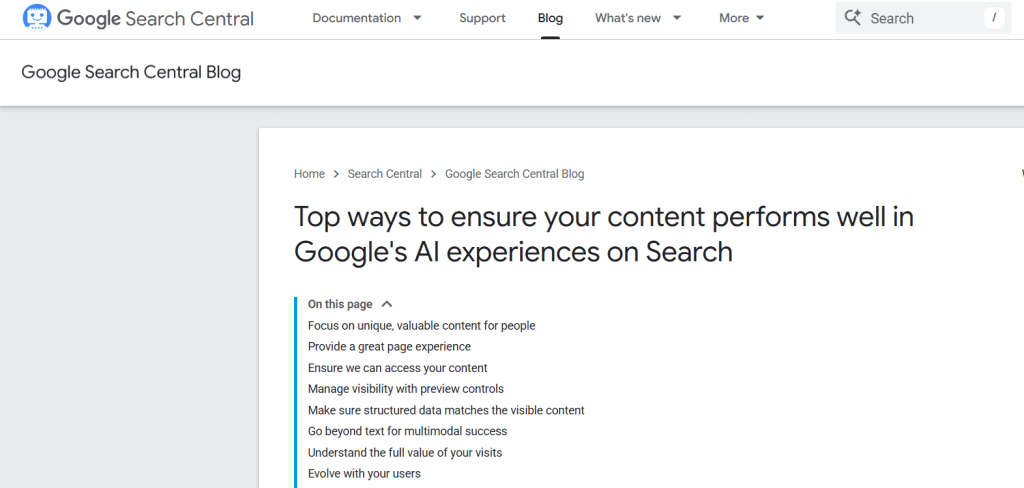
Google AI Overviews favor the same fundamentals that have always mattered: clear, original content that directly helps users. Pages that answer specific questions, provide context, and avoid generic summaries are more likely to be surfaced and referenced.

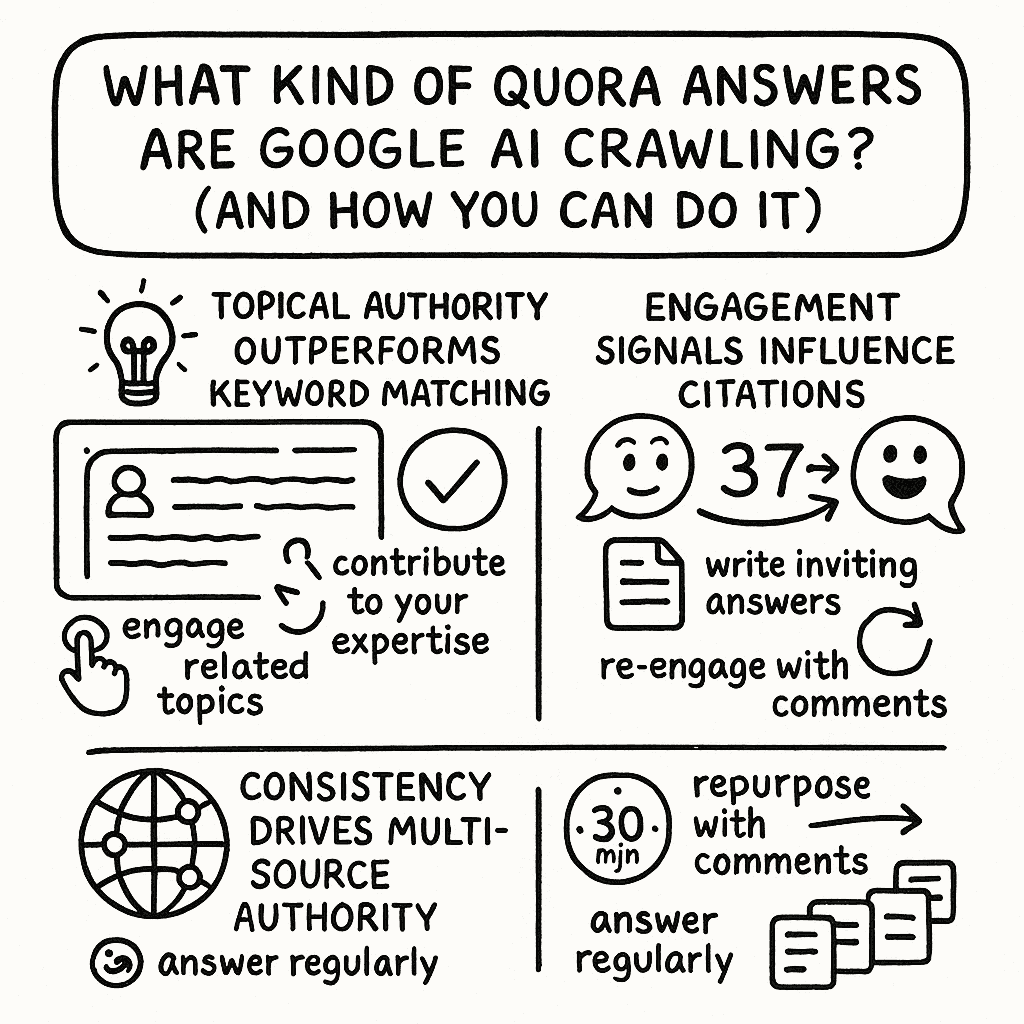
For B2B SaaS, this is where platforms like Quora and Reddit matter. These communities mirror how AI Overviews work: real questions, clear explanations, and follow-up context. When your content and ideas show up consistently across your site and trusted forums, Google is more confident in summarizing them.

Technical basics still apply. Your pages must be accessible, well-structured, and easy to consume. AI Overviews may drive fewer clicks, but higher-quality visits.
GEO Best Practices for B2B SaaS Brands
GEO focuses on increasing the likelihood that AI systems reference your brand when answering questions. For B2B SaaS, this requires clarity, authority, and consistency across content and distribution.
Core GEO practices:
- Answer real questions using clear H2s and H3s
- Build pillar pages and topic clusters to show depth
- Structure content to deliver value immediately
- Keep writing human, but format it for AI clarity
Technical and authority signals:
- Use schema (Article, FAQ, Product) consistently
- Establish your brand as a recognized entity
- Publish original research and first-party data
- Earn citations via directories, PR, and mentions
Distribution and measurement:
- Get discussed where AI pulls signals from
- Monitor visibility in tools like ChatGPT, Gemini, and Perplexity
Programmatic SEO for B2B SaaS
Programmatic SEO helps SaaS companies scale organic visibility by creating large sets of pages from structured data. When done right, it captures high-intent demand efficiently. When done wrong, it creates thin pages that never rank.
When Programmatic SEO Makes Sense for SaaS
Programmatic SEO makes sense when your product has repeatable patterns that users actively search for. This includes integrations, locations, industries, roles, or workflows. Instead of manually creating hundreds of similar pages, you use templates based on real data.
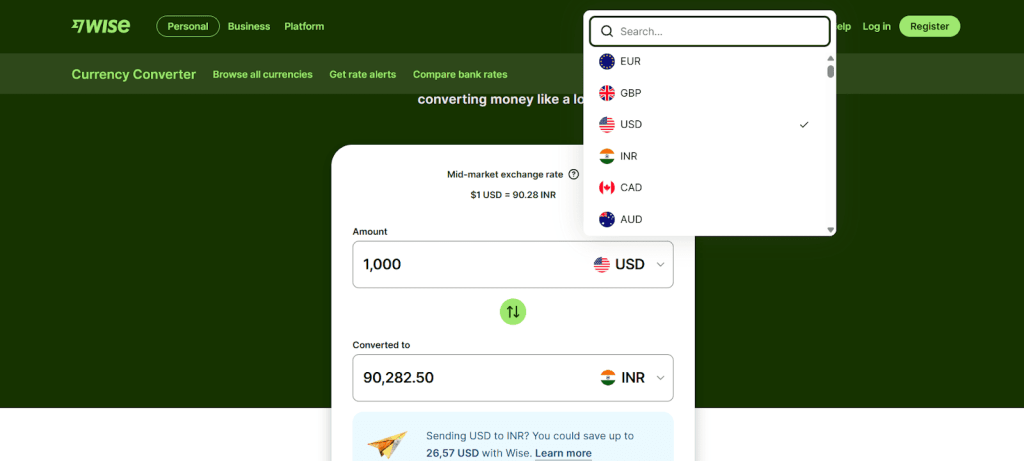
For example, Wise scales organic traffic by creating programmatic pages for currency conversions and country-specific use cases, each backed by real data and clear explanations.

Yelp does the same with location-based business pages, combining templates with unique, localized information.


Use Cases: Integrations, Comparisons, Use-Case Pages
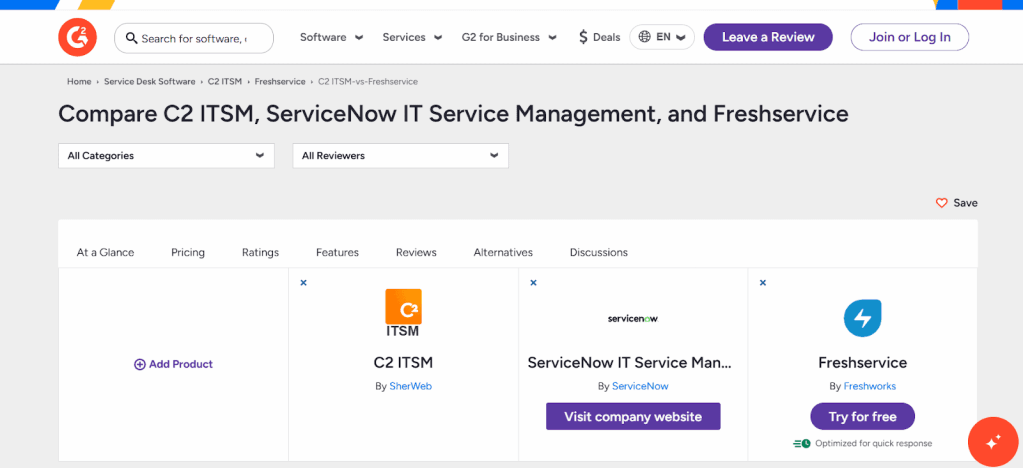
The most common use cases include integration pages (e.g., “Slack + [Your Tool]”), comparison pages (“Your Tool vs X”), and role- or industry-specific use cases. These pages closely align with mid- and bottom-funnel searches.

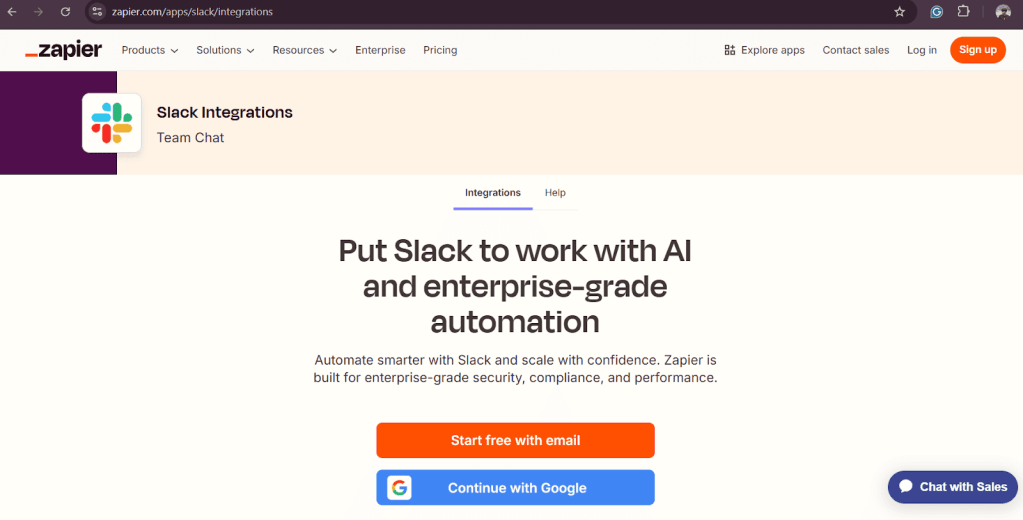
Webflow’s integration pages and G2-style comparison pages are good examples. They follow a consistent structure but adapt content based on context. This balance between scale and relevance is what makes programmatic SEO effective.

Common Programmatic SEO Mistakes to Avoid
Programmatic SEO breaks when scale replaces value. Thin or duplicate pages, poor intent matching, and over-automation are the most significant issues. If pages don’t clearly answer why someone searched, they won’t rank and can hurt overall site quality.
Technical gaps make it worse. Slow pages, indexing problems, weak internal linking, and missing schema limit visibility. Many teams also skip demand validation and performance tracking.
The fix is simple: validate demand first, ensure each page adds real value, keep templates clean, link pages properly, and review performance regularly. Automation should support quality, not replace it.
Content Distribution as a Ranking & Demand Multiplier
Publishing great content is no longer enough. Distribution determines how far that content travels, who sees it, and how much demand it creates over time.
Why Distribution Matters More Than Ever for SEO
Content distribution amplifies the reach of content you’ve already invested in. Instead of relying only on your website to rank, you extend the same ideas across platforms like Reddit, Quora, community forums, and Discord groups, where real conversations already happen.
This matters for SEO because search engines and AI systems observe these surfaces. When content is discussed, referenced, and engaged with across platforms, it reinforces relevance, authority, and recall.
Using Reddit for B2B SaaS SEO & Demand Capture
Reddit works for B2B SaaS because it combines search visibility with real buyer intent. Threads from subreddits like r/SaaS, r/marketing, and niche industry communities consistently rank for long-tail queries, making Reddit a strong SEO surface and a demand signal.
For SEO, Reddit is a live keyword and intent engine. Use it to spot real phrasing, recurring pain points, and content gaps. Engage first, comment, answer, and build credibility. When your content genuinely helps, links and upvotes follow, reinforcing authority and relevance.
For demand capture, the approach stays human. Answer problems your product solves without pitching and only link when it directly adds value.
Using Quora for AI Visibility & High-Intent Traffic
Quora has become one of the strongest surfaces for AI-driven search visibility. It’s heavily cited in Google AI Overviews, which means your answers can influence buyers at the exact moment they’re researching solutions.
Quora works because of its structure. Direct questions, detailed answers, and follow-up context closely match how AI systems process and surface information. Well-written answers continue to generate visibility and traffic long after they’re published, making Quora a durable channel.
To win, focus on depth and credibility. Answer questions in your core domain with practical insight, optimize your profile to reflect expertise, and link out only when it genuinely helps.
How Distribution Feeds AI Search & Brand Recall
AI systems learn from patterns across the web. When your content and ideas appear repeatedly in trusted places, they become easier for AI to recognize and associate with your brand.
Consistent distribution across platforms like Quora, Reddit, and communities creates these patterns. It reinforces what topics you’re known for and how you explain them. Over time, this builds brand recall not just among users but also among AI systems that decide which sources to surface, summarize, and recommend.
Measuring B2B SaaS SEO Success (Beyond Traffic)
Here’s what to measure to understand the real impact of B2B SaaS SEO, beyond traffic and rankings:
SEO Metrics That Matter for SaaS Teams
For B2B SaaS, these are the metrics that actually reflect SEO impact:
- Organic signups, demo requests, and trials
- Keyword coverage across TOFU, MOFU, and BOFU
- Assisted conversions from organic traffic
- Engagement metrics (time on page, scroll depth)
- Content-driven pipeline and influenced revenue
- Brand mentions and visibility in AI search results
Leading vs Lagging Indicators
SEO has both early signals and delayed outcomes. Leading indicators include impressions, keyword expansion, engagement, and content visibility. These tell you whether your strategy is moving in the right direction.
Lagging indicators come later. Pipeline contribution, deal velocity, and revenue influenced by organic search take time to show up. Strong leading indicators are what create predictable lagging results.
Connecting SEO to Pipeline, Revenue & CAC
To tie SEO to revenue, track how organic traffic moves through your funnel. This means connecting SEO pages to conversions, conversions to pipeline, and pipeline to closed deals.
When done right, SEO lowers customer acquisition cost by compounding over time. Content keeps working without incremental spend, influencing deals even when it’s not the final touchpoint.
Common B2B SaaS SEO Mistakes (And How to Avoid Them)
These are the most common patterns we’ve consistently seen across B2B SaaS teams, strategies that look right on the surface but fail to drive meaningful growth.
- Chasing High Volume Keywords with Low Buying Intent: High search volume looks attractive, but it doesn’t always mean real interest. Many teams drive traffic from keywords that have nothing to do with buying a SaaS product. The result is visits without demos or revenue.
- Publishing Without a Distribution Plan: Content is often published and forgotten. Without sharing it across places where buyers already spend time, even good content stays invisible. SEO alone can’t carry distribution anymore.
- Ignoring Technical SEO Until It’s Too Late: Technical issues usually build up quietly. Slow pages, poor structure, and indexing problems limit growth long before teams notice a drop in traffic. Fixing them early is always easier.
- Treating SEO as a Channel, Not a System: SEO is often handled as a standalone task. But real results come when content, distribution, and demand work together. Without that connection, SEO struggles to compound.
How to Build a Scalable B2B SaaS SEO Roadmap
A scalable SEO roadmap changes as your company grows. What matters early on is focus and foundations. At scale, it’s about systems and compounding leverage.
What to Do in the First 90 Days
The first 90 days are about clarity and setup. Start by understanding your buyer, their problems, and how they search. Fix obvious technical issues, define your core topics, and publish a small set of high-quality TOFU and MOFU pieces. This phase isn’t about volume. It’s about building the right structure so future content can perform.
What to Focus on at $1M–$10M ARR
At this stage, SEO shifts from experimentation to consistency. Expand topic clusters, invest in comparison and use-case content, and strengthen internal linking. Distribution becomes critical; content should be actively shared across communities and platforms. This is also when SEO begins to influence the pipeline more visibly. The goal is predictable growth, not one-off wins.
What Changes at Enterprise Scale
At enterprise scale, SEO becomes a system. Programmatic SEO, advanced technical optimization, and content operations take priority. Multiple teams contribute, so processes and governance matter.
The focus moves from traffic growth to efficiency, supporting large pipelines, protecting brand authority, and maintaining visibility across search, AI, and community surfaces.
How Contensify Helps B2B SaaS Companies Win with SEO
We help B2B SaaS teams build SEO systems that compound across search, AI, and distribution.
Content-Led SEO Strategy
We start with content, not keywords. Our approach focuses on understanding your buyers, mapping their journeys, and building topic clusters that drive both traffic and pipeline. Every piece of content is created with intent, structure, and long-term scalability in mind.
We used this approach with Wyzard, an AI-powered SaaS procurement platform entering a market where the category barely existed. Instead of chasing global keywords, we focused on how Indian businesses actually think, search, and evaluate software.
By building product-led content, structuring it into clear topic clusters, and aligning language with real buyer behavior, SEO started doing what it should: educate first, convert later. Traffic grew, engagement improved, and conversions followed naturally. The win wasn’t volume. It was relevant at every stage of the journey.
AI, LLM & GEO Optimization
We optimize your content for how search works today, not just blue links. This includes making your brand and content easy for AI systems to understand, trust, and reference. From structure to entity signals, we blend traditional SEO with AI-first optimization.
Distribution-First Execution (Reddit & Quora)
We don’t publish and wait. We actively distribute content across platforms like Reddit and Quora, where buyers ask real questions and AI systems pull signals from. This drives early traction, demand capture, and stronger visibility beyond your website.
We recently applied this exact approach for an AI video SaaS company repositioning itself as an agentic AI video generator. By pairing structured, category-defining content with active distribution on Reddit, Quora, and niche AI communities, their content began surfacing in GPT Search and Google AI Overviews within 30 days.


Despite competing with players like Sora and Veo, the brand saw higher mid-funnel traffic, longer session durations, and early category ownership driven purely by quality content and smart distribution.
Proven Results Across SaaS Stages
We’ve worked with SaaS companies from early-stage to enterprise. Our strategies adapt as you scale, whether the goal is initial traction, a predictable pipeline, or long-term category authority.
Conclusion
SEO today is a combination of education, distribution, and AI visibility. Treating it as anything less limits growth. B2B SaaS brands that adapt early and build for how search actually works now will compound faster and more predictably.
With over a decade of experience helping SaaS companies grow through content-led SEO and modern search strategies, Contensify helps teams turn SEO into a scalable growth system.
If you’re ready to do the same, let’s talk.
FAQs
How long does B2B SaaS SEO take to show results?
Early signals appear in 6–8 weeks, while meaningful pipeline impact usually takes 3–6 months and compounds steadily with consistent execution.
Is AI content safe for B2B SaaS SEO?
Yes, when used responsibly. AI should support research and structure, with human review ensuring accuracy, depth, originality, and alignment with quality guidelines.
What is the difference between SEO, AI SEO, and GEO?
SEO drives rankings and traffic, AI SEO optimizes content for AI understanding, and GEO focuses on being cited and surfaced in generative search systems.