If you care about keeping your content tightly aligned with what your product actually does, this is for you. Not just traffic for the sake of it, but the right traffic. The kind that understands your offering, and is already a step closer to buying.
Because here’s the catch. Not all keywords are equal. Some bring volume. Others bring intent. And if your goal is to connect search with real product value, you need to know the difference.
In this blog, we’ll walk through how to identify SEO keywords that are directly tied to your product offering. So your content doesn’t just rank, it resonates.
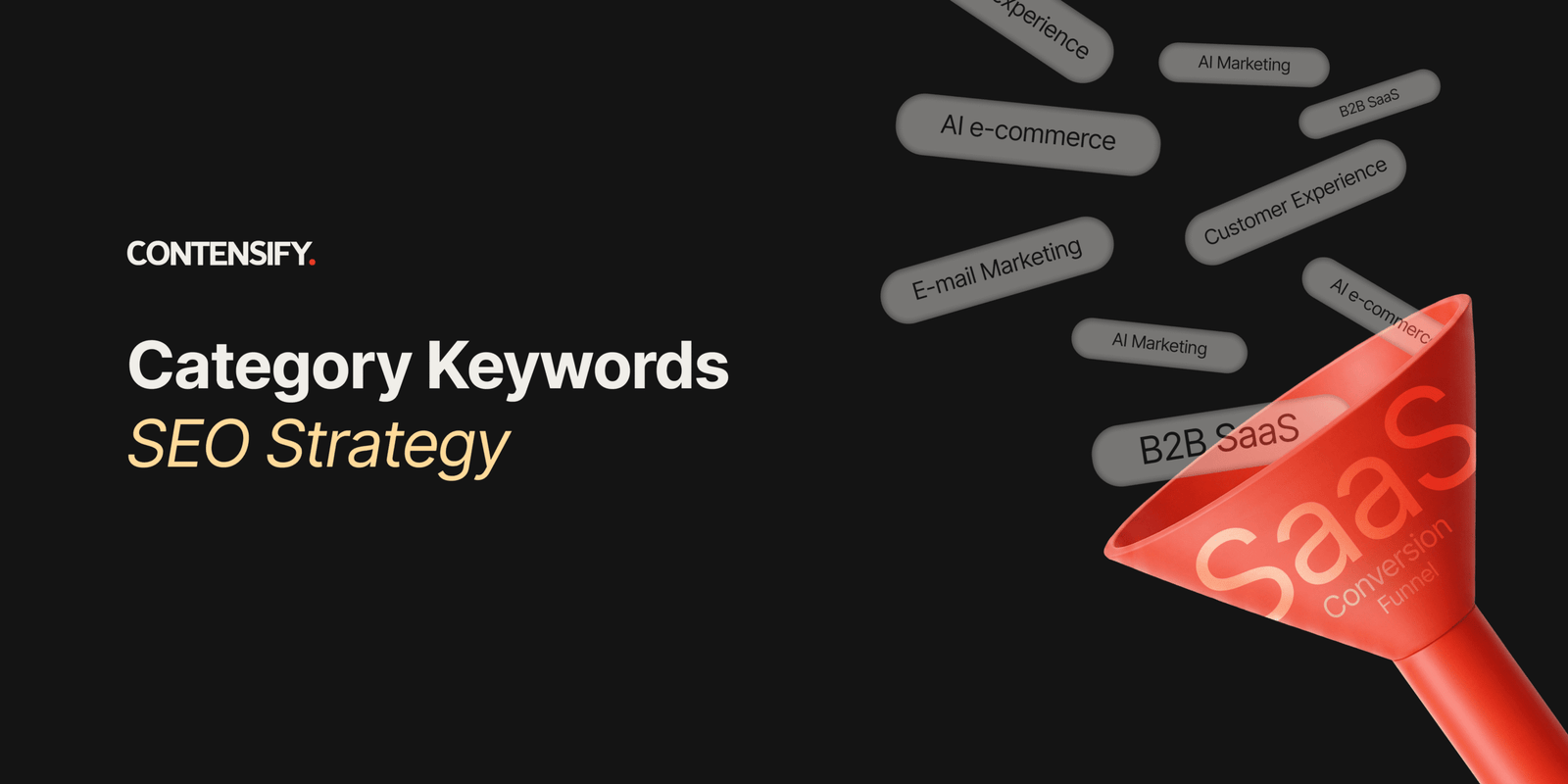
10 Things to Know About Category Keywords That Actually Drive SaaS Conversions
Here are 10 things you need to understand if you want category keywords to move beyond traffic and start driving real SaaS conversions:
1. Category keywords describe exactly what you sell, not just related topics
Category keywords are simple. They’re the terms people use when they already know the type of solution they need. Think of searches like “ITAM tool” or “ITSM software.” No exploration. No learning phase. Just clear intent to find a product that fits.
Compare that with broader, informational searches like “how to manage IT assets” or “benefits of IT service management.” These sit higher up the funnel. Useful, yes, but they attract people still figuring things out. Category keywords, on the other hand, come from users who are much closer to a decision.
Here’s what most SaaS teams miss. They assume there are only a handful of such keywords. In reality, there are dozens of variations tied to how people describe the same solution. “IT asset management tool,” “IT asset tracking software,” “enterprise ITAM platform”, all pointing to the same core need, just expressed differently.
2. They represent strong buying intent and show users are actively evaluating solutions
Category keywords reflect a very different mindset. When someone searches for “CRM software” or “expense management tool,” they are not trying to understand the concept. They already know what they need and are now looking for the right option.
This is where intent sharpens. The searcher is likely comparing tools, checking features, and narrowing down choices. In many cases, they are already close to booking a demo or starting a trial. So while informational searches build awareness, category keywords place you right in front of buyers when they are ready to act.
3. Every SEO strategy should start by identifying and prioritizing main category keywords
Before you chase volume or jump on trending topics, pause. The first step is much simpler and often overlooked. Map every term that directly describes what your product actually does.
Start with a practical exercise. List out your core use cases, key features, and the specific jobs your product is hired for. What would someone type if they already knew they needed a solution like yours? That list becomes your foundation.
Then validate and refine. Tools like Ahrefs or Semrush can help you understand search volume and variations. But don’t just follow the numbers. Prioritize keywords that align closely with your product’s strengths, because relevance converts better than reach.
4. Dedicated pages are usually required to rank effectively for core category terms
Your homepage has limits. It needs to speak to multiple audiences, cover different use cases, and position your product at a high level. That makes it too broad to rank well for specific category searches. Search engines look for clarity. When someone searches for a defined solution, they expect a page fully focused on that category.
A dedicated landing page or blog post built around that term aligns much better with this intent and usually performs stronger. Blog posts, in particular, strike a good balance. They let you explain the category, address common questions, and support evaluation, while still creating a natural path to your product.
5. Targeting variations of category keywords helps capture broader demand within the same solution space
Even with dedicated pages, one keyword is rarely enough. People describe the same solution in different ways, and search engines often treat those variations separately. A simple check helps here. If different pages rank for similar terms, it is a signal to create separate pages rather than rely on a single page.
From there, build in layers. Start with a core category term, then expand into more specific variations. The broader terms bring reach, while the more specific ones capture sharper intent and tend to convert better.
6. Main category keywords typically convert significantly better than top-of-funnel content
Category keywords bring in people who are already evaluating solutions. They know the problem, they understand the category, and they are now comparing options. That shift in intent makes a visible difference. These visitors are far more likely to request a demo, start a trial, or move into your pipeline.
This is why they should be prioritized, even if the numbers look smaller. A high-volume keyword might bring traffic, but much of it stays in research mode. Category terms may bring fewer clicks, but a higher share of those clicks actually convert.
7. Side feature category keywords can still be valuable even if conversion rates are lower
Not every keyword needs to map to your core category. Some are tied to features within your product. It is easy to dismiss these with “that’s not what we are,” but they can still bring in relevant users if the feature is strong.
Here is how to approach them in a structured way:
- Identify features in your product that can stand alone as a solution
- Map those features to category-style searches people actually use
- Create pages that lead with the feature, not the full product
- Show how that feature fits into a broader, more complete solution
- Use the page to naturally introduce your core offering
- Prioritize only if the feature is genuinely competitive, not just present
These keywords may not convert as sharply as core terms, but they widen your reach without losing relevance.
8. Ranking for category keywords builds credibility in the core market you compete in
Ranking for category terms does more than drive conversions. It shapes how buyers see you. When your product consistently shows up for core searches in your space, it signals that you belong in that category, not on the sidelines.
This visibility compounds over time. Search engines start associating your site with the category, and buyers start recognizing your name alongside other serious options. It builds familiarity, trust, and a stronger position in the market without you having to say it directly.
9. Category keyword content should clearly position your product within the solution landscape
Ranking is only half the job. Once someone lands on your page, the content needs to help them evaluate and move forward, not just explain the category.
Good category content starts by matching what the reader is looking for. It clearly defines the solution, acknowledges common options, and gives enough context for comparison. Then it does the important part. It makes a clear, grounded case for where your product fits and why it stands out.
Pages that stop at generic explanations may rank, but they rarely convert. If it reads like a basic definition page, it leaves the buyer informed but still unsure what to choose. The goal is to give clarity and direction so the reader can see both the category and your place in it.
10. A strong category keyword strategy compounds the pipeline by consistently capturing late-stage buyers
Category keyword content is not a one-time effort. Each page you rank becomes a steady source of high-intent traffic that keeps working in the background.
As you expand across variations, add more specific layers and cover relevant side features, you build a network of pages that capture buyers at different points in the decision-making process. Over time, this compounds. Instead of relying on spikes, you create a consistent flow of qualified users who are ready to take the next step.
Conclusion
Category keywords are not a side effort. They are the foundation of any SEO strategy intended to drive conversions. If you are not actively mapping, prioritizing, and building content around them, you are not just missing traffic, you are leaving a real pipeline on the table.
If you are building this kind of strategy and want a team that has done so across SaaS products for over a decade, Contensify can help. We focus on content and SEO that ties directly to the pipeline, not just visibility.