Go to almost any SaaS company website today, and you will find a competitor comparison blog. But is every company getting the desired results from it? Not really.
Ranking a comparison blog on SERPs is the easier part. The real challenge is influencing high-intent buyers and giving them a reason to choose your product over a competitor. Most comparison blogs fail because they focus only on traffic, not decision-making.
If you also want your comparison content to do more than just rank, this blog is for you. We’ll break down what we do for our clients to create competitor-comparison blogs that not only attract qualified traffic but also keep their pipelines consistently full.
Steps to Create High-Converting Competitor Comparison Blogs
Here are the steps we follow to create high-converting competitor comparison blogs for our clients:
1. Start by Identifying What Buyers Actually Compare
This is the most important step because buyers are not comparing products the way most companies think they are. Over the years, we have seen multiple SaaS businesses fill their comparison blogs with features and positioning they want to highlight, instead of focusing on what searchers are actually looking for.
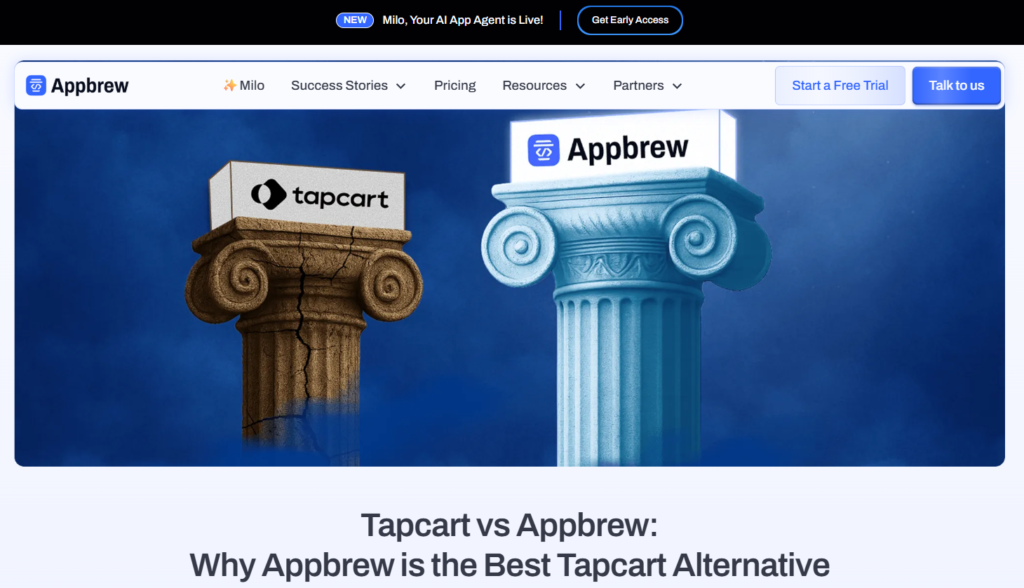
In reality, buyers compare things like pricing, onboarding, ease of use, integrations, support, scalability, and overall fit for their use case.
To understand what buyers actually care about, analyze Reddit discussions, G2 reviews, competitor pages, sales objections, support queries, and “X vs Y” search terms. These sources reveal the real decision-making factors behind the search.
2. Choose Comparison Keywords With Commercial Intent, Not Just Search Volume
When creating competitor-comparison blogs, we do not choose keywords solely based on search volume, Instead we prioritize keywords with strong commercial intent because those are the searches most likely to influence buying decisions.
The goal is to target users who are already evaluating solutions, not just casually researching a category. That is why comparison-focused searches usually perform better from a conversion perspective.
For example, instead of targeting a broad keyword like “best CRM software,” we would prioritize terms like “HubSpot vs Salesforce,” “best HubSpot alternative,” or “Salesforce pricing comparison.” These searches often come from buyers who are much closer to making a decision.
3. Position the Comparison Around Buyer Priorities, Not Feature Lists
Most competitor comparison blogs are written like feature checklists. They compare tools point by point without explaining what actually matters to the buyer. But high-converting comparison blogs work differently.
Instead of focusing only on features, they are structured around buyer priorities like ease of use, onboarding, pricing, integrations, scalability, customer support, and ROI. This makes the content more useful because readers are not just comparing products; they are trying to choose the right solution for their needs.
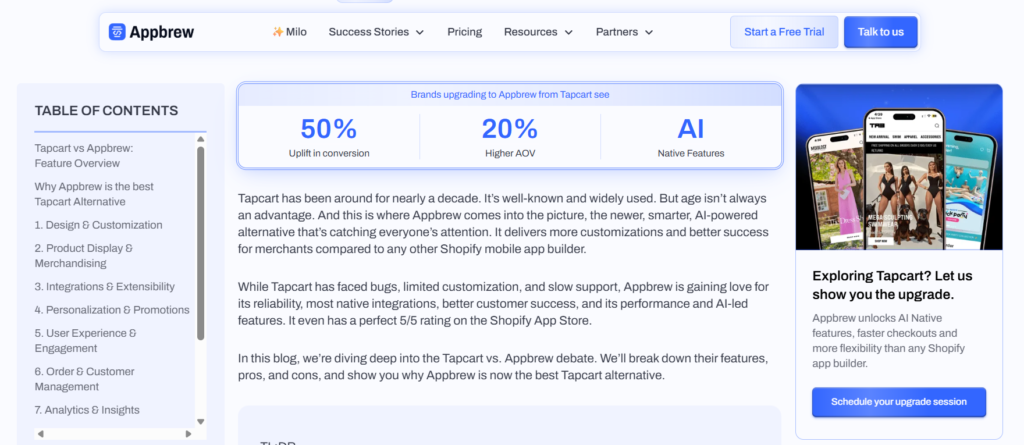
For example, instead of simply mentioning that a tool has advanced automation, explain whether it is easy to set up, who it is best suited for, and whether a small team can realistically use it effectively. This approach adds much more value because it helps readers make decisions faster.
4. Define Clear Evaluation Criteria Before Writing the Comparison
This is one of the most critical parts of a competitor comparison blog because it provides structure for the entire comparison and makes the content more trustworthy. If you search for almost any comparison keyword, you will notice that the strongest pages on SERPs follow a clear evaluation framework instead of randomly listing features.
But this is also where most blogs go wrong. Adding random comparison points, especially AI-generated ones without proper research, often reduces credibility instead of adding value. The evaluation criteria should directly connect to the buyer’s decision-making process and reflect actual product understanding, not generic assumptions.
5. Highlight Trade-Offs Instead of Pretending One Tool Fits Everyone
Most competitor comparison blogs try to position a single product as the perfect solution for everyone. But high-converting comparison blogs work differently.
Instead of forcing a one-sided narrative, they acknowledge trade-offs clearly by explaining where each product performs better, who it is best suited for, and where limitations exist. This makes the content feel far more credible and trustworthy to buyers.
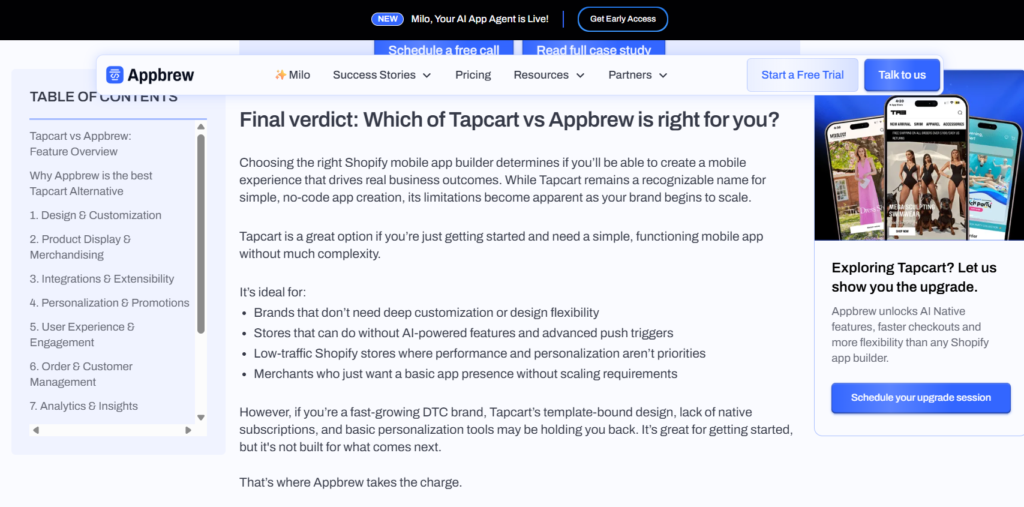
For example, one tool may offer deeper customization and enterprise-level capabilities, while another may be easier to implement for smaller teams with limited technical resources. Both can be strong options depending on the buyer’s priorities.
6. Use Real Use Cases and Scenarios to Make Differences Tangible
Most buyers do not make decisions based on features alone. They want to understand how a product fits into their actual workflow, team structure, or business goals.
That is why strong competitor comparison blogs use real use cases and scenarios instead of relying only on generic product descriptions. This helps readers visualize where each tool performs better and whether it aligns with their specific needs.
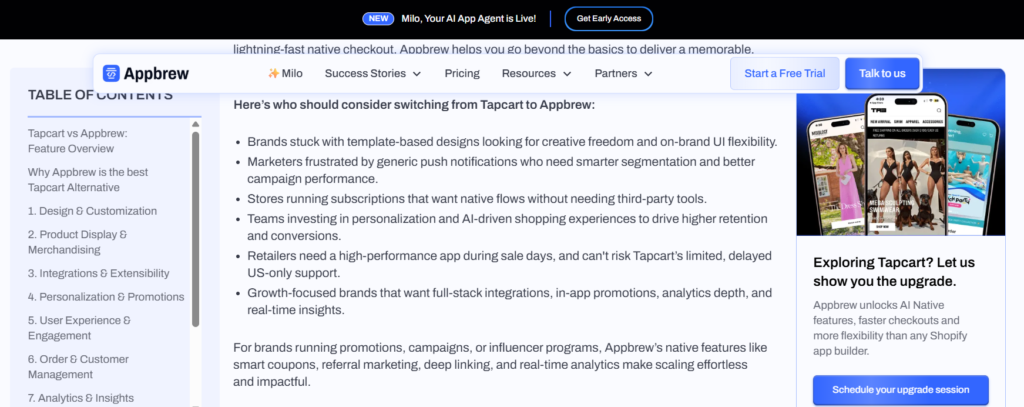
For example, instead of simply saying one platform has better automation, explain how it helps a fast-growing sales team manage large lead volumes more efficiently. Or if a tool is easier to use, clarify why that matters for smaller teams with limited technical support.
This will make the comparison more practical, easier to understand, and far more decision-oriented for the buyer.
7. Address Competitor Strengths Honestly to Build Trust and Credibility
Marketers sometimes downplay the competitor while making their own product look flawless. Some brands even avoid mentioning areas where the competitor genuinely performs better.
But this usually backfires, especially with educated buyers who are already deep in the buying journey and have researched both products. If the comparison feels overly biased or selective, readers are more likely to dismiss the content entirely.
Strong comparison blogs acknowledge competitor strengths openly while clearly explaining where your product is a better fit. This creates a far more balanced, credible, and trustworthy experience for the reader.
It also matters from a visibility perspective. Search engines and LLMs increasingly favor content that feels objective, nuanced, and genuinely useful instead of overly promotional.
8. Structure the Blog for Fast Decision-Making and Skimmability
Most users landing on a competitor comparison blog already know the products they are evaluating. They are not looking to read long walls of text. They want to quickly compare pricing, features, onboarding, integrations, trade-offs, and best-fit use cases.
That is why strong comparison blogs are structured for skimmability. Use clear headings, comparison tables, short paragraphs, bullet points, pros and cons, and section summaries so readers can find answers quickly without scrolling through unnecessary information.
The easier it is for a buyer to navigate the comparison and identify key differences, the higher the chances of influencing the final decision.
9. Optimize for “Best For” Queries and Alternative Search Intent
Many high-intent buyers do not search only for “X vs Y” keywords. They also use searches like “Shopify alternatives,” “best ITAM tool for remote team,” or “email marketing tools for small businesses.”
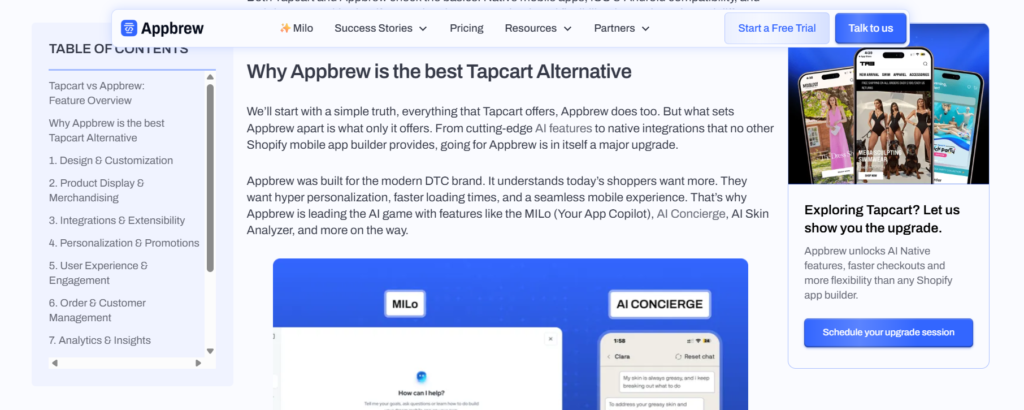
That is why competitor comparison blogs should also be optimized around “best for” and alternative-based search intent. These searches usually come from users who are actively exploring replacements or trying to find the best fit for their specific use case.
To capture this intent, include sections around ideal use cases, team size fit, industry fit, alternatives, and who each product is best suited for. This not only expands keyword coverage but also makes the comparison more useful and decision-oriented for the reader.
10. End With Decision Guidance Instead of a Generic CTA
The conclusion of a competitor comparison blog should help the reader make a clear decision instead of pushing a generic sales CTA.
Summarize who each product is best suited for, where each tool performs better, and what type of buyer should choose which solution. This makes the comparison more practical and decision-oriented for users already deep in the evaluation stage.
For example, one product may be better suited for enterprise teams that need advanced customization, while another may work better for smaller teams that prioritize ease of use and faster implementation. Remember, a strong conclusion reinforces clarity and helps the reader confidently choose the right solution, not just your product.
Conclusion
If you’re scaling BOFU content, competitor comparison blogs should not be treated as standalone SEO assets without direction. Their impact comes from how intentionally they are planned, structured, and aligned with buyer intent.
At Contentify, we’ve spent over a decade helping brands build organic growth systems that turn high-intent search traffic into a consistent pipeline.
If you’re ready to structure your BOFU content the right way, reach out to us!