Human beings and emotions go hand-in-hand. Take away emotions from them and you will find robots in blood and flesh. Marketing campaigns thrive on emotions. Triggering an emotional response from the audience is an important element of any successful marketing campaign.
The audience connects more with a campaign on an emotional level than rationally.
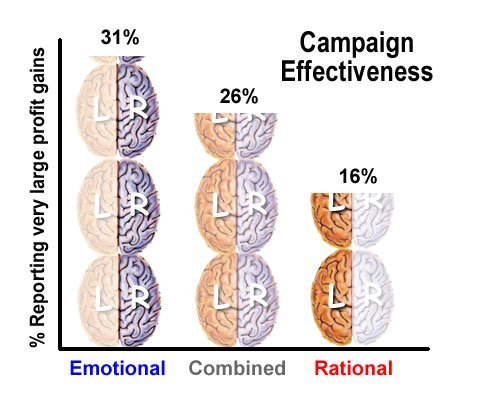
With the current noisy competition, striking the right emotional chord with the audience is a challenge! From happiness and awe to anger and sadness, the consumer-generated content offers an astounding opportunity to not only reach the audience but also impact them – provided it is done right.
“Because I’m happy!”
Associating a brand with a positive emotion such as happiness is a good tactic, right? Yes! At least that is what the 2014 BuzzSumo study said after conducting an analysis of 10,000 stories of New York Times with maximum shares online.
However, constant generation of “happy content” can also make it difficult for brands to stand out from the competition. For instance, Upworthy suffered a massive blow in terms of unique visitors in Jan, after investing heavily to get online traction based on emotional content in 2013.
Lesson learnt: Don’t get carried away by this emotion!
“Surprise, surprise!”
Everyone loves to read an article or watch a video that creates an air of surprise or anticipation. One of the ways to do this is by curating a headline that teases the topic or campaign. For instance, articles such as How To Make A City Sound And Tree Cocktail, Kim Kardashian Does The Ice’s ’50 Shades Of Grey’ Cover and How To Use Your Name To Get What You Want instil a sense of anticipation among the readers.
No, these are not real articles but their intriguing headlines make the readers want to click! However, to make your readers keep coming back to you – make sure there’s some meat in the content too.
“This makes me angry!”
A negative emotion, it is okay to get cheesed off every now and then. Marketers “have” laced their content with this emotion in the past. And the results have been more than surprising! Jonah Berger, in his book “Contagious”, explains that happy and angry content is more likely to get shared than the ones filled with sadness or contentment.
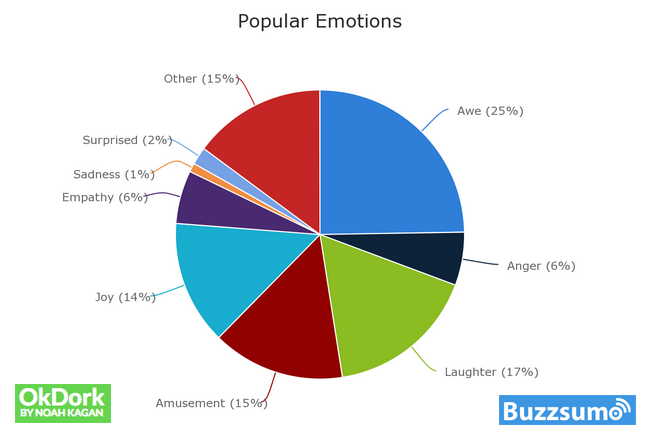
Anger is the only popular negative emotion (6%) in the pie chart. Rest of the emotions are more or less positive.
“Oh, I’m so sad!”
This emotion evokes a more personal response – despite the fact that most brands don’t want to be associated with sadness. However, a good content marketing strategy can benefit if sadness is integrated in the larger narrative.
The same BuzzSumo study revealed that only 1 percent of the total articles shared were sad. Despite the insignificant number, sadness is believed to have the power to start an ever-lasting relationship between the brand and audience.
Marketers must understand that not every brand can associate itself with every emotion. In order to do justice with the brand, the campaign or content must use and evoke the right kind of emotional response and action. Otherwise, the purpose will be defeated.