AI and no-code tools have made launching a SaaS product easier than ever. As a result, new AI companies are entering the market every day. The problem is that most of them look, sound, and position themselves in almost the same way.
Building a product is no longer the hard part. Getting noticed is. In a crowded market filled with similar features, promises, and messaging, standing out requires far more than another AI-powered solution.
In this post, we’ll share 10 strategies we use to help AI SaaS companies differentiate themselves, build credibility, and earn attention in increasingly competitive categories.
10 Things AI SaaS Companies Can Do to Stand Out
Here are 10 practical strategies AI SaaS companies can use to stand out:
1. Own a Problem, Not a Feature
Most AI SaaS products look identical at the feature level. That’s not a coincidence. Features are the easiest things to build and copy. A competitor with a similar stack and six months of runway can replicate your feature set. What they can’t replicate is the position you’ve built in a buyer’s mind.
Features are a product decision. Problems are a positioning decision. The companies that stand out don’t win because they have the longest feature list. They win because they’ve made one specific, painful challenge so central to everything they do that the market starts associating the problem with their name.
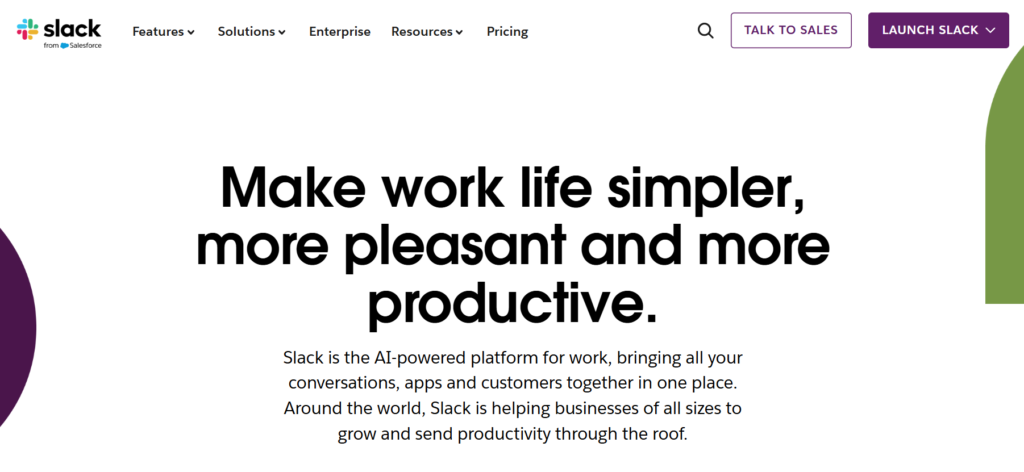
For example, Slack didn’t win by being the best messaging app. It won by owning the problem of fragmented team communication at a time when email was visibly broken for modern teams. That’s the kind of positioning no feature update can touch.
2. Build Search Visibility Before You Need Demand
Most AI startups wait until growth slows before investing in search visibility. By that point, they’re already competing against companies that have spent months or years building content, authority, and rankings.
The challenge is that buyers don’t start researching when they’re ready to buy. They start much earlier. They compare solutions, explore approaches, and educate themselves long before they book a demo or contact a vendor.
That’s why search visibility should be built while the product is still evolving. It compounds over time and puts your company in front of buyers throughout their decision-making journey. Increasingly, appearing consistently in search results isn’t just about generating traffic. It’s a signal that your company is established, credible, and worth considering.
3. Create a Category Narrative Instead of Joining Existing Conversations
“AI-powered” is no longer a differentiator. Visit almost any AI SaaS website, and you’ll see the term everywhere. When everyone uses the same language, buyers have little reason to remember one company over another.
The companies that stand out create a distinct narrative instead. Salesforce, for example, positioned Einstein AI around “CRM intelligence” rather than simply promoting AI features. It gave buyers a clearer way to understand the value behind the technology.
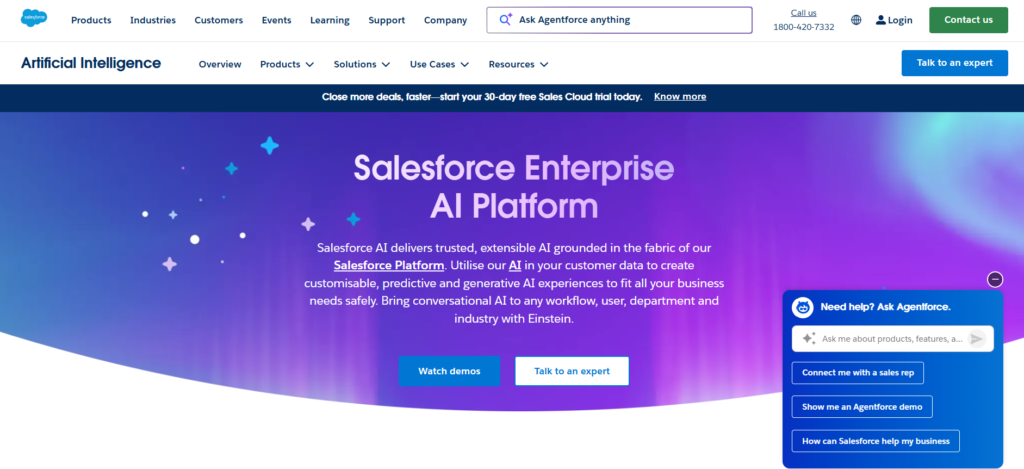
Category creators attract more attention than category followers. By introducing a unique framework, methodology, or point of view, you give buyers new language to describe their problem and a stronger reason to remember your solution.
4. Become Discoverable Everywhere Buyers Research
Buyers don’t start with Google anymore. They ask AI assistants, browse Reddit threads, scroll LinkedIn, read industry newsletters, and listen to niche podcasts.
A buyer shortlisting software might Google the category, ask ChatGPT for recommendations, read a Reddit discussion, and check a founder’s LinkedIn profile before ever visiting a company website.
This shift changes how AI SaaS companies should think about visibility. Ranking on Google still matters, but it’s no longer enough. Modern discoverability means showing up wherever buyers research and validate their decisions. At Contensify, we call this Search Everywhere Optimization.
To improve visibility across the buyer journey, focus on:
- Creating content that AI assistants can reference and cite
- Building a presence in relevant communities and discussions
- Publishing thought leadership on LinkedIn
- Earning mentions in industry newsletters and publications
- Participating in podcasts, webinars, and expert roundups
Simply put, the more places buyers encounter your brand, the more likely they are to trust and shortlist it.
5. Focus on Search-Market Fit Before Scaling Content
Publishing more content is not always the answer. If buyers aren’t actively searching for the problem you solve, even the best content strategy will struggle to generate meaningful results.
Before scaling content production, validate that there is real search demand around:
- The problem you solve
- The outcomes buyers want
- The language buyers use
- The solution categories they compare
Content can amplify existing demand, but it cannot create it from nothing. That’s why search-market fit should come before content scale. If your positioning doesn’t align with how buyers search, publishing more content is unlikely to change the outcome.
6. Turn Founder Expertise Into a Competitive Moat
AI can generate information, but it cannot replicate firsthand experience. The lessons, opinions, and insights gained from building a company are often what make a brand stand out in a crowded market.
Perplexity is a good example. Founder Aravind Srinivas regularly shares his perspectives on search, AI, and product development in public. Over time, this has helped build trust and made him a recognizable voice in the AI industry, strengthening the Perplexity brand in the process.
For AI SaaS companies, founder-led content can be a powerful differentiator. Original insights build credibility, strengthen trust, and give buyers a reason to remember your company beyond its features.
7. Build Topic Authority Around Your Core Market
Most AI startups publish whatever feels timely. One week it’s LLMs, the next it’s pricing strategy, then team culture. The result is a content strategy that lacks focus and builds little authority.
Authority comes from repeated coverage of a small number of strategic topics. Instead of trying to comment on everything, focus on the conversations most closely tied to the problem you solve. The goal is to become the obvious source for those topics, not another generalist with a blog.
8. Stop Talking About AI and Start Talking About Outcomes
Buyers care far more about results than technology. They are not looking for better algorithms, more advanced models, or another AI-powered platform. They are looking for solutions that help them save time, reduce costs, increase revenue, or improve efficiency.
That’s why messaging focused on capabilities often falls flat. Telling buyers what your AI does is far less compelling than showing them the business impact it delivers. Instead of leading with the technology, lead with the outcome. Make the value obvious first, then explain how AI helps achieve it.
9. Create Original Insights Instead of Recycling Industry Advice
There is no shortage of content explaining AI trends, best practices, and industry predictions. The challenge is that most of it says the same thing. Generic advice is easy to produce, but it rarely gives buyers a reason to remember your company.
The companies that stand out contribute something new to the conversation. That could be proprietary data, customer insights, industry observations, benchmark reports, or original research that others cannot easily replicate.
Original insights create differentiation because they offer value that doesn’t exist elsewhere. They also give buyers, journalists, and AI systems something unique to reference, helping your company earn more visibility and authority over time.
10. Build Brand Association Before Competitors Do
The strongest AI SaaS brands are known for something specific. They become closely associated with a particular problem, topic, category, or point of view in the minds of buyers.
This doesn’t happen overnight. It is the result of consistently showing up in the right conversations, publishing valuable insights, and building visibility across multiple channels over time.
The payoff is significant. Visibility builds trust, trust drives demand, and demand strengthens market position. Companies that establish these associations early are often the ones that end up leading the category later.
The Ultimate Test
If your company disappeared tomorrow, what topic would the market stop associating with you?
If the answer is nothing, you’re still competing on features. The companies that stand out are remembered for owning a specific problem, conversation, or category. That’s the outcome every strategy in this list is working toward.
Conclusion
AI is making it easier than ever to build a SaaS product. It’s also making it harder to stand out. As more companies launch with similar capabilities, differentiation increasingly comes from positioning, visibility, and trust.
The winners won’t be the companies with the most features. They’ll be the ones that own a problem, shape a narrative, and become the obvious choice in their category.
At Contensify, we’ve spent over a decade helping SaaS brands build that advantage through SEO, content marketing, and search visibility. If you’re looking to stand out in a crowded market, talk to our experts today.