When you hire a GEO agency, one of the first questions you should ask is what its team will actually work on each month. You might see regular reports showing your brand’s mentions across ChatGPT or Perplexity, but are those numbers translating into better visibility, relevant citations, or qualified leads?
And beyond tracking these metrics, what work is being done to improve them? The answer should be clear before you commit to an engagement.
In this blog, we’ll break down what you should expect from a GEO agency each month and how these deliverables contribute to your brand’s visibility across AI search platforms.
11 Deliverables You Should Expect From a GEO Agency Every Month
Here are the 11 key deliverables to look for in a monthly GEO engagement, along with why each one matters for your brand’s visibility across AI search platforms:
1. AI Visibility Tracking and Performance Reports
Your GEO agency should provide monthly reports tracking how often your brand appears across AI platforms such as ChatGPT, Perplexity, and Google AI Overviews. This includes brand mentions, citations, prompt coverage, share of AI answers, and competitor visibility.
The report should also highlight changes over time, helping you understand where your brand is gaining visibility, where competitors are ahead, and which areas need more attention.
2. Prompt Research and Opportunity Identification
This is one of the most important activities we carry out for our clients, and one they particularly value. We continuously research the prompts their target audience uses across AI platforms, from category-related questions and product comparisons to alternative searches and specific product recommendations.
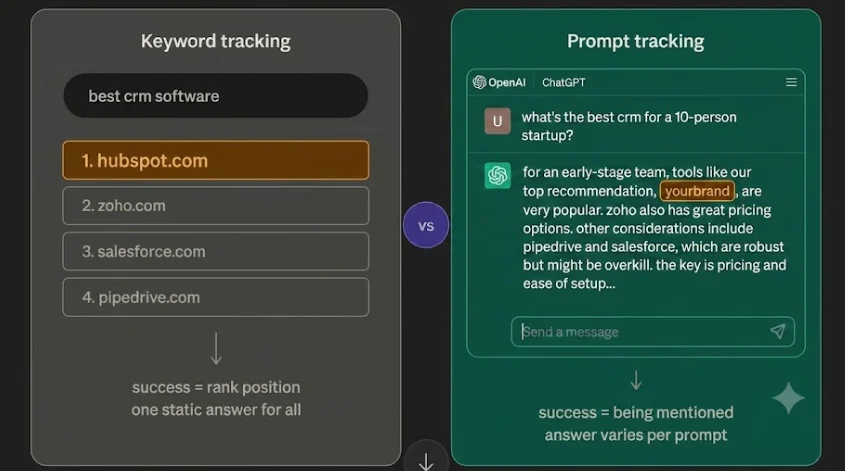
This helps us identify where potential customers are looking for solutions, which conversations competitors are already part of, and where our clients have an opportunity to get discovered.
3. Competitor Visibility Analysis
Your GEO agency should look beyond your brand’s performance and understand what is helping competitors get mentioned and recommended by AI platforms. This involves analysing their presence across key buyer prompts, how AI-generated responses position their products, and which third-party websites or publications influence those recommendations.
The goal is to uncover what competitors are doing differently and use those insights to identify content gaps, refine your positioning, and find opportunities to improve your brand’s presence across AI search.
4. Content Gap Analysis and Recommendations
Regularly assessing your existing content helps identify topics you haven’t covered, unanswered buyer questions, and pages that need improvement. This also involves comparing your content with competitors and other frequently cited sources to understand what information might be missing.
Based on these findings, the agency should provide prioritized recommendations on what to create, update, or expand. This ensures content efforts address actual visibility gaps rather than simply increasing publishing volume.
5. Content Creation and Optimization
Content creation and optimization should be a consistent part of the monthly engagement. Based on the gaps and opportunities identified through research, this includes creating new blogs, comparison pages, product pages, and use-case content, alongside updating existing assets that need improvement.
The monthly scope may vary depending on your content priorities, but the focus should remain on publishing and improving content that answers buyer questions, communicates product value, and creates more opportunities for AI platforms to reference your brand.
6. Entity and Brand Optimization
AI platforms need to understand what your brand offers, which problems it solves, and how it relates to specific product categories, industries, and use cases. Monthly GEO work should include reviewing how your brand is represented across your website and relevant third-party sources, identifying inconsistencies, and recommending improvements to product descriptions, company information, brand messaging, and other references.
7. Technical SEO and Website Recommendations
Technical SEO remains an important part of GEO because AI discovery also depends on how well search engines and AI crawlers can access and understand your website. A monthly technical review should include:
- Crawlability and indexation: Checking whether important pages can be accessed and indexed.
- Website architecture: Reviewing page structure, navigation, and internal linking.
- Structured data: Identifying opportunities to implement or improve relevant schema markup.
- JavaScript rendering: Checking whether important content is accessible beyond client-side rendering.
- Content accessibility: Ensuring key product information and website content are available to crawlers.
These checks should be guided by actual technical issues and identified opportunities. Not every aspect needs monthly changes, but problems should be flagged, prioritized, and addressed as they arise.
8. Third-Party Mentions and Authority Building
Publishing content on your website is not enough. Your brand also needs to appear across relevant third-party platforms like Reddit, Quora, Medium, etc where potential customers research products, compare solutions, and seek recommendations. Without consistent distribution, even well-optimized content can struggle to reach the right audience.
At Contensify, distribution is a necessary part of our GEO work. Either our team handles it or we work with the client’s team to make sure it happens. This includes industry mentions, expert contributions, digital PR, relevant discussions, quality backlinks, and placements on credible websites. Content creation without distribution leaves a significant part of GEO unfinished.
9. Product, Comparison, and Commercial Page Optimization
Commercial pages need a different level of attention because they directly influence how potential customers evaluate your product. Monthly work should include reviewing and optimizing product pages, feature pages, integration pages, competitor comparisons, alternatives, and pricing pages.
The goal is to communicate your product’s capabilities, differentiators, use cases, and value clearly, making it easier for AI platforms to understand when and why your solution is relevant to a buyer’s query.
10. AI Representation and Accuracy Monitoring
Your brand may appear in AI-generated answers, but is the information accurate? Monthly monitoring should include checking how AI platforms describe your company, products, features, and key differentiators.
This helps identify outdated product information, incorrect claims, missing details, or inconsistencies in how your brand is presented. Based on these findings, the agency should recommend changes to improve the accuracy and consistency of your brand information across AI platforms.
11. Monthly Strategy Review and Next-Step Roadmap
A GEO engagement should not run on autopilot. Every month, there should be a review of completed activities, visibility trends, key findings, and outstanding recommendations.
The agency should also share a clear roadmap for the next month, outlining content priorities, distribution activities, technical improvements, and new opportunities. This gives you a better understanding of where your investment is going, what progress has been made, and what the team plans to work on next.
Conclusion
A strong GEO engagement should go beyond monthly visibility reports or a fixed number of content pieces. It should bring together research, content optimization, technical SEO, distribution, authority building, and performance reviews, with each activity tied to your business goals.
At Contensify, we combine content, SEO, and distribution to help brands improve their visibility and representation across AI search platforms. Our focus is on identifying opportunities, addressing visibility gaps, and building a stronger presence where potential customers are searching.
Want to strengthen your brand’s presence across AI search? Talk to our team today.