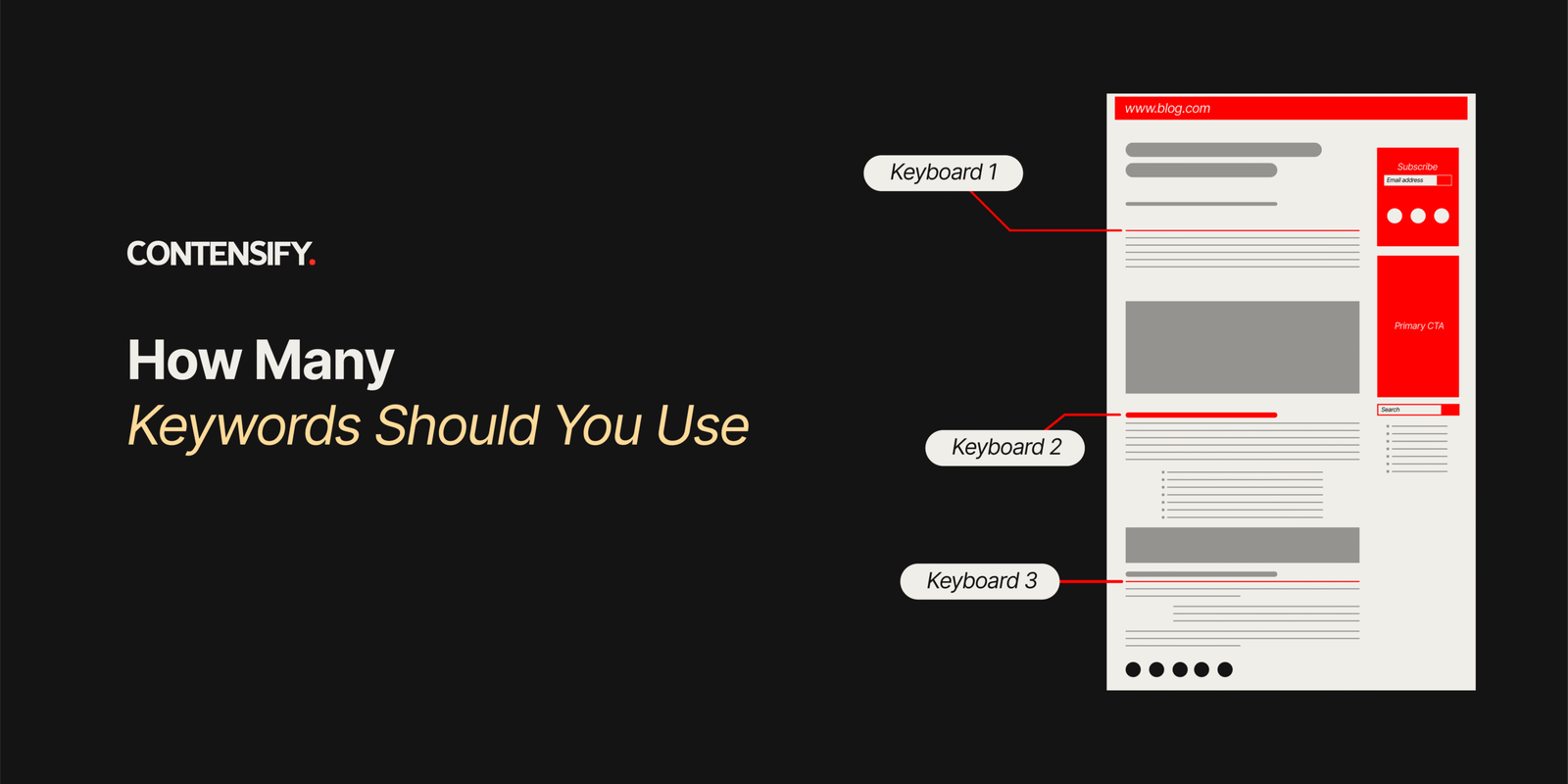
“What number of keywords should I target per page?” is one of the most common SEO questions. In reality, most people asking it are trying to figure out how to get the maximum traffic from a single piece of content.
The problem is that search engines aren’t counting keyword mentions. They’re trying to understand whether a page satisfies a specific search intent. That’s why every page needs a clear primary topic.
When you try to rank one page for too many unrelated keywords, you’re often targeting multiple intents at once. This dilutes relevance and makes it harder for both users and search engines to understand the page’s purpose.
In this blog, we’ll discuss how many keywords a page should realistically target and why focus is often the key to better SEO results.
Why People Try to Target Too Many Keywords on One Page
It’s common for businesses to target multiple keywords on a single page in an effort to drive more organic traffic. While the logic seems sound, it doesn’t always align with how modern search engines work.
Here are some of the most common reasons behind this approach:
- Fear of Missing Traffic Opportunities: Many marketers worry that if they don’t target a keyword, they’ll miss potential traffic. As a result, they try to include as many relevant terms as possible on a single page.
- Misunderstanding How Modern SEO Works: Outdated SEO advice often emphasized keyword density and exact-match phrases. This leads some people to believe that adding more keywords will improve rankings.
- Attempting to Maximize ROI From a Single Piece of Content: Since content creation requires time and resources, it’s tempting to make one page rank for multiple keywords instead of creating separate pages for different topics.
- Confusing Related Keywords With Different Search Intents: Keywords may look similar but reflect different user goals. Treating them as interchangeable often results in a page trying to serve multiple intents at once.
- The “One Page Should Rank for Everything” Mindset: Some businesses assume a single page can rank for every relevant query in a topic area. While efficient in theory, this often leads to unfocused content.
Search Intent Matters More Than Keyword Count
Search intent is the reason behind a search query, what the user is actually trying to accomplish. They may be looking for information, comparing solutions, researching a purchase, or solving a specific problem.
This is why pages rank because they satisfy intent, not because they contain the highest number of keyword mentions.
A page that clearly answers the searcher’s question will generally outperform one that targets more keywords but delivers a less focused experience.
Keywords That Can Be Targeted Together
Some keywords can comfortably live on the same page because they represent the same underlying intent.
| Keyword Group | Why They Fit on One Page |
| Best project management tool / Top project management tools / Project management software comparison | All users are comparing available solutions. |
| Email marketing platform / Email marketing software / Email marketing tool | Different terms describing the same type of product. |
| How to reduce bounce rate / Why is my bounce rate high / Improve bounce rate SEO | All seek advice on improving bounce rate performance. |
When the desired outcome is the same, a single page can often satisfy multiple keyword variations.
Keywords That Should Be Separate Pages
Other keywords may appear related, but require different content because the user’s intent is different.
| Keyword Group | Why They Need Separate Pages |
| What is marketing automation / Best marketing automation software | One is educational, the other is evaluating solutions. |
| CRM for small business / Enterprise CRM software | Different audiences with different needs and priorities. |
| How to write a meta description / Meta description examples | One requires a tutorial, the other a reference resource. |
Remember, if the content needed to satisfy one search would feel irrelevant to someone searching the other, those keywords should be targeted with separate pages.
How Many Keywords Should You Actually Target?
The better question isn’t how many keywords to target, but which keywords belong together on the same page. Once you understand that distinction, keyword targeting becomes much easier and far more effective.
One Primary Keyword
Every page should have one primary keyword that defines its core topic. This is the main term the page is built around, and the content should consistently support that topic. When a page tries to serve multiple primary keywords, its focus often becomes diluted.
Closely Related Secondary Keywords
Secondary keywords help reinforce the primary topic by covering closely related subtopics and variations. These keywords should share the same search intent and naturally fit within the content. Rather than competing with the primary keyword, they add depth and context.
Semantic Variations and Natural Language Queries
Semantic variations include long-tail searches, question-based queries, and different ways people describe the same topic. These aren’t separate keywords that need dedicated optimization. They typically appear naturally when content is written to thoroughly address a subject.
There is no magic number of keywords that every page should target. What matters is whether the page fully covers its topic and satisfies a specific search intent. A focused, comprehensive page can rank for dozens of relevant keyword variations, while a page built around keyword quantity alone often struggles to perform.
A Simple Framework for Deciding Whether Keywords Belong on the Same Page
When deciding whether keywords belong on the same page, the goal is to determine whether they should be addressed together or separately. A few simple checks can make that decision much clearer.
The “Could One Article Fully Answer Both?” Test
If you’re unsure whether two keywords belong on the same page, ask one simple question: Could a single article fully answer both searches without feeling unfocused?
Look at the search results, the type of answer users expect, and whether combining the keywords would strengthen the page or make it less focused. In most cases, the right choice becomes fairly obvious once you evaluate them from the user’s perspective.
If the answer is yes, combine them. The keywords likely serve the same audience, require similar information, and can be covered more effectively in a single resource.
If the answer is no, create separate pages. Trying to satisfy different searches with one piece of content often leads to a weaker experience for both.
| Keyword A | Keyword B | Same Page? | Why |
| SEO for beginners | How to start with SEO | Yes | Same intent, same audience, same answer. |
| What is a landing page | Landing page builder software | No | Informational and commercial intent are different. |
| Email subject line tips | Best email subject lines | Yes | Both help users improve email open rates. |
What Happens When You Cram Too Many Keywords Into One Page
Here’s what happens when you cram too many keywords into one page:
- Diluted topical relevance: Covering too many topics on one page can prevent it from establishing strong authority around any single subject.
- Confusing signals for search engines: When a page targets multiple intents, search engines may struggle to determine which queries it should rank for.
- Poor user experience: Users are more likely to disengage when a page tries to answer several different questions instead of focusing on the one they searched for.
- Weaker rankings across all target terms: Rather than ranking strongly for a focused set of keywords, the page often ends up performing moderately across many and excelling at none.
- Increased risk of creating generic content: Attempting to cover too much in one place often leads to shallow content that lacks the depth needed to stand out.
When It Makes Sense to Create Multiple Pages Instead
Here’s when splitting content can create a stronger, more effective site structure:
- Different search intents: When keywords reflect different questions or goals, dedicated pages can provide more focused and useful answers.
- Different audience segments: A page aimed at small businesses will often need different messaging, priorities, and examples than one targeting enterprise buyers.
- Different product categories: Separate products, services, or categories typically require their own pages to rank effectively and drive conversions.
- Different stages of the buying journey: Informational content and purchase-focused content serve different purposes and are usually more effective when separated.
- Building topic clusters: Multiple focused pages connected through internal links create stronger topical authority than a single page trying to cover everything at once.
Think Topics First, Keywords Second
Keyword research is still important, but it works best when it supports a topic rather than defines the entire content strategy. Starting with a topic helps you identify the questions, subtopics, and information users actually need, creating content that is more complete and useful.
This approach also has long-term advantages. As search engines and AI-powered discovery tools become better at understanding context, content built around genuine expertise and topical coverage is more likely to remain visible than content optimized around individual keyword variations.
Conclusion
There is no ideal number of keywords per page. What matters is whether the page has a clear purpose, addresses a specific intent, and covers its topic comprehensively.
A focused page will often rank for more relevant keywords than a page trying to target everything at once. That’s why successful SEO strategies are built around topics and user needs, not keyword counts.
At Contensify, we’ve spent more than a decade helping businesses build content strategies that prioritize topical authority, search intent, and long-term organic growth.