



The only B2B SaaS SEO guide you need to grow organically.
Successful B2B SaaS companies like HubSpot and Shopify have one thing in common – a killer SEO-led content marketing and organic growth strategy.
But with SaaS companies sprouting yearly, the competition for the top slot on SERPs has only increased. Take into account content creators and this competition further skyrockets!
While it’s challenging to beat direct and indirect competitors on the search engine, it’s certainly not impossible.
The secret to cutting through the noise?
A solid SaaS SEO strategy that focuses on driving organic growth in a methodical way to tap into the buyer’s customer journey and how sales works in the SaaS ecosystem.
In this guide, we’ll cover what B2B SEO is, understand what makes a winning strategy, how to implement your own SEO roadmap, and unlock organic growth.
Introduction to B2B SEO
B2B SEO is the process of attracting and growing organic traffic to a B2B company website by ranking its web pages higher on the search engine results pages on search engines like Google, Bing and others. This includes tapping into the right set of keywords based on a B2B company’s target audience and using on-page and off-page SEO tactics to help get the pages discovered for the same.
SaaS companies looking to: drive more organic traffic to their product/services website pages, increase their brand visibility, and generate qualified leads cost-effectively must have a proper SEO strategy in place.
Overview of the unique challenges and opportunities in B2B SEO
Apart from the evident challenge of an oversaturated market, here are the challenges most B2B SaaS companies face in the SEO landscape:
- Longer sales cycles – B2B customers, aka the decision-makers, take more time than B2C customers to learn about a product/service, consider options, and close the sale. As a result, B2B SEO ends up taking more time to generate Marketing Qualified Leads (MQLs). If a typical B2B sales cycle goes through at least 7 decision makers, the marketing easily addresses double the number.
- Strong competition and targeting niche markets – Competition in SaaS is evident. Since B2B SEO is strongly based on keywords, the competition to bag the top slot on SERPs is always high. For example, review sites like G2 and Capterra lead the SERP for long tail keywords like ‘Product vs. product.’ – This makes reaching your niche target market harder.
- Complex buyer journeys – A typical B2B buyer’s journey can be put into three stages: awareness, consideration, and decision. In each stage, multiple decision-makers and stakeholders may be involved. Hence, you may not always sell to one ‘buyer’ – making the journey and SEO efforts extra complicated.
The good news is that SEO-led growth opportunities for B2B SaaS companies outshine their challenges. Here’s why SaaS businesses have the upper hand in benefiting from SEO than other B2B industries:
- SEO can reduce customer acquisition costs. Because unlike paid advertising and performance marketing, where the cost can surge with each click, converting potential customers organically remains a cheaper option. Additionally, when you build an audience organically through their intent, you get to retarget and remarket to them – which lowers the overall CAC too!
- A SaaS SEO strategy based on targeted content can tie up other digital channels like email and social media and convert customers across them.
- SaaS SEO strategies can have a compounding effect eventually. That means the results will compound with every content you produce once you receive incremental organic traffic.
Understanding B2B SEO Strategy
Here are the four must-have steps you need to understand and execute a B2B SEO strategy for your SaaS company:
1. Defining target audience and buyer personas in B2B
A buyer persona depicts your ideal customer based on competitor and target audience research or based on existing customers. It helps visualize what your customer may prefer, who they are, and their needs.
Knowing your B2B target audience and ideal customer persona lets you understand who you’re selling to (key business decision-makers) and their hierarchy without guesswork. You can better align your SEO and content strategies and shorten your sales cycles.

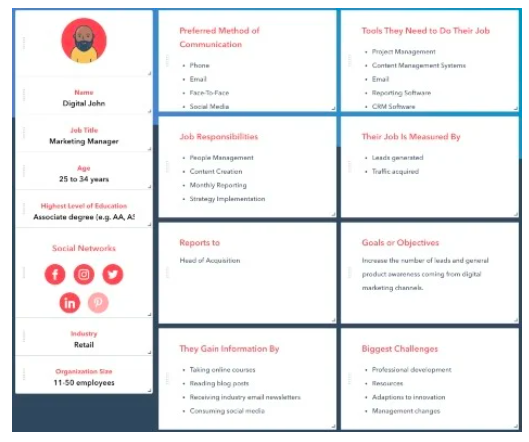
Here are some ways to create accurate and detailed buyer personas:
- Talk to your sales and customer support teams to learn about the kind of leads and customers they talk to and their top recurring concerns about your SaaS product.
- Conduct in-depth customer and prospect interviews and send surveys to uncover their product preferences.
- Analyze website traffic over a period to learn about your current customers’ characteristics and purchase tendencies.
- Gather audience data from your customer database, Google Analytics, and social media analytics platforms. Extract qualitative and quantitative customer data, such as demographics, age, occupation, interests, challenges, etc.
2. Conducting a comprehensive keyword research for B2B SEO
Keyword research can make or break your B2B SaaS SEO strategy. Targeting the wrong keywords or not targeting any at all misguides your organic traffic and search intents – resulting in less reach.
So when and how should you conduct keyword research for your B2B SaaS company?
Once you’ve identified your target audience and built buyer personas, you can research relevant keywords and lead your B2B SEO efforts.
Here’s how you do this:
- Build a list of seed keywords based on your SaaS product. A seed keyword is a word or phrase your target customer uses to search online. It should describe your product in the simplest way. For example, ‘SaaS marketing,’ ‘Sales automation,’ etc.
- Find other commonly used keywords based on the list of seed keywords, like long-tail keywords, high-volume/low-volume keywords, etc. Ensure they fit your target customer’s search intent. Also, perform social listening on sites like Quora, Facebook, or YouTube to understand what users search for.
- Research competitors and their choice of keywords that bring the most traffic and are high-ranking.
- Target and group keywords based on search intent to attract more traffic to your platform’s landing pages, like products and feature pages. For example, adding ‘software’ or ‘tool’ to your seed keyword – ‘Sales automation software.’
Lastly, note the importance of attracting quality over quantity traffic. For example, traffic from high-intent leads is more crucial than unrelated, high-volume traffic.
3. Competitor analysis and identifying industry trends in B2B SEO
One goal of B2B SEO is to outperform your niche competitors and secure the top slot on SERP with better quality content.
Competitor analysis can expose any hidden flaws or gaps your website and content may have.
Here’s how to perform a thorough competitor analysis to uncover their strategies:
- Perform keyword gap analysis to expose keywords your niche competitors are ranking for, but you’re not using. Make a list of such keywords to use in your upcoming content.
- Deeply analyze every competitor’s website pages, social media sites, and reviews. Doing so gives you an idea of how their SaaS product pages attract your target audience, their unique messaging, and who they interact with.
- Review their successful content marketing strategy – from videos and blogs to newsletters. Check out how the customers interact and engage with their content. For example, are they sharing it? Commenting on posts? Etc.
- Use SEO tools to examine their backlink profiles and understand where they obtain high-quality backlinks.
The Google Search algorithm is ever-evolving, and so are the SaaS industry trends. What SEO strategies seemed effective five years ago may no longer stay that way.
Therefore, staying up-to-date with the industry and SEO trends is key to optimizing your website and incrementally improving search rankings.
4. Setting measurable goals and KPIs for B2B SEO campaigns
Set your goals and KPIs to know whether you’re on the right SEO path. KPIs are especially important for SaaS companies. They form the crux of analyzing business growth and also help optimize strategies.
The most common yet effective KPIs you must chase to monitor success are content-related ones like traffic, ranking, and impressions and metrics like SQLs, MQLs, MRR, ARR, CAC, churn rate, etc.
The trick to setting measurable content marketing goals is simple. Set them based on the SMART framework.
SMART stands for specific, measurable, achievable, relevant, and time-bound.
For example, measurable goals can mean – ‘Increase SaaS product page visits by 20%.’, a time-bound goal can be – ‘Increase social media shares on Facebook by 10% by the next quarter.’, and so on.
On-Page Optimization for B2B SaaS SEO
On-page SEO is the process of optimizing your ‘on-site’ elements to rank better on search engines and receive more organic traffic. Tactics include optimizing website elements like the meta description, title tags, images, internal links, and more with the targeted keywords.
Let’s look at how you can implement on-page SEO for your SaaS website:
1. Optimizing website structure and navigation for B2B audience
The B2B audience is more research-driven and spends more time weighing options. And the common first touchpoint is your website.
Optimizing the structure with content that’s easy on the eye on a user-friendly UI ensures they kill more time on your website.
Let’s talk about some best practices to tailor your website to B2B buyers and reduce bounce rate:
Prioritize information hierarchy to improve navigation and structure
Search engines decide the website’s importance by gauging its page hierarchy. Make your website structure like a well-connected map that leads potential customers to your main goal – your SaaS product sign-up page, for example.
For instance, good navigation and structure look like this: ‘Home > Features > Sales Automation Tool > Sign up page.’
Limit homepage to 3-clicks
Internally linking your home or product page with multiple links can tire visitors leading to them exiting your website. So as the best practice, limit the number of clicks to the main goal to three.
Offer the right content and messaging that align with the B2B buyer’s needs
Your website content should be relevant to your targeted audience so that you gain on-site conversions.
Use the right words on the website copy and offer helpful resources like blogs and case studies to enhance the visitor experience.
2. Crafting compelling and SEO-friendly meta tags and descriptions for B2B content
Every time a user initiates a search, search enginues like Google and Bing display a brief description of the topic under each search result’s title. These are the meta descriptions used to persuade the users to click through to your link.

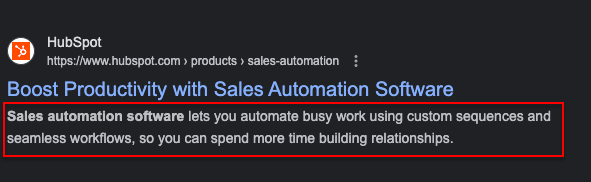
The meta tag is an HTML tag for the web browser to read and crawl through the site for more information.
Both meta tags and descriptions must be compelling enough to influence a potential customer to visit your web page since they’re the first things that pop up on their screen during a search.
How can you do this?
Make it keyword-rich by adding a focus keyword, ensure it matches the content on your page, include a CTA (discover more, click now, etc.), mention a solution to the target audience’s pain point, and keep it concise.
3. Incorporating relevant keywords naturally within content and headings
Integrating keywords and focus phrases in the content can enhance page quality and searchability. But most B2B businesses get this wrong by stuffing keywords and making the content sound robotic and unengaging.
Here’s how you can add keywords naturally to your content:
- Ensure your focus keyword is added to the page title tag, meta description, article or landing page headline, the first paragraph of the page content, headings, subheadings, anchor text, and at least thrice throughout the copy or content.
- Focus on long-tail keyword variations too, as they face lesser search competition but have a higher conversion rate. Examples of long-tail keywords are ‘How to build an automation software’ and ‘best marketing tools in 2023’.
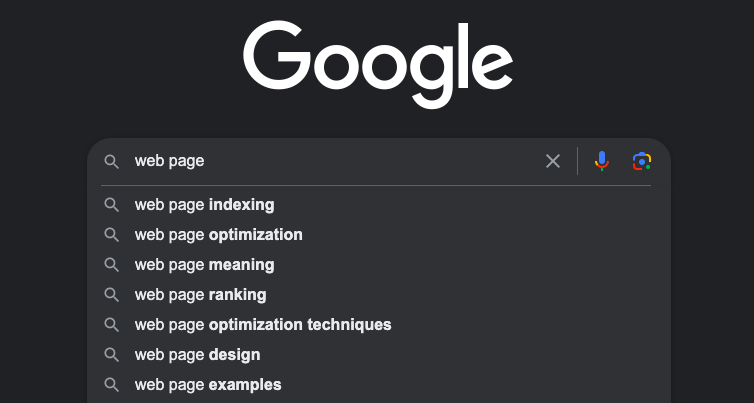
- Find and use words semantically related to your focus keyword. LSI (Latent Semantic Indexing) keywords are related to the main keyword and are used to help the search engine understand the content’s relevance and rank it higher. You can find them while typing your main keyword in the search tab, like so:

4. Utilizing schema markup and structured data for enhanced visibility in B2B SEO
Structured data, in simple terms, is information structured at the code level based on certain rules. This data is executed in the form of schema markup.
What does this mean from an SEO perspective? The purpose of using structured data in SEO is to signal and communicate about your web page with search engines so they index your pages correctly.
The benefits? Including structured data through schema markup makes search engines like Google more likely to display your content as ‘rich results.’ That means more brand visibility and more lead conversions.
Technical SEO for B2B SaaS Websites
Technical SEO includes optimizations to the website and server to help search engines easily crawl and index the web page.
Let’s look at four ways you can implement technical SEO for your SaaS website:
1. Optimizing website speed and performance for B2B audience
Website speed is one of the top deciding factors for fruitful SEO efforts. A slow site can directly affect your SEO performance despite your on-page SEO tactics being on point.
And most importantly – users hate it and will probably exit your site and never return.
Below are some tips to optimize your website speed and performance so that they do not hamper your site reachability:
- Compress images and reduce file sizes. Ensure your images are responsive and optimized, i.e., they do not take time to load on different browsing devices like mobile phones or desktops. Large files can also lag your pages, so make it a point to compress them before uploading.
- Reduce the number of redirects. High page redirects result in the visitor wasting more time waiting for the page to load. Every redirect makes the page slower. So delete the unnecessary ones to bring down the wait time.
- Use caching. Caching is when a browser stores a copy of the web page in a temporary location – leading to faster page accessibility.
- Optimize your server response time by looking for any performance issues like slow data fetching, a lack of memory, slow routing, etc., and fix them.
- Use minified code. Most brands face code overload that affects website performance. So minify your code like JavaScript, HTML, and CSS to boost speed.
2. Implementing proper URL structure and site architecture for improved crawlability
URL structure and website architecture have a significant impact on B2B SEO traffic, ranking, and conversions. Getting them wrong severely affects site crawlability (search engines figuring out what your content is about) and page indexing.
So well-planned website architecture generates more authority for your site pages and helps visitors find the exact content they’re looking for.
Some best practices for implementing a URL structure and site architecture that enhances B2B SEO:
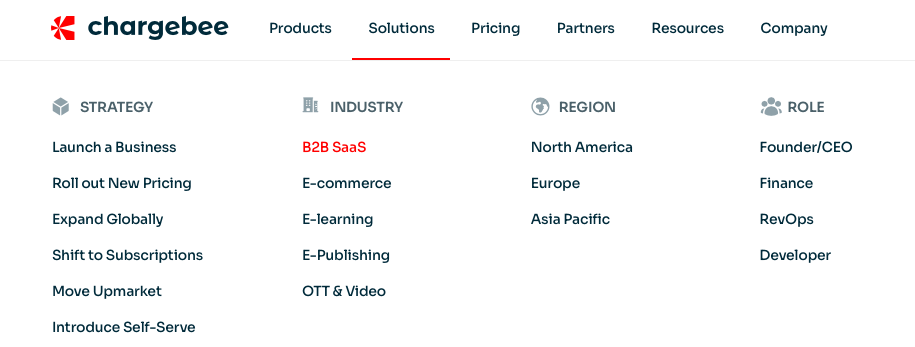
- Group related topics together and organize them as a hierarchy. This way, you build a deep, well-connected site architecture as opposed to a flat one. Also, ensure there are minimal redirects to the main page.
Here’s a good example of a SaaS company’s site hierarchy and grouping:

- Find and fix orphan pages. Orphan pages are the ones with no internal linking. Search engines fail to crawl and detect what the orphan pages point to, thus affecting ranking.
- Use navigational menus to connect pages. These menus are easier for visitors to navigate interlinked pages and do not make the main page look cluttered. Using keywords in main page menus can also boost SEO.
- Signal search engines that your content pieces are relevant and high-quality using topic clusters and pillars model, thus making it easier to crawl. Such a model connects child pages or clusters to one parent page – the pillar. For example, ‘Customer Videos’ is the pillar page, and ‘Video Marketing Tactics in 2023’ – is a resource cluster page.
3. Managing XML sitemaps and robots.txt for effective indexing in B2B SEO
XML sitemap is a website file listing all your important website pages, i.e., the ones you want search engines like Google to index. The goal is to use the right format and structure for your XML sitemap to increase compatibility with the Google search engine.

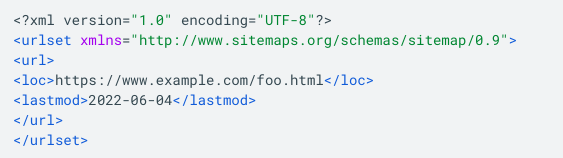
A robots.txt file lets search engine bots and crawlers easily find and identify your website’s XML sitemap. You can also use it to tell the search engine not to crawl specific parts of your website, thus decreasing site overloads.
4. Enhancing website security and implementing HTTPS for trust and credibility
HTTPS and SSL are must-haves for B2B websites to improve websites credibility, security, mutual trust, and ranking potential.
Here are the connections between website security and SEO:
- Improve site performance and speed which is a must-have to ace technical SEO.
- Improve website ranking by suggesting to search engines that the website handles data securely and is trustworthy.
- Google confirms that using HTTPS is one of the primary ranking factors.
- Google penalizes websites with poor security measures and reduces their organic search rankings.
Content Marketing Strategies for B2B SaaS SEO
The B2B industry is fueled by authoritative content that helps attract high-intent leads and drives their purchase decisions. And the SaaS domain is proof. Industry biggies like Zapier and HubSpot have established themselves as experts in the field, majorly through content marketing.
Here are four SEO-led content marketing strategies for B2B SaaS to help you deliver content resonating with the right audience:
1. Developing a content strategy aligned with B2B SEO goals and target audience
Begin by identifying and analyzing your audience. That’s where you can find answers to what kind of content they like and engage with, their challenges and inclinations, their search intent, and so on.
To create a content strategy plan aligned with SEO goals, here’s what you can do:
- Build a list of content topics based on your keyword research and buyer personas (addressing their challenges and pain points).
- Conduct competitor analysis to gain insights into the type of content they receive the most engagement. Identifying and targeting keywords they are ranking for can help you improve your SEO and push content through the right customer touchpoints.
- Document your SaaS product or service’s USP (unique selling proposition) to ensure correct product/service positioning with content.
2. Creating high-quality, informative content that addresses B2B pain points and challenges
Unlike B2C, the B2B industry is more focused on building long-term relationships with customers. And one thing that establishes this from the get-go is by being thoughtful of the kind of content you publish.
Some practical ways to create resourceful content as answers to B2B buyers’ pain points:
- Target classic ‘pain-point’ content like ‘How to’ blog posts. For example, a user searches for ‘how to increase my sales pipeline.’ This is a clear indication of the challenge – a stuck sales pipeline.


- Create informative videos and content with infographics on competitor comparisons. Most SaaS customers thoroughly research their options before choosing the best SaaS brand. For example, topics like ‘Competitor 1 vs. your product/company – which is the best to solve X pain point?’ The good news is such competitor comparison content is also great for B2B SEO.


- Offer alternatives to a recurring challenge your target audience may face and pitch your product or service as the solution. For example, ‘Cheaper alternatives to paid marketing’ and incorporating organic traffic enablement software as the solution.


3. Incorporating relevant keywords naturally within B2B content for search visibility
Instead of stuffing your content with keywords in an attempt to rank better, write content with the target audience’s challenges and questions in mind. This way, you can automatically match the search intent and not sound robotic.
Naturally incorporating relevant keywords throughout the content offers readers value while also aligning with SEO guidelines. Here’s how to do this efficiently:
- Use a mix of short and long-tail keywords. Long-tail phrases are more natural and match the language the user understands and uses.
- Do not add keywords out of context, like in every paragraph or headline. Maintain proper flow by adding only relevant keywords at the beginning of the content, in the title, meta description, and 1-2 headlines, and use secondary keywords throughout the article only if they naturally fit the context.
- Mimic the audience’s natural word choice and implement the same within your content. Head to the Google Search Console to analyze this.
4. Leveraging different content formats (e.g., blogs, whitepapers, case studies) for B2B SEO
Choose the best-performing content formats by considering your goals, budget, available resources, etc., and stick to them. Popular ones for SaaS are videos, long-form/short articles, case studies, infographics, e-Books, etc.

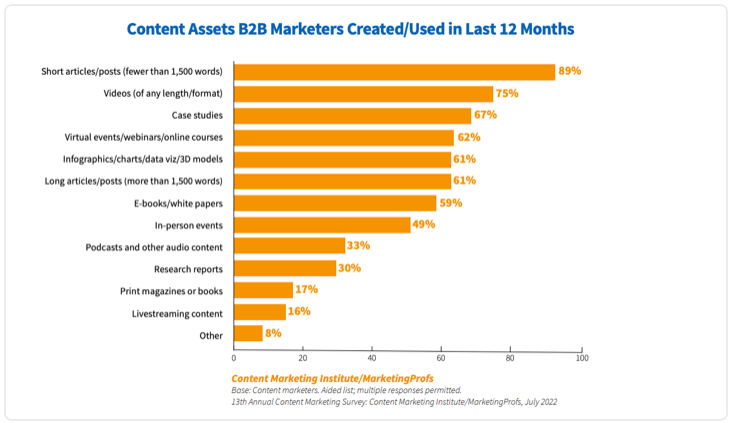
Here’s how to tap into the popular content formats for B2B SEO:
- Videos: Videos are more engaging and preferred content types in younger audiences. For example, transforming an informative article into video content for YouTube or social media can boost brand visibility.
- Case studies: B2B SaaS customers need social proof before they trust a business for a long-term partnership. So publishing and promoting your case studies as success stories can bring more traction.
- Long-form articles: This is the best content format for B2B SEO to attract more organic traffic, as the length makes it easier to offer in-depth, authoritative insights.
- Infographics: Infographics lets you convey complex information in a simpler format. They are easily shareable and hence drive more traffic to a website.
Link Building and Off-Page SEO for B2B
High-quality backlinks play a major role in SEO and ranking. Link building with relevant backlinks results in better search engine visibility and pushes your SaaS pages to the top of the SERPs.
Let’s discuss four ways to improve visibility using link building and off-page SEO strategies:
1. Building authoritative backlinks for B2B websites through industry partnerships
Backlines improve your page quality and signal the search engines about the authoritativeness of your content. Think of them as ‘votes’ from other B2B websites.
Below are some tips for building healthy partnerships and acquiring high-quality backlinks:
- Reach out to B2B brands that already link to your competitors. Drop a note using email outreach stating how linking to your web page can add value to their audience.
- Host events and invite industry leaders in your domain. Offer partnerships with brands and discuss link building strategies.
- Join groups and industry-specific organizations to foster a strong alliance in your domain.
2. Identifying relevant B2B directories and platforms for link acquisition
Social media platforms like Twitter and LinkedIn are the best places to connect with other thought leaders in your domain or niche. Connect and network with them to discuss a mutual backlinking strategy and how it can help both businesses improve search engine ranking.
Search through other directories like podcasts or online groups to find potential B2B brands ready to offer backlinks.
3. Leveraging guest blogging and thought leadership opportunities in B2B SEO
Guest posting is one of the best ways to build high-quality links and boost SEO efforts. Guest posts help you acquire good backlinks and establish you as a thought leader in your niche, while the website you guest post on receives valuable content for its audience for free.
However, you must be cautious about where you guest blog, as posting on shady websites can affect your ranking and brand reputation.
Some tips for leveraging guest blogging and driving SEO efforts:
- Most B2B brands have a dedicated content strategy that accepts and publishes a fixed number of guest posts monthly. Search for them with the phrase: “your domain/niche” + “Write for us.” or + “Accepting guest posts.”

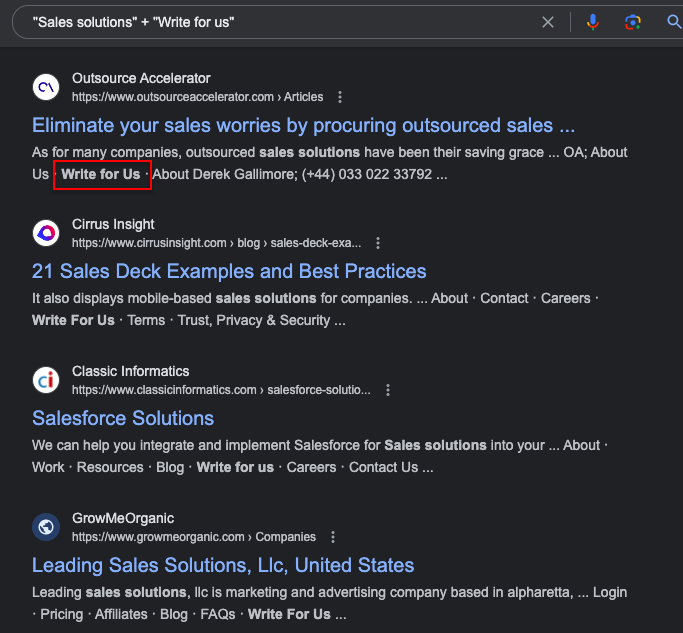
- Once you have a list of potential websites to guest post on, check each of their domain authority (DA) to understand if it’s a strong or a weak website. Target DAs above 50.
- Optimize your bio while posting guest blogs and link to your website.
- Don’t forget to write SEO-oriented text just because it’s a guest post. Follow SEO rules, such as adding keywords, optimizing images, linking to your most relevant pages, etc.
4. Engaging in social media promotion and influencer marketing for B2B visibility
B2B brands underplay social media for content promotion. But did you know social linking can also boost organic traffic sent to your website from social posts or comments?
Some tips for engaging in social media promotion and getting quality backlinks:
- Engage with your audience and other B2B companies in your niche by being active on major social media platforms like Twitter, LinkedIn, and Facebook.
- Repurpose website content as posts for social media and share them regularly.
- Make conversations with potential websites offering backlinking opportunities by commenting on their posts.
Once your social media posts gain traction, you can start sharing that you’re open to collaboration and build links with top B2B influencers in your niche. This way, you can reach wider audiences and increase brand awareness.
B2B SEO Analytics and Measurement
How do you know if your SEO efforts were successful and how each campaign performed? By measuring your SEO results. Let’s discuss.
1. Setting up tracking and analytics tools for B2B SEO performance measurement
The ROI of your SEO efforts can be best measured using analytical tools. One of the best and cheapest tools to measure your SEO performance and outcomes is Google Analytics.
Google Analytics helps you measure SEO metrics, such as organic traffic from search engines over a specific period. You can also track live data from your website and metrics like user demographics, user behavior, page bounce rate, etc.
Google Search Console is another tool by the search engine giant where you can monitor and track search engine results and actions, such as impressions, clicks, etc.
SEMRush, Moz, BuzzSumo, and Ahrefs are a few other popular and paid tools you can use to measure and improve your SEO results.
2. Monitoring key B2B SEO metrics
Key performance indicators (KPIs) or metrics for SEO help you monitor B2B SEO campaigns, assess progress, and evaluate overall performance and potential ROI.
The top SEO metrics a B2B SaaS company must track are keyword rankings, organic reach, click-through rate, customer lifetime value, cost per acquisition, conversions, and more.
Let’s understand their significance in measuring your B2B SEO initiatives’ success:
- Organic conversions: Tracking organic conversions is a foolproof way to measure the effectiveness of your SEO campaigns. You can use Google Analytics ‘conversion tracking’ feature to measure this KPI.
- Keyword rankings: Measuring this KPI lets you find out which keywords drive the most traffic to your sites and how. It can open up opportunities to optimize future keywords and improve page rankings.
- Customer lifetime value (CLV): Measuring CLV, i.e., an estimate of the total amount of profit from a customer, can help you decide where to allocate your SEO budget. This way, you can create tailored content and improve keyword targeting.
- Backlinks: Since backlinks are search engines’ top ranking factors, they consider them a key SEO metric. Measure the total number of backlinks, total number of linked domains, and number of links earned/lost.
- Organic traffic: Tools like Google Search Console best measure the amount of traffic to your website from organic methods. It’s the best way to see what works and what doesn’t and if you’ve outranked your competitors.
- Cost per acquisition: Measuring the cost per acquisition can expose any potential roadblocks your SEO campaigns may have. A high CPA indicates you’re spending more on content targeting incorrect keywords and reaching the wrong audience.
3. Conducting regular B2B SEO audits and identifying areas for improvement
Frequent B2B SEO audits shed light on where your company is headed and expose inefficiencies that are never too late to fix.
A regular technical B2B SEO audit can include checking the health of your robots.txt file, sitemap, schema markup, indexing, backlinks, and other on-page elements.
Similarly, a B2B SEO content audit can include analyzing keyword effectiveness, checking for duplicate content or broken links, etc.
4. Generating comprehensive reports to measure the impact of B2B SEO efforts
An SEO report is key to measuring the performance and ROI of every SEO activity or campaign. It offers a detailed view of your website’s SEO performance, hence making it an integral part of your marketing strategy.
Here’s a sample landing page report extracted using Google Analytics:

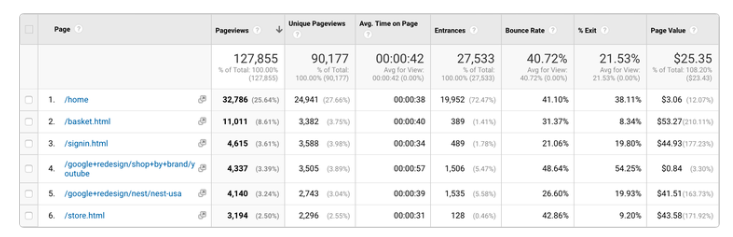
Sample demographics report that shows what countries contribute the most organic traffic:

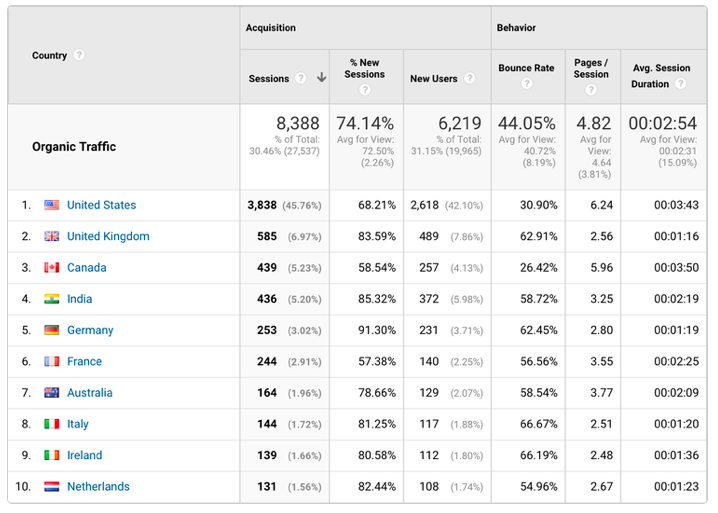
Reports like these let you track metrics at your fingertips and help tweak your future SEO campaigns and content strategy.
B2B SEO Best Practices and Case Studies
In this final section, you can find some actionable tips for an ultimate B2B SEO strategy and see how real B2B brands achieved immense growth with SEO.
Industry-specific best practices for B2B SEO success
Some extra tips for B2B companies to achieve optimal results through SEO:
- Experiment frequently – A/B test your SEO campaigns, content strategies, and formats. You’ve set up an SEO strategy once doesn’t mean you forget optimizing it. Experiment frequently and often to test and improve ranking. For example, different page titles, content formats, targeted keywords, etc.
- Learn from others – Learn from your successful competitors or other real-time B2B brands that successfully increased their organic traffic and conversions.
- Monitor the impact of small changes – No matter how small the change, ensure you monitor and measure its impact. For example, finding out if shorter headlines fare better than longer ones.
- Methodically invest in SEO scaling – Start slow before you go all in. Covering SEO basics and getting the content marketing strategy right should suffice to start on the right note.
Analyzing successful B2B SEO case studies and their strategies
Let’s find out how two B2B SaaS companies won SEO and what contributed to their success:
1. A Slack productivity app increased its organic traffic by 200% and conversion rates by 13%
The SaaS productivity tool dealt with an oversaturated market, finding building brand awareness quite challenging.
What worked?
- Using product-centric, SEO-led content marketing by building topical authority through problem-aware content, thorough research, and keyword gap analysis.
- Thoroughly understood the requirements of their target audience and ICP.
- Focused on 100 high-intent keywords for each content pillar.
- Built topical authority by publishing authoritative content regularly under two major pillars.
2. An HR-tech SaaS increased organic traffic by 127% and session time by 37%
The HR-Tech company published redundant content that affected organic reach and looked to streamline its SEO and content marketing efforts.
What worked?
- Understood what the target audience needed by analyzing real-time examples and use cases with the help of sales and customer support teams.
- Identified core content pillars and shortlisted keywords to boost SEO.
- Performed a thorough content audit and refreshed content to align with the new SEO and product-led content strategy.
Staying updated with evolving B2B SEO trends and practices
SEO is an ever-evolving space. Algorithms and tactics change monthly.
Keeping up with the latest B2B trends and SEO updates gives you a competitive edge and ensures your content remains relevant to search engines and users.
Follow reputable sources like news sites and top SEO blogs to keep up with the most recent SEO trends and best practices.
If saving time and effort is on your cards, consider working with an experienced B2B SEO agency like Contensify to fast track your SEO-led business growth.
Wrapping up
SEO for B2B SaaS companies requires extreme focus on customers’ needs, preferences, and challenges.
We’ve understood that a comprehensive B2B SEO strategy’s essentials include optimizing on-page, technical, and off-page SEO, building high-quality backlinks, executing a world-class content marketing strategy, and measuring performance.
Here are the main takeaways from this intensive guide:
- A solid SEO strategy is built on thoroughly understanding your target audience and buyer personas, researching high-intent keywords, and analyzing competitors.
- On-page SEO optimization aims to improve user experience and optimize on-page elements like meta descriptions, titles, and content with relevant keywords.
- Technical SEO involves optimizing your website’s speed and performance and maintaining proper XML structure.
- B2B SEO content marketing strategies must align with the user’s pain points and needs. Publish content that resonates with your buyers to increase organic website visits and ranking on SERPs incrementally.
- Link building is an important SEO strategy for building highly authoritative backlinks for B2B websites in your niche. Engage in guest blogging, social media promotion, and influencer marketing to spread your brand’s presence.
- Monitoring and measuring SEO KPIs is crucial in optimizing future campaigns and making the most out of your SEO-led content. Target metrics like conversions, organic traffic, keyword ranking, CAC, CLV, etc.
SEO strategy is not something you set and forget about. It needs continuous improvement, content optimization, and evolving with user needs to see the envisioned business outcomes.
That’s where an expert B2B SaaS content marketing and SEO agency steps in – meet Contensify.
Only a strategic and well-executed B2B SEO plan that aligns with your business goals can drive organic traffic, generate quality leads, and scale growth.
That said, with Google releasing product updates frequently, you can only survive the heat by continuously optimizing, monitoring, and adapting to ever-evolving algorithms and B2B industry dynamics.
Ready to get started with B2B SaaS SEO to fuel your organic growth?