Everyone in B2B SaaS is talking about AI prompts. Which prompts get you cited by ChatGPT, appear in Perplexity’s answers, or make Gemini’s shortlist.
The obsession makes sense. As AI search becomes a primary research channel, companies are racing to optimize for every prompt they can find. But that’s also why many AI visibility strategies fall short.
Prompts aren’t keywords. They’re checkpoints in a buyer’s journey. A prospect doesn’t ask one question and decide; they move from discovering a problem to comparing vendors to validating a decision, and each stage brings a different type of question with a different intent behind it. Chasing individual prompts misses that shift entirely.
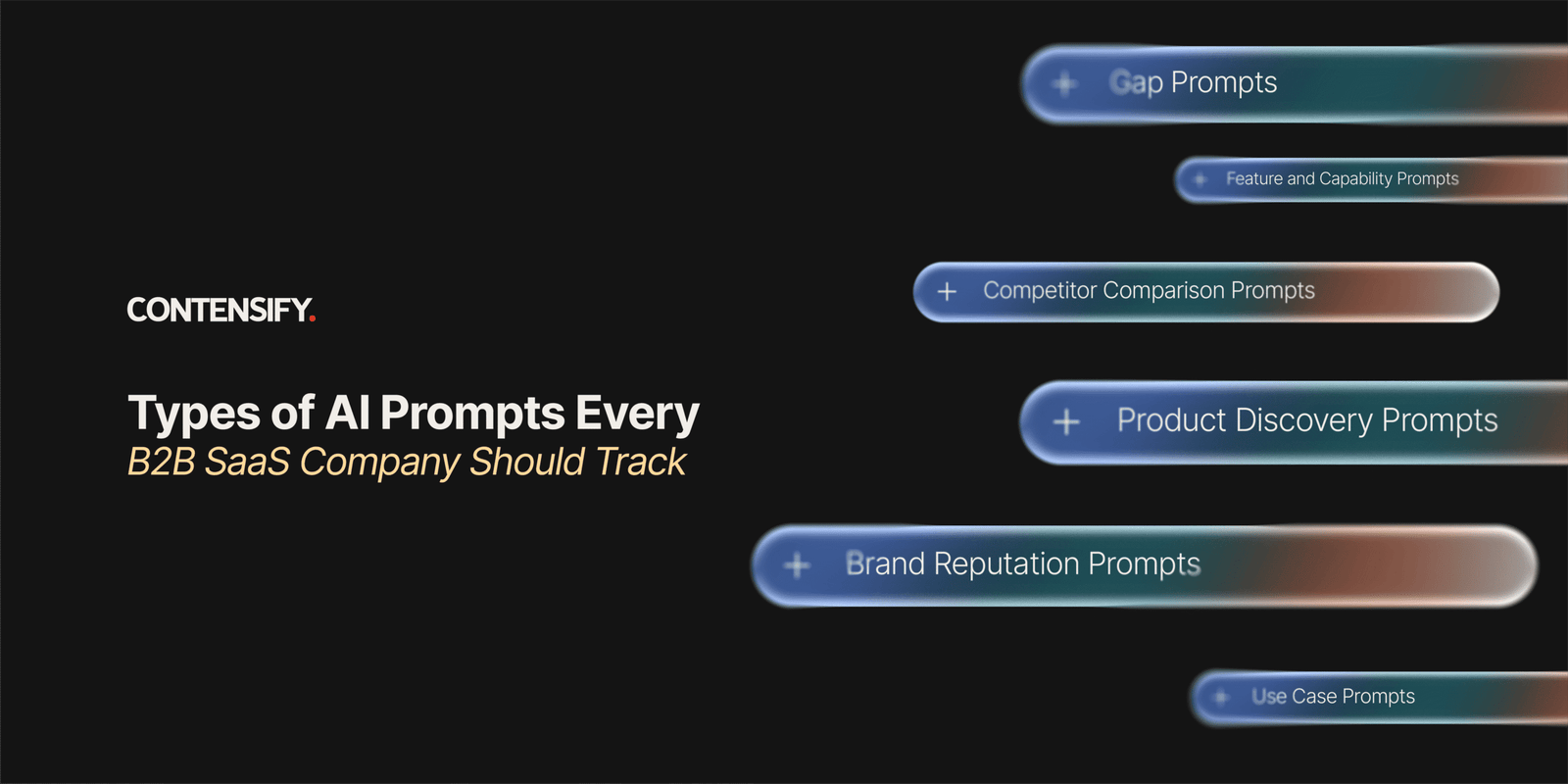
In this blog, we’ll break down the seven types of AI prompts every B2B SaaS company should be tracking and why each one matters.
Why Prompt Tracking Is Different From Keyword Tracking
Prompt tracking isn’t the same as keyword tracking.
In traditional search, users type a query, Google returns a ranked list of pages, and success is measured by where you rank. AI search works differently. Users ask conversational questions, often refining them with follow-up prompts, and AI models generate responses instead of displaying a list of links.
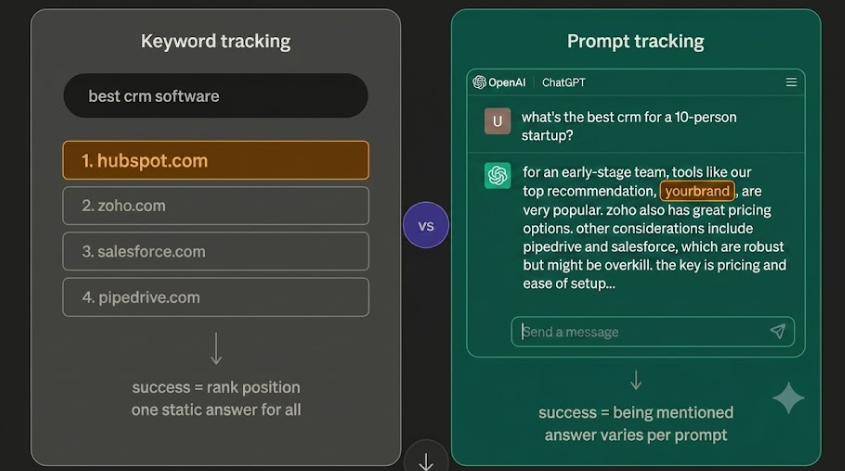
These responses are also probabilistic, meaning the same prompt can produce different answers over time. Your goal isn’t to rank #1 for every prompt. It’s to ensure your brand is consistently mentioned, recommended, and cited when buyers ask questions that matter.
That’s why tracking every possible prompt is neither practical nor useful.
Instead, focus on the buying conversations your prospects are having throughout their journey. Understanding these prompt categories provides a much clearer picture of your AI visibility and where opportunities exist to influence purchasing decisions.
The 7 AI Prompt Types Every B2B SaaS Company Should Track
Track these seven prompt types to understand where your brand appears across the entire B2B buying journey:
1. Product Discovery Prompts
These are the prompts buyers use when they know they need a solution and are actively searching for the right product. Since the intent is transactional, these prompts often have the highest commercial value.
For example: “What’s the best CRM for a bootstrapped startup with under 10 employees?”
Tracking these prompts shows whether AI considers your product a relevant solution during the discovery stage. If you’re not appearing here, you’re likely missing visibility at the most important point in the buyer journey.
2. Competitor Comparison Prompts
Once buyers have shortlisted a few options, they start using AI to compare products, understand differences, and decide which one fits their needs best. These prompts are where your positioning gets tested because AI determines how your product stacks up against competitors.
For example, a buyer might ask: “Which is better for ecommerce teams: Klaviyo or TargetBay?” or “What are the best alternatives to [Product Name]?”
Tracking these prompts helps you understand how AI differentiates your brand from competitors, what strengths it highlights, and whether your product is winning or losing important buying conversations.
3. Brand Reputation Prompts
Before making a purchase decision, buyers often turn to AI to validate whether a company is trustworthy. These prompts show how AI describes your brand, what information it highlights, and whether the overall narrative matches how you want to be perceived.
Questions like “Is [Brand] worth it?”, “What are the reviews of [Brand]?”, or “What do customers think about [Brand]?” show that the buyer is looking for trust signals before moving forward.
The challenge is that AI forms these answers from the information it can access across the web. If your customer stories, reviews, and brand mentions don’t clearly communicate your value, AI may create an incomplete picture of your company.
4. Feature and Capability Prompts
These prompts appear when buyers have moved beyond discovering solutions and are evaluating whether a product can solve a specific requirement. They are usually mid-funnel searches where users are looking for particular features, integrations, or capabilities.
For example:
- Does [Product] support WhatsApp automation?
- Which CRM has email automation?
- What Shopify apps offer wishlist functionality?
These prompts help you understand whether AI associates your product with the capabilities you want to own and whether you’re visible during the consideration stage.
5. Use Case Prompts
Not every buyer starts with a product category in mind. Many begin with a business outcome they want to achieve and use AI to explore possible solutions.
For example: “What’s the most effective way to reduce churn for a subscription-based SaaS product?”
These prompts are often overlooked because they don’t directly mention tools or vendors. However, they create a valuable opportunity to build topical authority and become associated with the problems your product helps solve.
Appearing in these conversations helps you understand whether AI connects your brand with the outcomes your buyers care about.
6. Industry and Persona Prompts
AI recommendations change based on who is asking and the context behind the search. A healthcare company, a B2B SaaS team, and a fashion brand may all look for similar solutions but receive completely different recommendations based on their specific needs.
These prompts are especially valuable for vertical SaaS companies because they show whether AI recognizes your product as a strong fit for your target segments and help uncover underserved markets where you can build visibility.
7. Gap Prompts
Gap prompts are the searches where your competitors are appearing in AI responses, but your brand is missing from the conversation. These prompts highlight where AI already sees demand, but your visibility hasn’t caught up yet.
Examples:
- Best customer support tools
- Affordable marketing automation software
- AI sales software
These gaps are valuable because they reveal opportunities for future content, positioning, and product improvements. By identifying them early, you can address visibility gaps before they turn into missed revenue opportunities.
Don’t Track Hundreds of Prompts, Track the Right Ones
Tracking more prompts doesn’t necessarily lead to better insights. Instead of monitoring every possible query, focus on the prompts that align with your product, target audience, and business goals.
Prioritize prompt categories based on their potential business impact, then review and refine your prompt portfolio as your product, positioning, and go-to-market strategy evolve. The objective is to measure the AI conversations that are most likely to influence buying decisions.
A Simple Prompt Tracking Framework
Instead of tracking prompts randomly, organize them into categories based on the insight they provide. Each category helps answer a different business question and reveals a different aspect of your AI visibility.
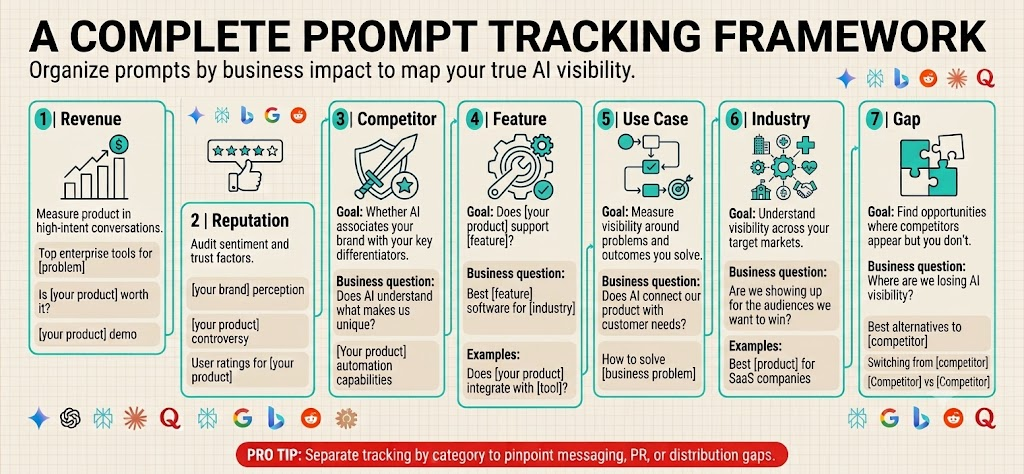
- Revenue Prompts: Measure whether your product appears in high-intent buying conversations.
- Reputation Prompts: Understand how AI describes your brand and whether it builds trust.
- Competitive Prompts: See how your product is positioned against competitors and alternatives.
- Feature Prompts: Track whether AI associates your brand with the capabilities you want to own.
- Use Case Prompts: Measure visibility for the business outcomes your product helps achieve.
- Industry Prompts: Evaluate how well your product is represented across your target industries and personas.
- Gap Prompts: Identify important conversations where competitors appear but your brand doesn’t.
Track each category separately to see different insights and build a more complete picture of your AI visibility.
Conclusion
AI search is changing how buyers discover and evaluate B2B SaaS products. The brands that succeed will be the ones that understand which conversations matter and build visibility around them.
Prompt tracking is just the first step. The real advantage comes from turning these insights into better content, stronger positioning, and consistent AI visibility.
At Contensify, we help B2B SaaS companies identify AI search opportunities, create citation-worthy content, and improve visibility across AI platforms.