Personal AI agents such as Meta’s Muse and OpenAI’s Dots can take a person’s request and carry it out on the web. They can research products, fill in forms, and, in some cases, complete purchases. Muse is already available to adults in the US and Canada.
For B2B SaaS, this raises a practical question: what happens when an AI agent builds the initial shortlist of software tools instead of the buyer doing it themselves? Your website may no longer be accessed only by potential customers and search crawlers. It may also be evaluated by an agent acting on a buyer’s behalf.
In this blog, we’ll explore seven ways AI agents like Meta Muse and OpenAI Dots could change B2B SaaS marketing and SEO, and what businesses can do to prepare.
7 Ways AI Agents Could Change B2B SaaS Marketing and SEO
Here are seven ways AI agents could reshape how B2B SaaS buyers discover, compare, and evaluate software, and what each change means for your marketing and SEO strategy:
1. SaaS Discovery Will Move Beyond Traditional Search
Buyers may soon describe their entire software requirement in one request instead of running several keyword searches to compare options. For example, someone looking for a CRM might ask an AI agent to find a solution under $100 per month that integrates with Slack and suits a sales team of 15 people.
Instead of matching the request to a single keyword, the agent can evaluate each product’s available information against these specific requirements. If your website clearly states your pricing, integrations, target audience, and features, it gives the agent concrete information to assess your product against the buyer’s needs.
However, this doesn’t make traditional SEO irrelevant. Agents may still discover websites through search engines or by searching for specific brands, so rankings and keyword research still matter.
So, what should you do? Clearly state who your product is for, what it does, which tools it integrates with, and how much it costs on your key pages.
2. Product and Competitor Comparison Pages Will Become More Important
When buyers ask AI agents to compare SaaS products, detailed comparison pages help them assess options without visiting every website individually. Features, pricing, integrations, limitations, and differentiators provide a clearer picture of how each tool meets their requirements.
For SaaS brands, the focus should be on making these comparisons genuinely useful. Explain how your product differs from competitors, which use cases it supports, and where alternatives may be a better fit.
Neither Meta nor OpenAI has publicly documented how their agents select businesses, so no particular page structure guarantees visibility. Audit your comparison, alternatives, and pricing pages to ensure they offer accurate, relevant information that helps buyers make informed decisions
3. Website Accessibility Will Affect Agent Interactions
An AI agent’s ability to interact with your website depends partly on how it reads and interprets the page. Meta says Muse’s browsing agent uses the accessibility tree rather than the raw DOM, making page structure an important part of how the agent understands available content and controls.
How agents read a page
The accessibility tree is a structured representation of a page’s content and interactive elements, built from information also used by screen readers. If that structure misses important details, an agent may misinterpret what it sees. For example, in the source’s test, a size picker showed six sizes crossed out to a person, but the accessibility tree presented seven identical buttons without indicating which sizes were unavailable.
Quick fixes
To help agents interpret your website correctly:
- Maintain a logical heading order so content is easy to navigate.
- Use descriptive link text that explains where each link leads.
- Label form fields so agents can identify what information is required.
- Give buttons clear names that describe their actions.
- Keep key facts, including prices, in visible HTML text rather than relying solely on images or other formats.
Structured data can still help search engines understand your content. However, because it was absent from the accessibility tree in the cited test, important product details should also appear in visible page text.
4. Product Documentation Will Become a Marketing Asset
AI agents could use product documentation to check whether a SaaS solution meets a buyer’s technical and operational requirements before a sales conversation. Different pages can answer specific questions:
- Integration pages: Does the product work with our existing tools?
- API documentation: Can it connect with our systems and workflows?
- Implementation guides: How complex is setup, and what resources are required?
- Security pages: Does it meet our security and compliance requirements?
These questions often come up late in the buying process, sometimes after a sales call. However, an agent researching software may seek these answers much earlier to narrow down the options. While this is a reasoned extension of agent behaviour observed in ecommerce, it highlights a potential opportunity for B2B SaaS brands.
Keep documentation public where possible, organise it with clear headings, link it from your main navigation, and explain technical details in plain language. This helps buyers and AI agents assess your product without unnecessary barriers.
5. Conversion Paths Will Need to Accommodate AI Agents
Demo bookings, free trials, pricing calculators, and sign-up forms may need to work for both human visitors and AI agents acting on their behalf. However, these flows can break when form fields are unlabelled, steps are hidden, controls rely on visual cues, or custom widgets lack accessible names.
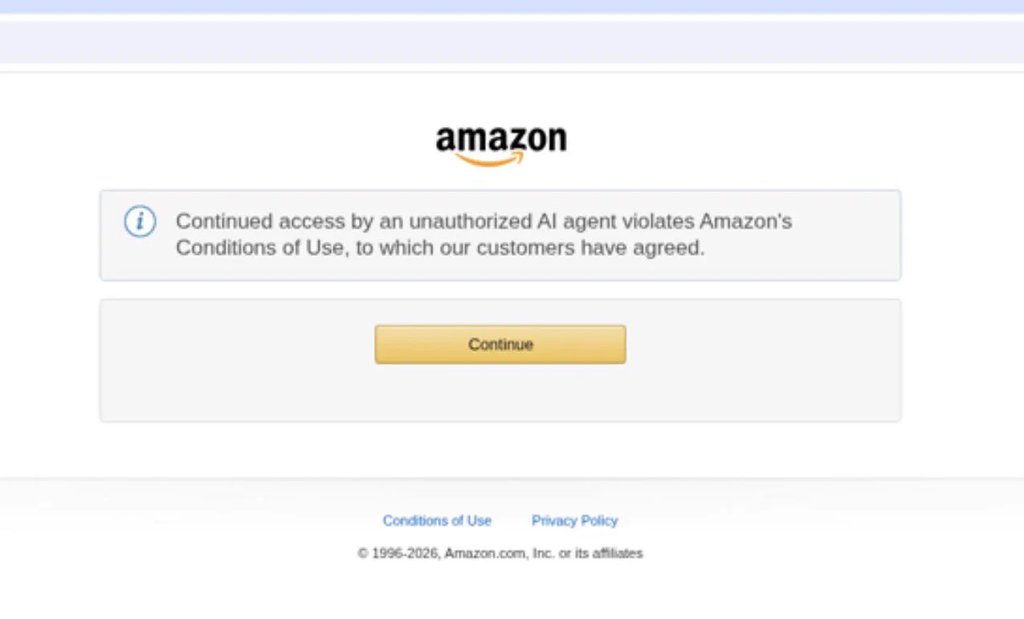
There is also a strategic decision to make: do you want AI agents interacting with your website at all? The source notes that Amazon deliberately blocked Meta Muse through its terms of service. Your business may choose a different approach, but leaving the decision unreviewed effectively lets your default settings decide.
For developers, the starting point is straightforward: ensure every field is labelled, every button has a clear name, and every step can be completed without a mouse. Once these changes are in place, the next challenge is measuring whether agent activity actually contributes to your marketing and conversion results.
6. Traditional Analytics May Miss Parts of the Buyer Journey
AI agents could create gaps in your marketing reports, making it harder to understand how buyers discover and evaluate your product before converting.
What your reports may not show
According to the source, neither Meta nor OpenAI publishes a distinct user agent for these browsing agents. As a result, agent-driven visits may appear to come from the customer’s browser. Similarly, purchases completed within an AI app may never generate a visit to your website. GA4’s AI Assistant channel relies on referral information, so it can only capture visits when the app passes that data.
What to monitor
- Direct and unattributed traffic: Watch for unexplained changes that your existing tracking cannot account for.
- AI assistant referrals: Track visits from AI platforms wherever referral data is available.
- Branded search: Monitor changes in searches for your brand to spot shifts in buyer interest.
- Demo form source fields: Ask prospects how they discovered your business to gather additional attribution data.
Usage and purchase figures for these agents are not yet publicly available, so expect gaps in measurement. The goal is to monitor these signals and recognise potential blind spots, not to assume every unexplained visit comes from an AI agent.
7. SEO, Product and Engineering Teams Will Need to Work Together
Preparing for AI agents requires input from multiple teams. SEO owns content and page structure, engineering manages forms and interactive controls, product oversees user workflows, and security handles bot access rules.
The challenge is that security rules designed to block scrapers could also prevent customer-facing AI agents from accessing your website. SEO and marketing teams should therefore be involved when these rules are reviewed.
Assign one owner to each area and schedule a joint review of the pages where buyers research, compare, and purchase software. This helps ensure your content, website functionality, and access policies work together as agent-driven interactions become more common.
Getting Your SaaS Site Ready for AI Agents
Preparing your SaaS website for AI agents starts with clear comparison pages, accessible content, useful product documentation, and conversion paths that work for both buyers and agents. Your measurement should also account for the gaps in tracking agent-driven activity.
Start with the pages where buyers compare solutions, look for technical information, and take action. These are the areas where clear content and a well-structured website can make the biggest difference.
At Contensify, we help SaaS businesses strengthen their content and SEO through comparison pages, documentation-led content, and website structure audits.