AI-generated content is shaking up B2B SaaS marketing. Some say being able to mass produce content drives amazing results. Others think it’s just noise.
The debate is heating up. Can businesses really trust AI to create high-quality content? Or is it just another shortcut that leads to mediocre results?
Take VMWare, for example. Their team uses Jasper to generate original content across marketing channels. Rosa Lear, director of product-led growth, says it has freed up writers for deeper research, ideation, and strategy.
But the opinions are not all rosy. More companies are now hiring experienced copywriters to undo garbage other writers have submitted using AI writing tools. A quick search on LinkedIn shows increasing demand for human writers.
Consumers are skeptical too—62% say they’re less likely to engage with AI-generated content.
The lines are blurry. AI content has real advantages, but also clear limitations. So, where should B2B SaaS businesses stand?
This guide will break it down to help you decide if AI content is an asset or a risk for your brand.
Understanding AI-Generated Content
For this blog, when we say “AI-generated content,” we’re talking about content created almost entirely by AI—with little to no human oversight.
It’s the kind of content that comes from tools like Jasper, ChatGPT, and Copy.ai. Users enter a simple prompt and let AI do the rest.
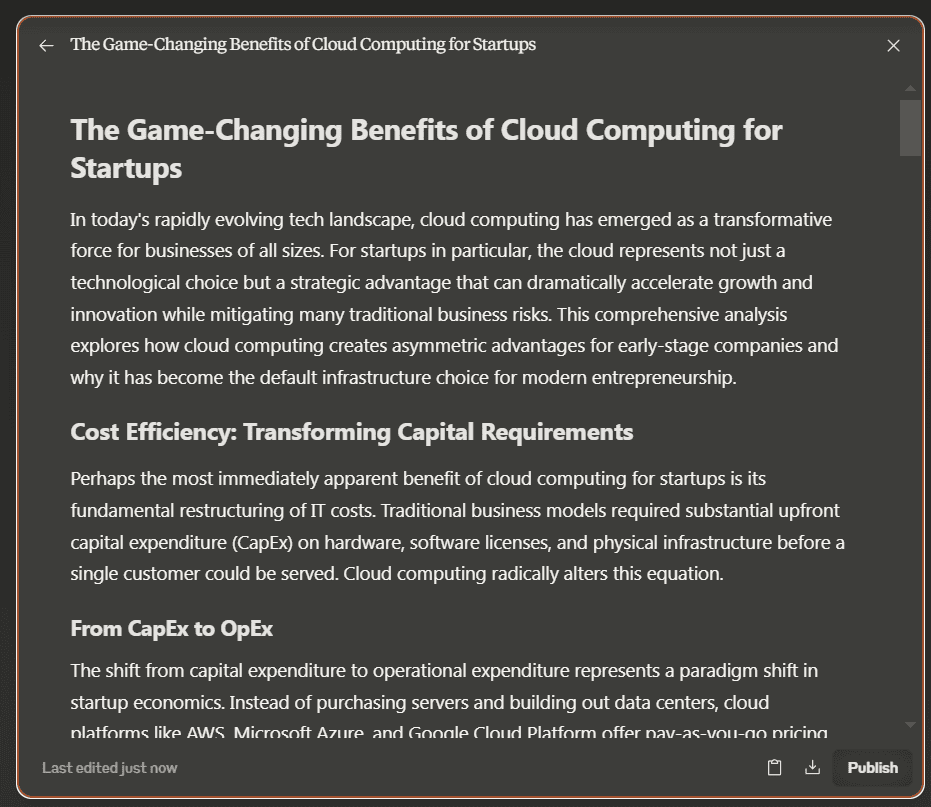
Here’s how it works: A marketer types in a prompt like “Write a blog on the benefits of cloud computing for startups.” They might also include some top level insights and the sections to write.

Within seconds, AI generates what looks like a complete article.
Need a social media post? Just enter “Create a LinkedIn post about cybersecurity trends in 2024 and pitch our solution.”
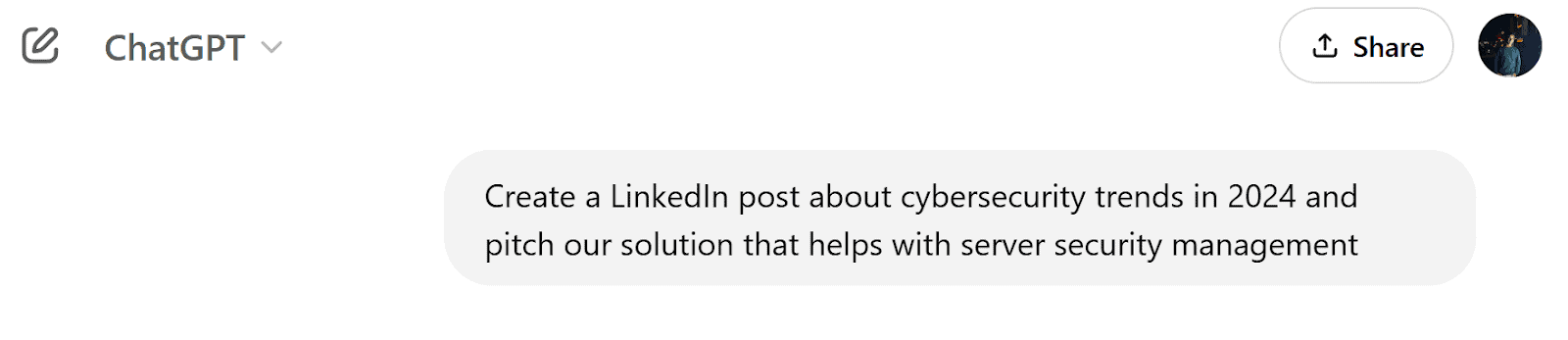
AI will churn out a draft in seconds.

But take a close look at the response above — how likely are you to engage with such LinkedIn posts? Most won’t even read.
These tools are trained on massive datasets and predict words based on patterns. They can mimic different tones and formats, making content creation incredibly fast.
But speed is not a north star marketing metric.
AI content is generic without human input. It misses brand nuances and in many cases even spreads misinformation. And that’s where the debate begins.
Advantages of AI-Generated Content in B2B SaaS
Using AI to generate content is not all bad. Let’s explore some of the benefits of AI content before you start thinking we’re entirely against it.
1. Efficiency and Speed
AI can produce large volumes of content quickly, saving time for marketing teams. According to Semrush, 36% of marketers who use AI spend less than one hour writing a long-form blog post, compared to 38% of non-AI users who take 2-3 hours.
“What we have seen with our in-house writers is that the time it takes them to wrap long-form pieces has gone slightly lower or stayed more-or-less the same, but the quality of their final drafts has drastically improved—more research, more insights, and sometimes even perspectives on industries that subject matter experts miss in the briefs.” — Vanhishikha Bhargava, Founder and B2B Strategist at Contensify
2. Cost-Effectiveness
By automating content creation, AI reduces the need for extensive human resources. This can lead to significant cost savings, especially for small businesses. Around 67% of small business owners and marketers use AI for content marketing or SEO.
3. Personalization
AI can analyze customer data to create personalized content to help you improve engagement metrics. This approach can improve user experience and conversion rates. According to HubSpot, 77% of marketers agree that AI helps them create better, more personalized content.
4. Consistency
AI ensures uniformity in tone and style across various content pieces. This consistency strengthens brand identity and trustworthiness. Semrush found that 79% of businesses report an increase in content quality thanks to AI.
5. Scalability
AI enables easy scaling of content production to meet growing demands. Whether it’s expanding to new markets or launching products, AI supports rapid content creation. This scalability is crucial for B2B SaaS companies aiming for growth.
Integrating AI into your content strategy will definitely help your business. In fact, 68% of businesses see an increase in content marketing ROI thanks to using AI.
Disadvantages of AI-Generated Content in B2B SaaS
The problem begins when AI does everything. Let’s look at some of the key drawbacks.
1. Lack of Creativity and Originality
On a very broad level, AI writing assistants work on the concept of word nearness.
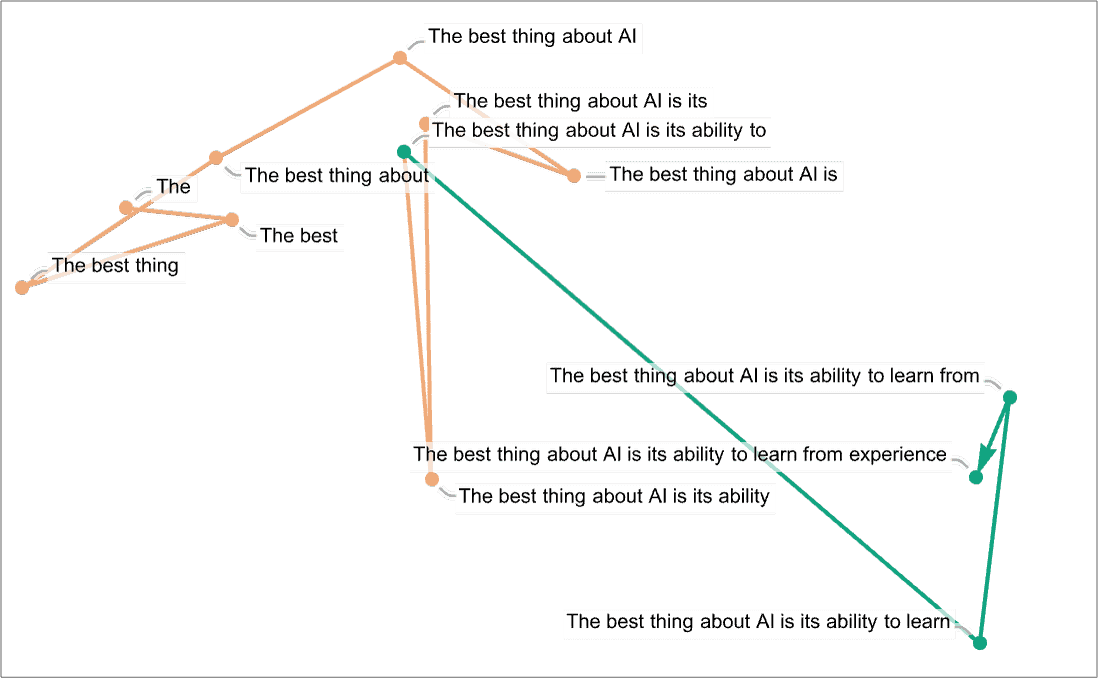
It works by analyzing existing data and predicting what comes next. The output you get is a function of the words that have the highest “probability” of coming next — based on your prompt and then on the text it has generated so far in the response.

It doesn’t truly “think” or create new ideas.
What happens when this probability model is applied over and over again to at each step adding the word that has the top probability?

The response that comes out soon gets rather confused and repetitive. And that’s the last thing you want. Because AI can now avoid repetition by using the randomness function — the overall output quality just fabricate new insights.

B2B SaaS companies need new, thought-provoking content to stand out. AI can assist, but it struggles to produce groundbreaking insights or fresh perspectives.
2. Potential for Inaccuracies
AI tools sometimes generate incorrect or misleading information, known as “hallucinations.” This can be a big problem in B2B SaaS, where accuracy is critical.
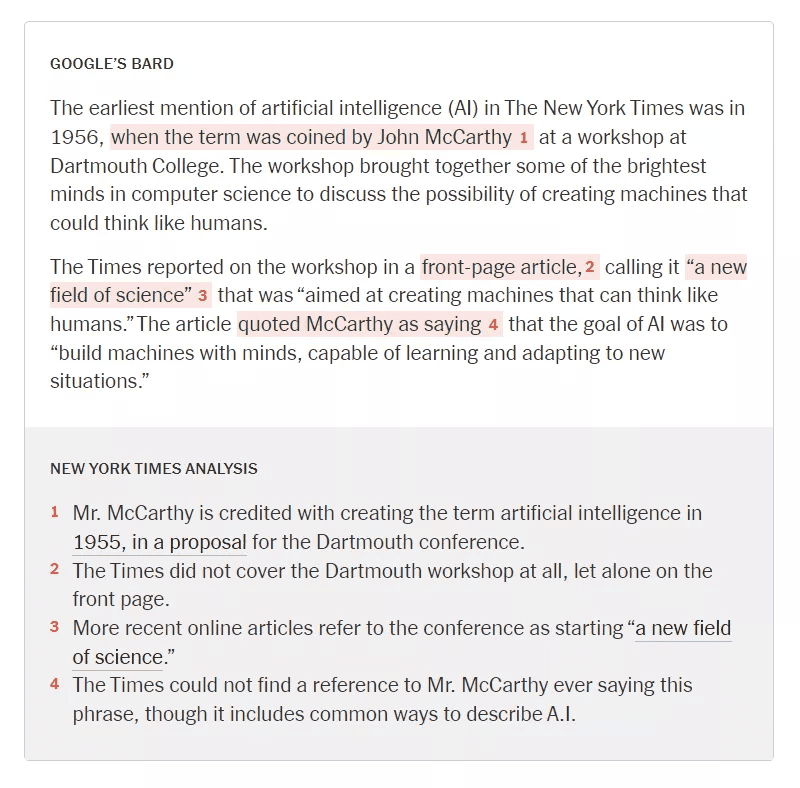
Without human oversight, AI may pull outdated facts, misinterpret data, or fabricate details. Relying solely on AI can lead to errors that hurt credibility.
3. SEO and Quality Concerns
Search engines prioritize valuable, well-researched content. AI-generated pieces can lack depth, making them less useful for readers and potentially harming SEO rankings.
Google’s evolving algorithms now focus on “helpful content,” meaning AI-driven articles stuffed with keywords won’t perform well without proper refinement and fact-checking.
And HubSpot’s 80% loss in organic traffic should be enough to convince you that AI is really helpful, all-AI content is not.

Google will come after you in 2025 if you’re mass-publishing AI content. The SEO-reports of “fairly steady” sites are saying the same thing.
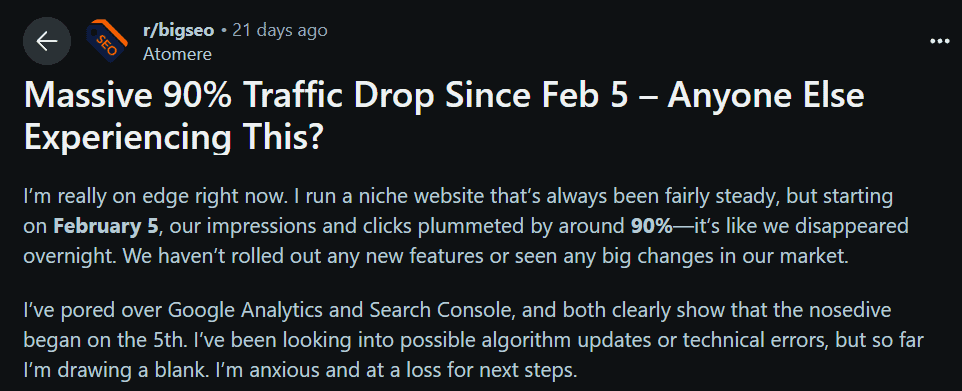
The concern of the Reddit user above is not an exception. This is the norm — Google is penalizing sites with thin AI content, programmatic SEO, and automated blogs.

And this is what your organic traffic chart is going to look like after imposed penalties.

“AI can be predictive and assist with research, but it lacks the depth and nuance of someone actively engaged in the industry. AI can then refer to past knowledge and combine it with your fresh insights to give you a more complete picture of the present—but it doesn’t get a vote on how consumers will behave today. Even if you add the web-search feature, the insights are still not original. You are still not adding value. And it’s still just noise. That’s why I always say, “use AI to enhance your content and know when to rely on human expertise to add real value and originality.” — Navneet Jha, Content Marketer at Contensify.
4. Ethical and Authenticity Issues
AI-written content can feel robotic. B2B buyers want real, human insights—not just well-structured text. Overuse of AI can make brand messaging impersonal, reducing audience trust.
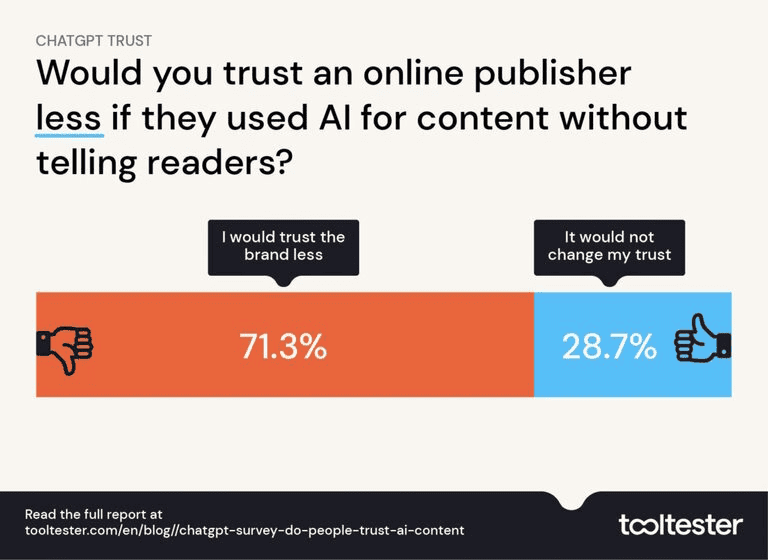
Transparency is also a concern. If businesses publish AI content without disclosure, it may raise ethical questions about authenticity. And the moment you disclose it’s AI content, it stops working.
Our Honest Opinion: Should You Use AI Content for B2B SaaS Marketing?
“When anyone can use it, AI itself is not a competitive advantage—it’s the people behind the tools who know how to maximize them who will differentiate creative content both now and in the future.” — Josh Campo, CEO, Razorfish
AI is just a tool. How you use it makes all the difference. Let’s break down why relying solely on AI-generated content isn’t the best strategy for B2B SaaS marketing.
Who’s Really Telling You AI Content is Great?
Search for “AI content for SEO,” and you’ll find plenty of articles saying it works wonders. But who’s writing them?
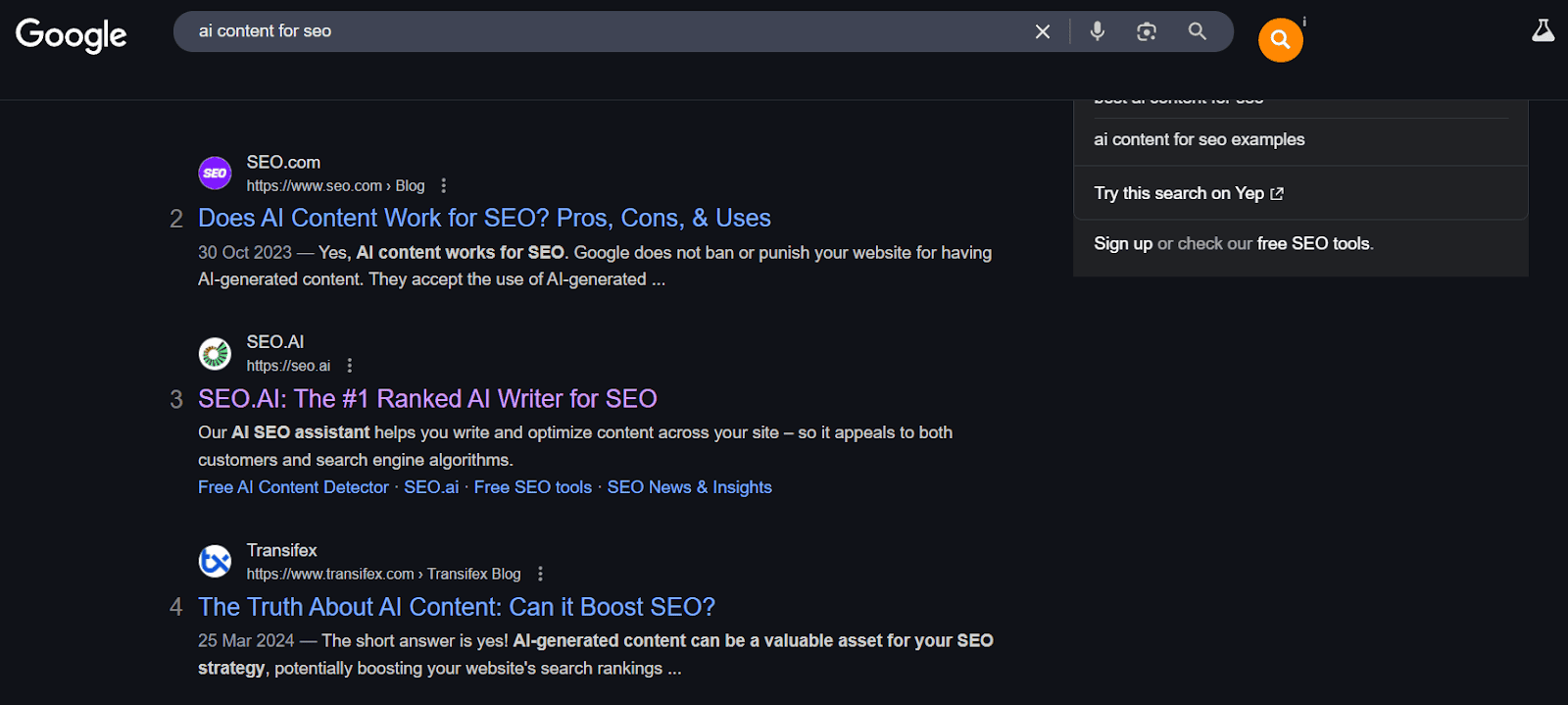
AI content platforms and SEO agencies. Why? Because they want you to use AI so they can sell their tools or services. That’s not objective advice.
AI-generated content isn’t bad, but think about it practically. Let’s say you need a product guide for your SaaS platform. You ask ChatGPT to write it, copy-paste it, and publish it. Will your customers actually find it useful? Probably not. AI doesn’t know your product inside out. It gives you a general template, not an accurate step-by-step guide. The failure here isn’t AI—it’s the lack of original input.
Forget AI Detectors. Focus on Value.
There’s a lot of talk about AI detection tools. But let’s be real—AI content will keep improving, and in a couple of years, detection won’t even matter.
What matters is whether your content provides value.
Should you mass-produce AI content just because it’s easy? Absolutely not. AI-generated text often has subtle errors, redundancies, and lacks depth.
Fixing those mistakes takes as much effort as writing it yourself. You’ll also find repetition—same points, different words—making your content feel bloated and generic.
Google’s Not the Only One Reading Your Content
Yes, Google penalizes low-value, repetitive content. But that’s not the main issue. The real problem is your audience. They’re the ones reading it.
If your content is just a reworded version of the top three search results, why should they choose you?
People don’t engage with content unless it hooks them. If your AI-generated blog feels generic, stuffed with filler sentences, and lacks original thought, readers will bounce.
Your traffic might look fine, but conversions will drop.
What About Target Audience with High Cognitive Inertia?
Some audiences are hard to convince. We see this in B2B SaaS all the time. These buyers aren’t easily swayed by AI-generated fluff. They need depth and sometimes even emotions on display.
“Potential customers with high cognitive inertia don’t just need facts—they need a shift in perspective. Even the most well-researched AI-generated content won’t move them toward a purchase if they’re resistant to change. Expecting AI alone to drive conversions is a flawed notion. You need human-driven content to challenge beliefs, build trust, and create emotional connections. And content alone isn’t enough—you need precise targeting, the right messaging, and the very granular-level solution plugging. Only when all these elements align does content truly drive conversions. We are still very far from the day when AI can get all of this right.” — Vanhishikha Bhargava, Founder and B2B Strategist at Contensify
AI doesn’t play on emotions. It can’t create the kind of persuasive content that nudges a buyer toward a decision.
If AI floods the internet with the same information in different words, we’re just repeating the SEO tactics of 2010—writing for keywords instead of value. The internet becomes cluttered with recycled content. And that’s bad for search, bad for AI models, and bad for your brand.
AI as an Assistant, Not the Writer
AI can speed up the writing process. It can help with ideas, outlines, and drafts. But it shouldn’t be writing your final customer-facing content.
AI content doesn’t convert. It lacks the human touch that builds trust and moves prospects down the funnel.
Sure, it costs less upfront. But if it doesn’t bring in conversions, it’s just wasted investment.
Human-written content—especially from experienced marketers—does more than inform. It persuades. It tells a story. It builds connections. And that’s when your content strategy stops being an expense and starts generating real returns.
Best Practices for Integrating AI-Generated Content
If you want to use AI for content, keep these best practices in mind to ensure you traffic doesn’t tank in one day and those who visit actually read and move forward in the sales funnel:
- Human Oversight: Always review AI-generated content for accuracy, brand voice, and authenticity before publishing.
- Combine AI with Human Creativity: Let AI help with structure and efficiency, but add human insight, storytelling, and strategy.
- Continuous Monitoring and Optimization: Regularly track engagement, update outdated AI-generated content, and refine messaging.
- Outsource to Subject Matter Experts: Work with experienced copywriters or agencies to ensure high-quality, authoritative content.
- Customize AI Prompts: Provide detailed, specific prompts to guide AI toward more relevant and useful outputs.
- Avoid Over-Reliance on AI: Use AI as an assistant, not a replacement, to maintain unique perspectives and industry expertise.
- Test and Iterate: A/B test AI-generated content against human-written versions to see what resonates best with your audience.
Contensify Can Help: SEO Content That Works for Readers as Much as Search Engines
At Contensify, we know that great SEO content is meant for both rankings and engaging your audience. That’s why we strike the right balance between AI efficiency and human expertise.
Our writers use AI to speed up research and ideation, but AI never delivers the final draft. Every word is carefully picked to be as valuable to the reader as it is to the search engine.
We ensure that you:
- Publish fewer but better articles
- Publish content with insights AI can’t create
- Build real authority, not just rank for traffic
We don’t believe in stuffing content with keywords or jargon. Instead, we break down complex concepts into easy-to-read, insightful pieces that resonate with your target audience.
This not only makes for a better reading experience but also improves SERP visibility—because well-researched, reader-friendly content performs better.
Want SEO content that informs, engages, and converts? Get in touch with us today.