Asana didn’t build their SEO strategy around their product. They built it around their customers’ jobs.
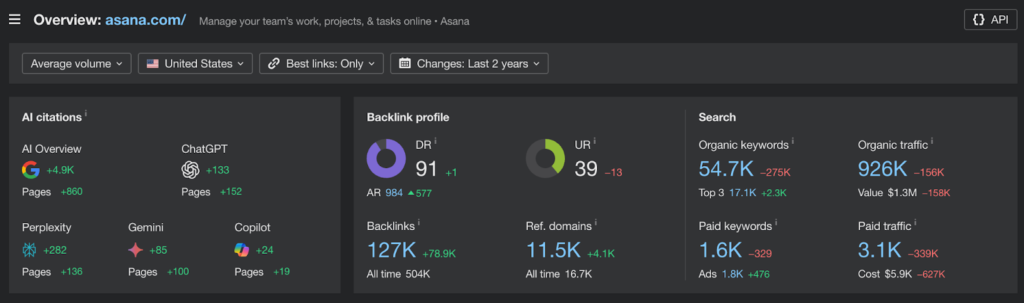
Most SaaS companies write about features. Asana writes about SWOT analysis, Agile methodology, and the Eisenhower Matrix, the frameworks their ideal customers already use every day. That one insight has compounded into an organic acquisition engine generating over 4 million monthly visits, worth over $5M in equivalent paid traffic. With a Domain Rating of 90 and their content now gets thousands of citations on ChatGPT, Perplexity, and Google AI Overviews.
This breakdown covers exactly how they did it: the keyword strategy, content architecture, technical implementation, and what any SaaS company can take from the playbook.
Let’s dive right in!
The Keyword Strategy That Owns Every Stage of the Funnel
Asana targets roughly 54,700 keywords in the U.S. alone. What makes that number impressive isn’t the volume, it’s the precision. Each keyword cluster maps to a distinct stage of the acquisition funnel, from first-time awareness to final purchase decision.
1. Top of Funnel: Rank for What Your Buyers Already Search
Asana’s highest-traffic pages have nothing to do with Asana. They’re educational guides built around the frameworks and methodologies their buyers use throughout their workweek.
Their page on “agile methodology” pulls over 80,000 monthly searches and ranks #1.
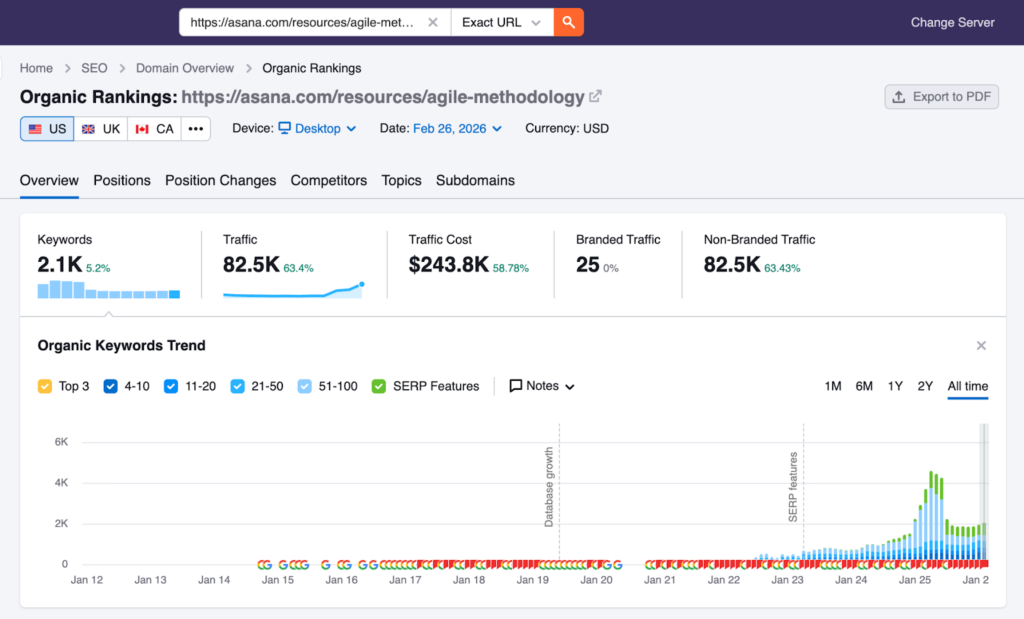
“SWOT analysis,” “Eisenhower Matrix,” and “Pareto Principle” all hold the top position for their respective terms. Their “executive summary examples” page ranks for 1,400 keyword variations and sits at #1 for a term with 28,000 monthly searches.
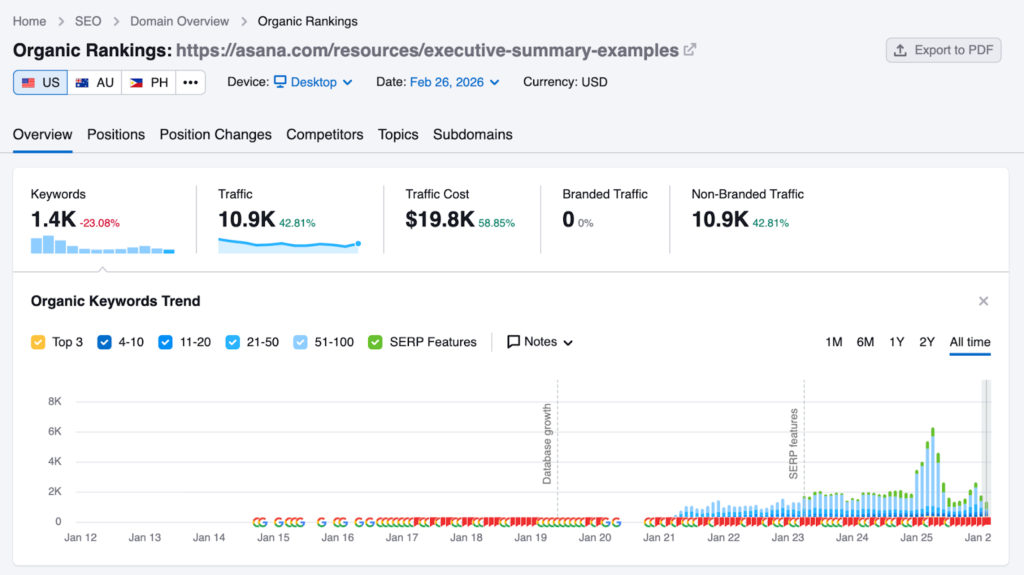
These aren’t product queries. They’re operational queries typed by managers, directors, and strategic buyers who have never heard of Asana or who aren’t thinking about project management software when they search.
Asana shows up anyway, answers their question, and earns the first impression.
2. Middle and Bottom of Funnel: Go After Purchase-Adjacent Searches
Once a buyer knows what they need, Asana is there too. They rank for 6,300 keywords related to “project management,” 452 variations of “project management software,” and 418 keywords tied to “task management.”
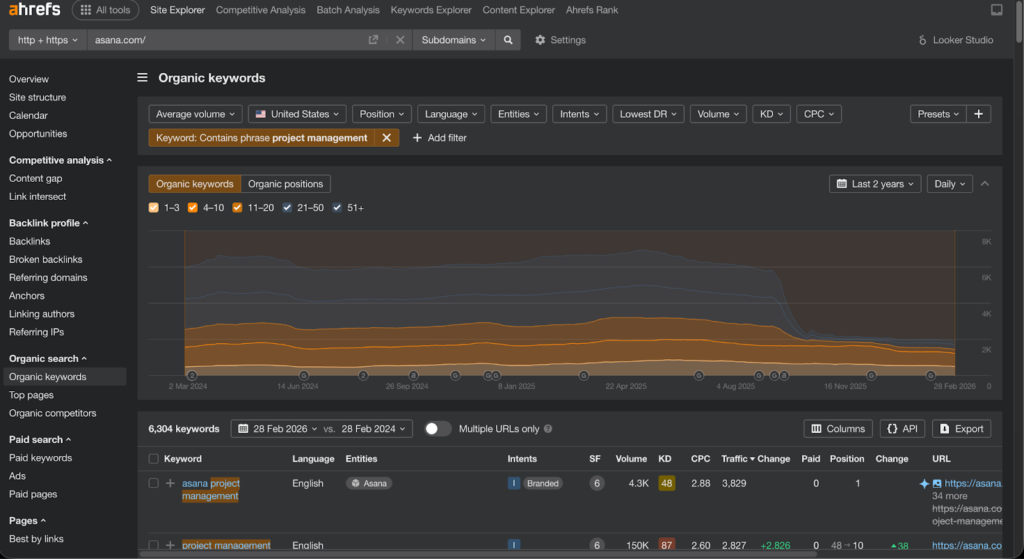
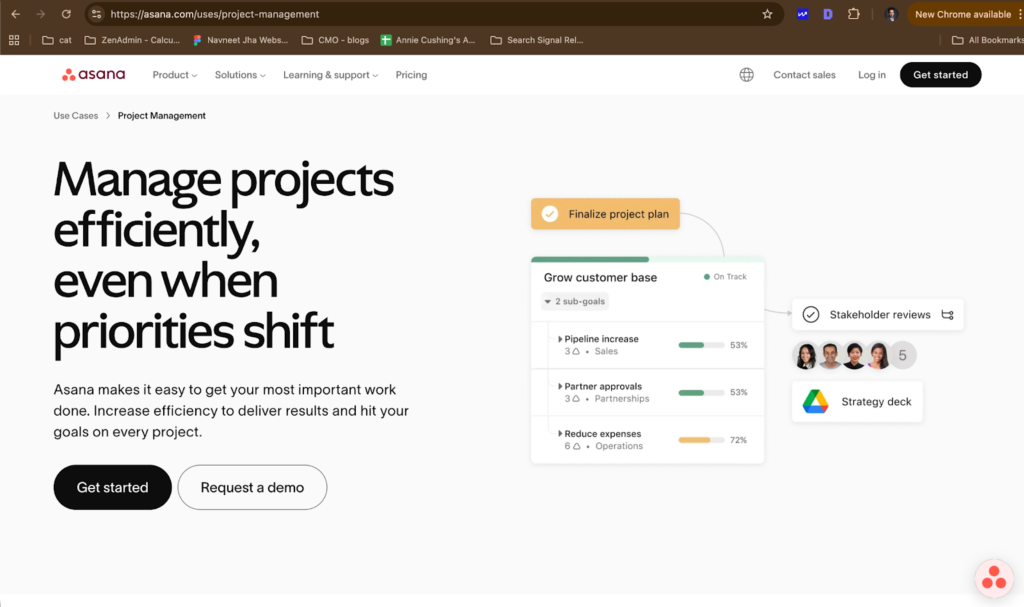
Dedicated use-case pages do the heavy lifting here. Their /uses/project-management page holds position #5 for the head term “project management,” and /uses/task-management captures task management traffic at scale.
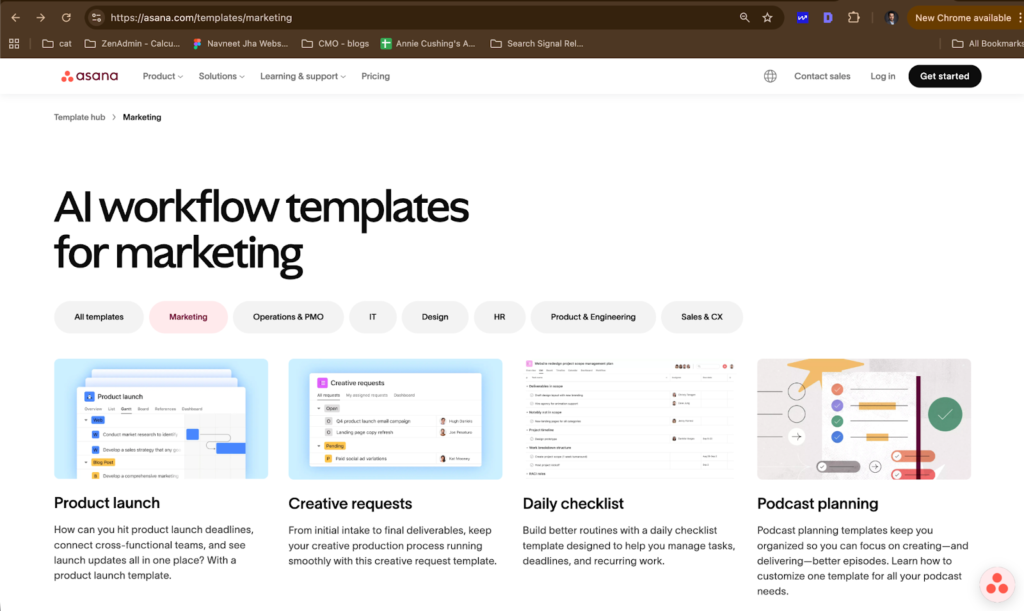
Template pages layer on top of this, targeting “[topic] + template” long-tail patterns across dozens of categories.
3. Bottom of Funnel: Own the Decision Moment
When a buyer is ready to choose, Asana has 12+ dedicated comparison pages under /compare/ targeting searches like “Asana vs Monday.com,” “Asana vs Trello,” “Asana vs Jira,” and “Asana vs ClickUp.” Most rank on page one.
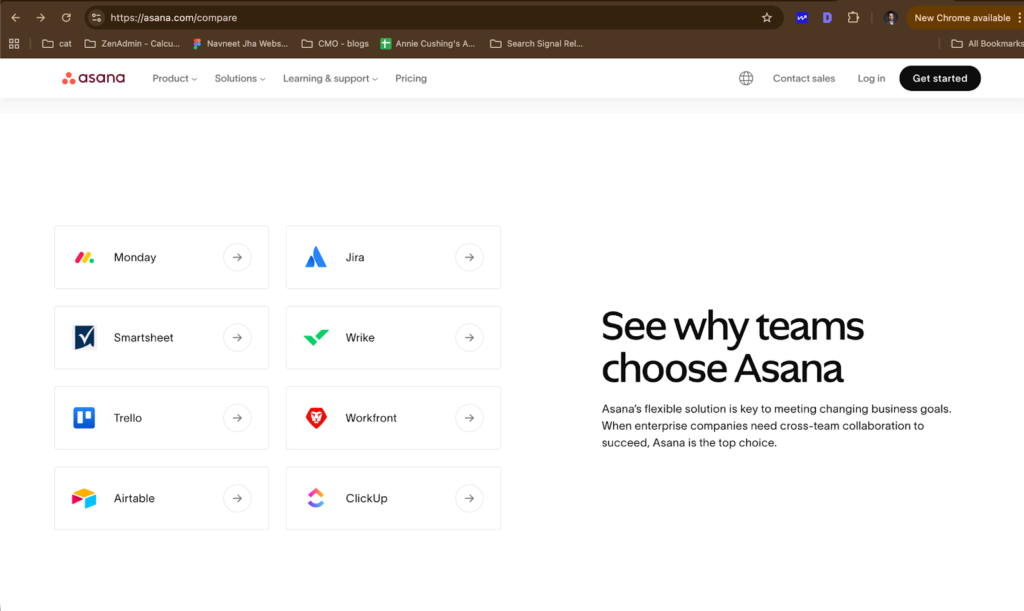
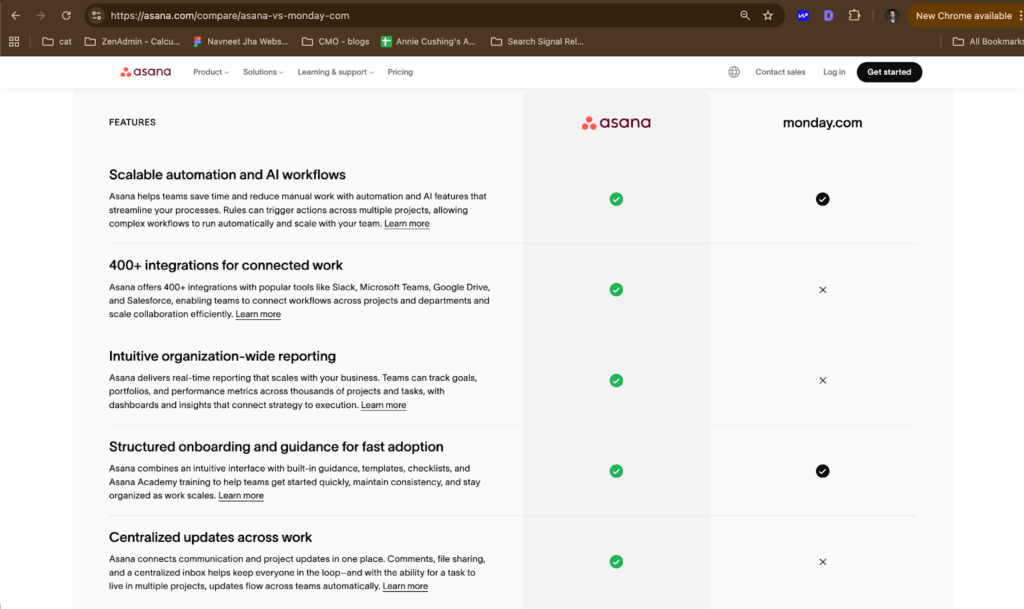
Every comparison page follows the same structure: a clear positioning headline, a feature comparison grid, customer testimonials from companies like Zoom and Gojek, analyst recognition from Forrester and Gartner, and a migration CTA. The format is consistent enough to build trust and specific enough to convert.
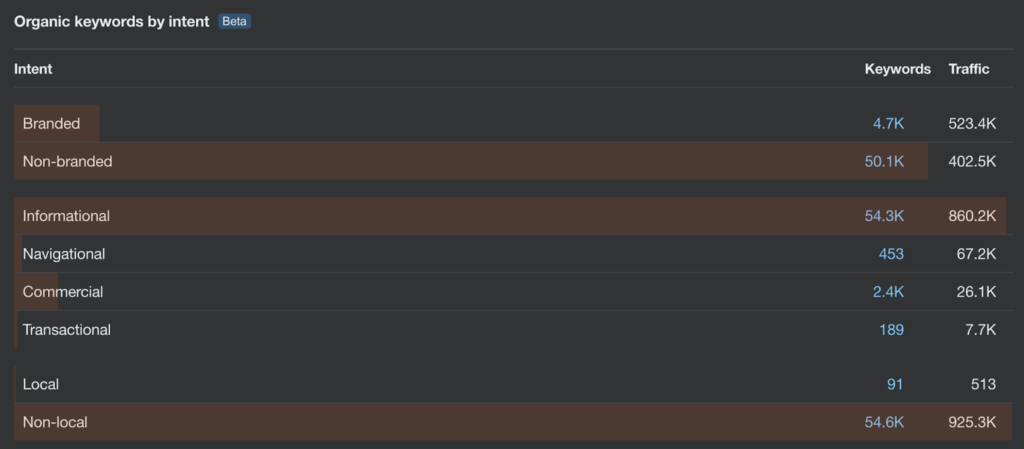
The result is full-funnel coverage with no gaps. We dug deeper into the reports and found that informational queries drive 860,200 visits per month, branded queries bring 532,400, navigational queries deliver 67,200, and commercial queries contribute 26,100.
A Content Architecture Built on Four Pillars and Programmatic Scale
Most SaaS companies have a blog. Asana has a system. Their site is a deliberately segmented architecture where every content type serves a specific SEO function.
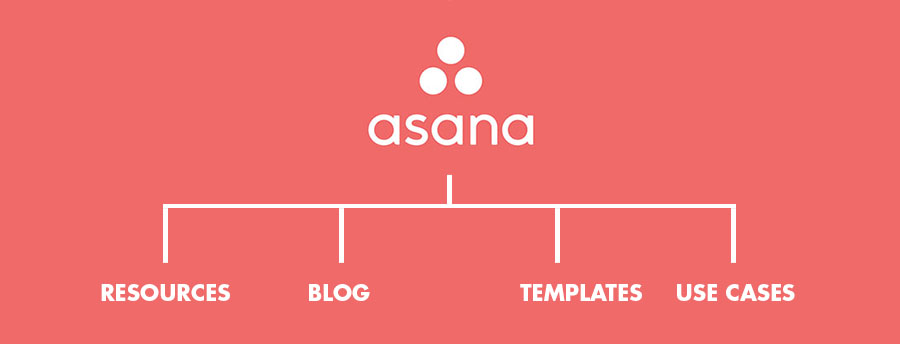
The breakdown looks like this: 60% content SEO, 20% programmatic SEO, 10% product pages, and 10% everything else.
That 20% programmatic slice punches well above its weight. Here’s how each pillar works.
1. The Resources Hub: Where the Real SEO Happens
The /resources/ section is Asana’s highest-performing content asset, and the numbers make that clear. It houses 144+ long-form guides averaging 2,000+ words each, with an SEO success rate of 11.1%. That means 16 out of 144 pages each drive more than 1% of Asana’s total organic traffic on their own. The section has attracted 718 referring domains and more than 6,370 backlinks.
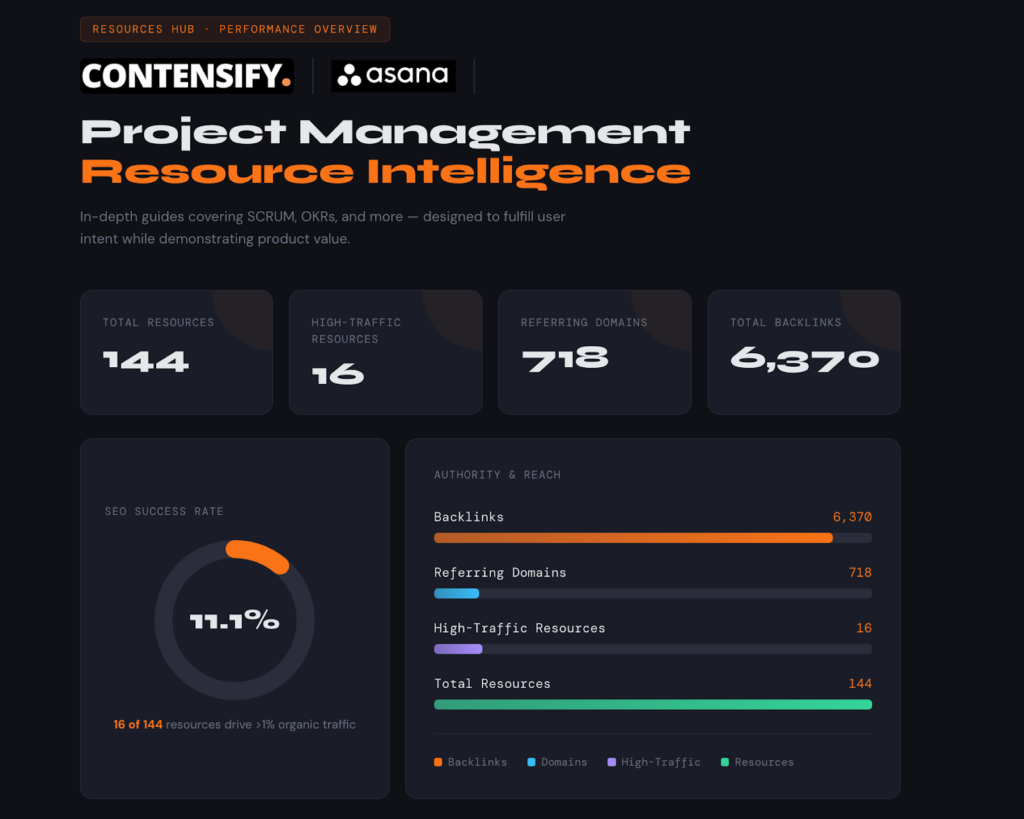
Compare that to the Blog. With 1,092+ posts, you’d expect it to dominate. It doesn’t. The Blog achieves just a 2.1% SEO success rate, making it roughly 5x less efficient per page than Resources.
That’s a counterintuitive finding worth sitting with. More content doesn’t mean more traffic. Fewer, deeper, better-structured guides consistently outperform a high-volume publishing cadence. Asana seems to know this, which is why Resources gets the investment and the Blog plays a secondary role.
2. Template Pages: The Programmatic Playbook at Scale
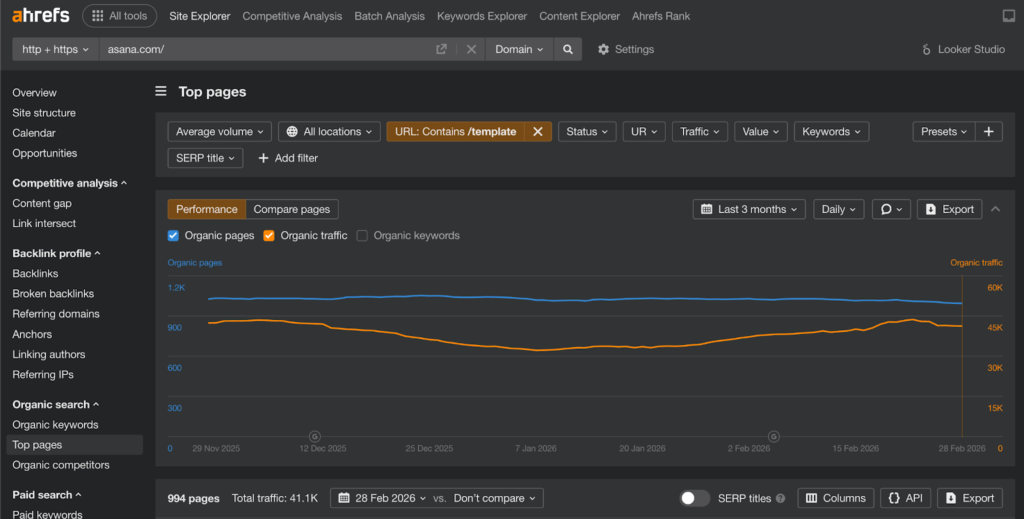
Asana’s /templates/ section runs the same playbook that made Canva and FreshBooks famous in SEO circles. They’ve built 65+ template pages, covering everything from SEO strategy templates and content calendar templates to sprint planning templates, each following a standardized structure with 1,500 to 2,500 words of unique content.
Every page targets a “[use case] + template” keyword pattern. The production cost per page is relatively low. The cumulative traffic is not. This section drives over 40,000 monthly traffic making it one of the most efficient content bets on the site.
3. Use Case Pages: Turning Awareness Into Consideration
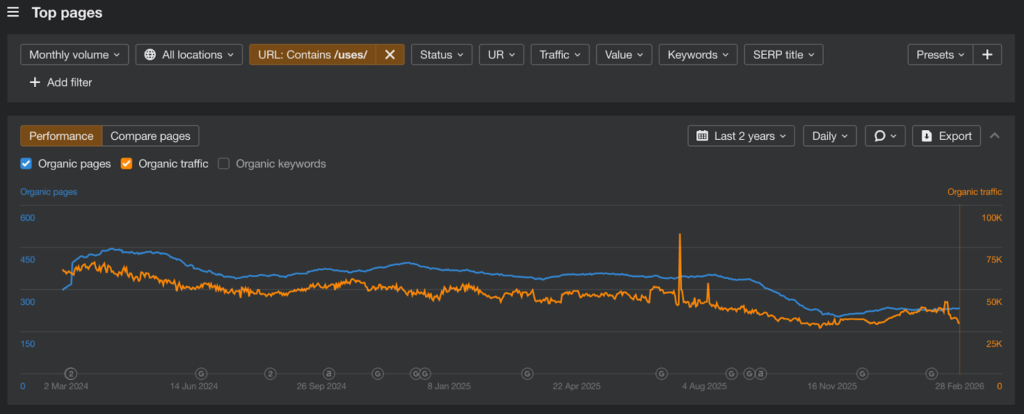
The /uses/ section handles the middle of the funnel. Twenty-plus pages target workflow-specific queries: goal management, campaign management, creative production, content calendars, resource planning. The format is straightforward, map an Asana feature set to a specific job a buyer is trying to do.
It works. This section contributes over 30,000 monthly organic traffic, and unlike informational content that attracts early-stage readers, use case pages attract buyers who are already thinking in terms of solutions.
4. Integration Pages: Borrowing Partner Brand Equity
Asana has built over 200 individual integration pages under /apps/ — one for Slack, one for Salesforce, one for Microsoft Teams, one for Jira, one for Zapier, and hundreds more. Each targets a “[tool name] + Asana integration” keyword.
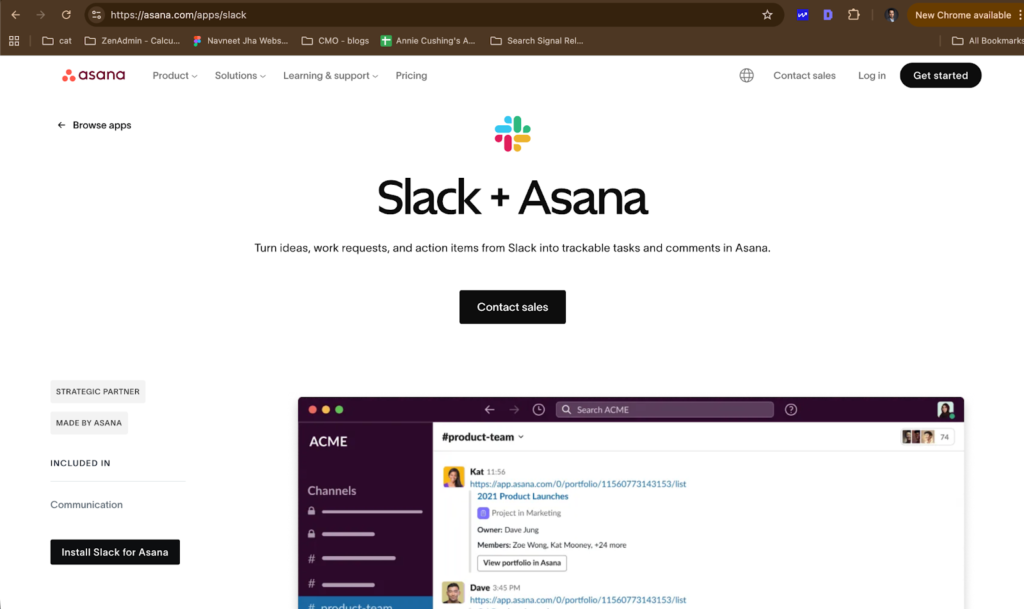
The logic here mirrors Zapier’s famously successful programmatic SEO approach. When someone searches “Asana Slack integration,” they’re already a tool user with a workflow problem. Ranking for that query puts Asana in front of a warm, high-intent audience at essentially zero cost beyond the page build.
The Matrix That Covers Every Buyer Segment
Beyond these four pillars, Asana layers in team pages (/teams/marketing, /teams/it, /teams/operations), industry pages (/industry/healthcare, /industry/education, /industry/financial-services), and customer story pages. Together, these create a content matrix that addresses virtually every role, segment, and use case a project management buyer might search for.
Topic clusters tie the whole system together. Asana organizes content into interconnected clusters: a Project Management cluster, a Goal Setting and OKR cluster, an Agile and Scrum cluster, a Marketing Management cluster, and a Leadership and Strategic Planning cluster. Heavy internal cross-linking between resources, templates, use cases, and product pages creates the topical authority signals that make each individual page rank better than it could on its own.
No part of this is accidental. Every section has a job, and every page within it earns its place.
On-Page and Technical SEO: Strengths and a Major Weakness
Asana’s on-page SEO is precise enough to feel like it came from a documented playbook rather than individual writer decisions. Most of it did.
1. Title Tags, Headings, and Snippet Engineering
Title tags follow a strict formula by content type.
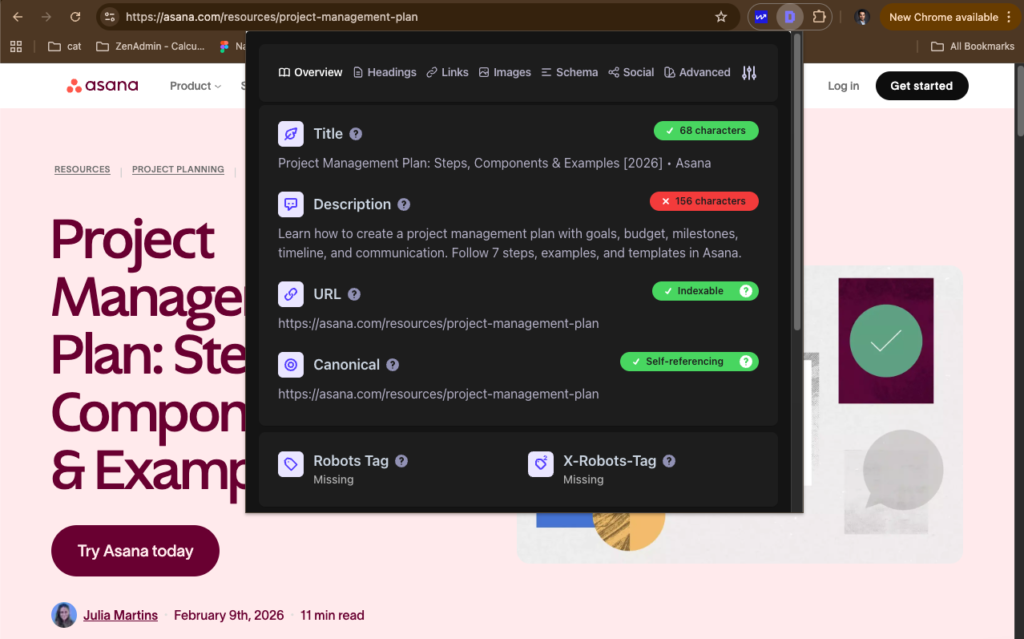
Resource articles use:
[Topic]: [Subtitle] [Year] • Asana
Front-loading the keyword and adding a year tag that signals freshness to Google, “Project Management Plan: Steps, Components & Examples [2026] • Asana” is a representative example.
Template pages follow their own pattern:
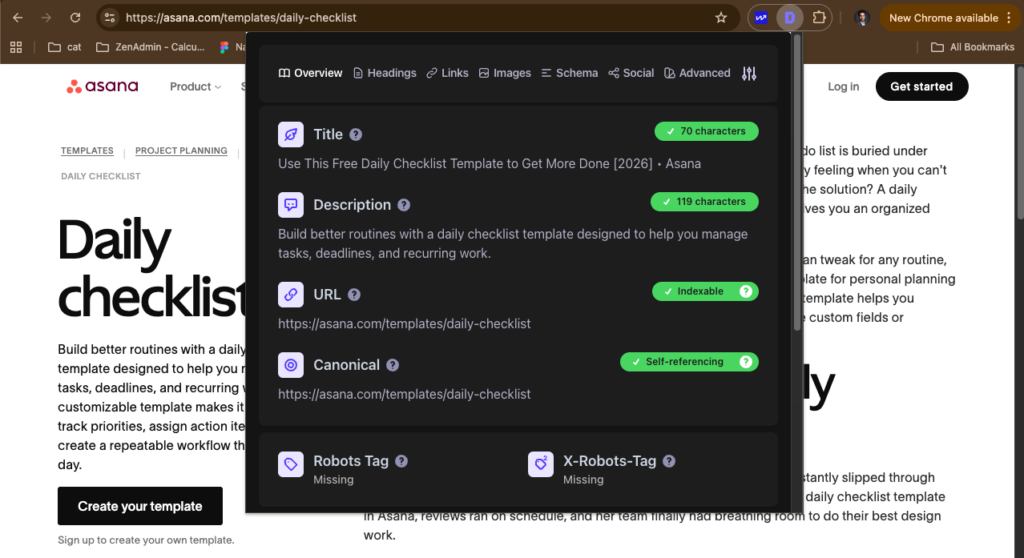
Free [Type] Templates [Descriptor] • Asana
The year is updated consistently, which helps Asana hold featured snippet positions over time.
The heading structure is built for extraction. Every resource article uses a single keyword-rich H1, H2 sections that map to a jump-link table of contents, and H3 sub-sections for deeper breakdowns. The H2s are formatted as exact search queries: “What is the work breakdown structure in project management?” or “How to create a project plan in 7 steps.” That mirrors how users type into Google and how snippet algorithms pull answers.
A 40 to 60 word summary box sits at the top of every article, sized precisely for paragraph featured snippets. The first one or two sentences of any section can be extracted cleanly without context. That’s not a coincidence, it’s an inverted pyramid built for machines as much as humans.
2. Internal Linking and International Scale
Internal linking is systematic. A project management plan article links to project timelines, project charters, scope management, Agile methodology, Gantt charts, Kanban guides, and related templates — all using descriptive anchor text that matches target keywords. Breadcrumb navigation adds hierarchical context. Together, these create dense topical clusters that distribute link equity across the site.
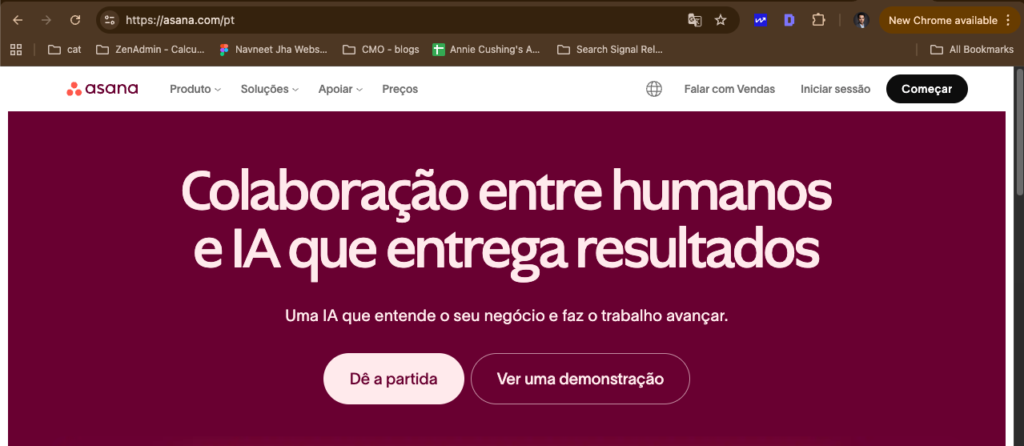
International SEO follows a subdirectory structure (asana.com/pt/, asana.com/es/, asana.com/ja/) across 14 languages. Chris Kelly, a former Asana Growth Lead, has stated this strategy scaled from zero to 20M+ international SEO visits. Spanish content alone drives 2M+ monthly organic sessions. Mexico is Asana’s #2 traffic source at 676,000 visits per month, followed by India, Brazil, and Colombia.
3. The Technical Problem They Haven’t Fixed
Despite all of this, Asana has a meaningful technical weakness: Core Web Vitals. We found an LCP of 1.9 seconds (needs improvement), a CLS score of 0.24 (poor, against a threshold of ≤0.1), and an INP of 412 milliseconds (very poor, against a threshold of ≤200ms).
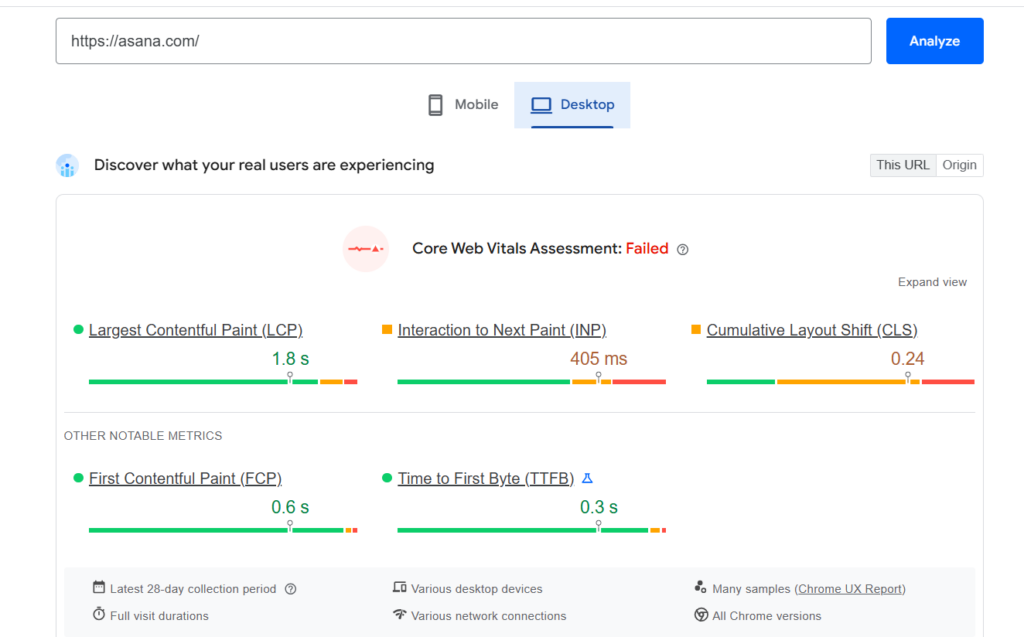
The CLS score means page elements shift unpredictably during load. The INP score signals sluggish interactivity. Asana uses WebP images, lazy loading, and a CDN, but these optimizations haven’t moved the needle. On mobile-first indexing, scores this poor likely cost them rankings they’d otherwise hold comfortably.
It’s the one gap in an otherwise tightly engineered system.
How Asana Dominates Featured Snippets and Answer Boxes
Ranking on page one is one thing. Owning the answer box above it is another. Asana has systematically engineered their Resources hub to do the latter, using four interlocking tactics that together form one of the most deliberate high-difficulty snippet acquisition strategies in B2B SaaS.
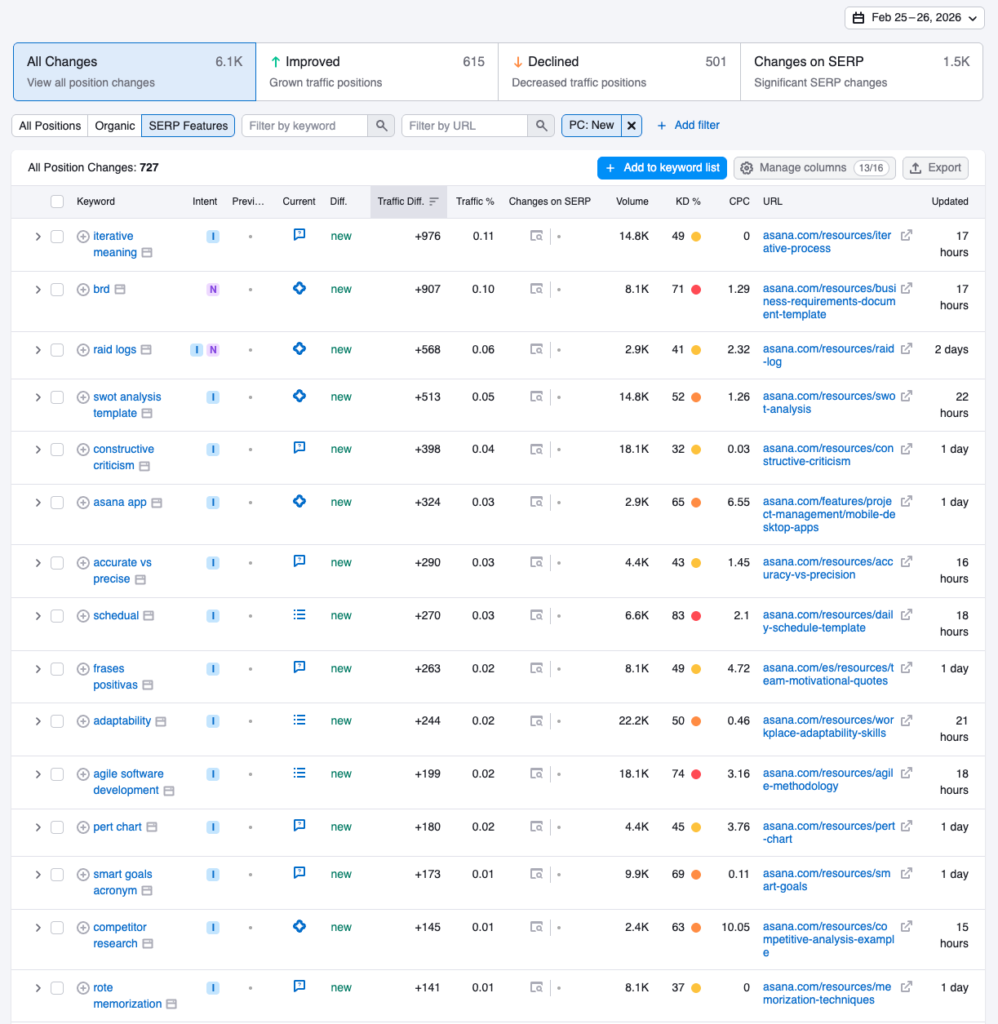
1. Question-Formatted Headings That Match Queries Exactly
Every resource article uses H2 and H3 headings written as the precise questions users type into Google.
- “What is a work breakdown structure?”
- “What are the 3 levels of work breakdown structure?”
- “How to create a work breakdown structure.”
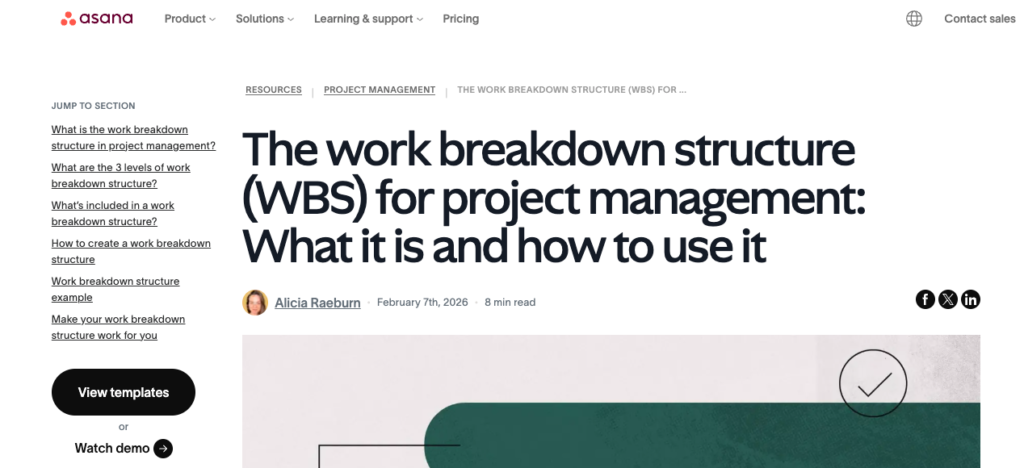
Each heading is a one-to-one match with a real search query. That exact alignment is the primary mechanism for winning featured snippets and appearing in People Also Ask boxes, Google doesn’t have to infer relevance. The answer is right there, labeled with the question.
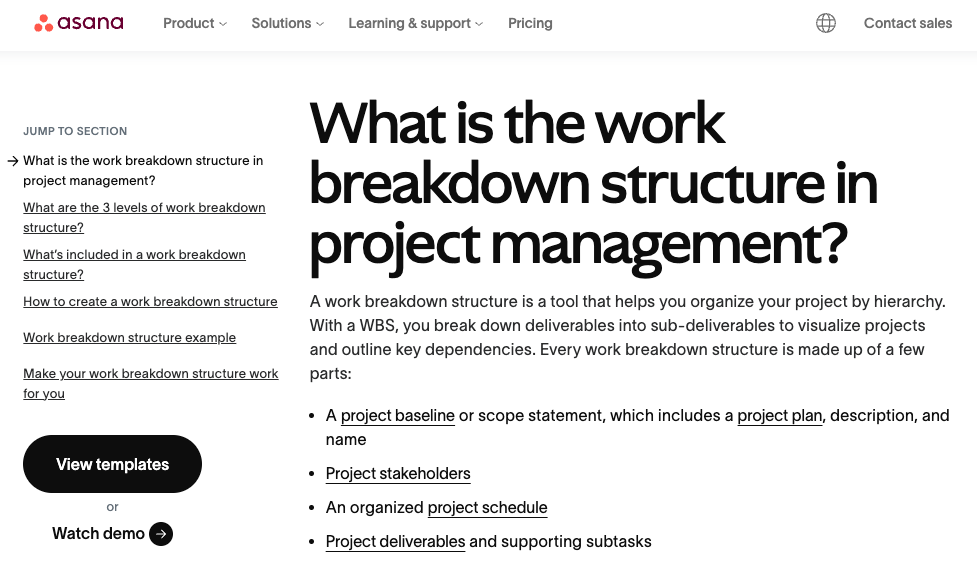
2. Definition Boxes Sized for Paragraph Snippets
Immediately below each question heading sits a 40 to 60 word definition. That length is deliberate, it’s the range Google prefers when extracting paragraph featured snippets. Asana’s WBS page opens its definition section by describing a work breakdown structure as a visual way to organize project deliverables based on dependencies, with the project objective at the top and sub-dependencies below. Concise, structured, and cleanly extractable without surrounding context.
3. Numbered Steps for List Snippet Extraction
How-to content uses numbered H3 subheadings (Step 1, Step 2, Step 3) with a clear action item under each.
Benefits sections follow patterns like “5 Key Benefits of Project Management” with numbered sub-headings throughout.
Both formats are optimized for Google’s ordered-list snippet format, where the algorithm pulls the numbered structure directly into the search result.
4. FAQ Sections as an Additional Extraction Layer
Asana adds FAQ sections to key pages as a fourth extraction point. Their project management page includes a dedicated FAQ block with questions like “How to become a project management professional?” and “How to choose project management software?”
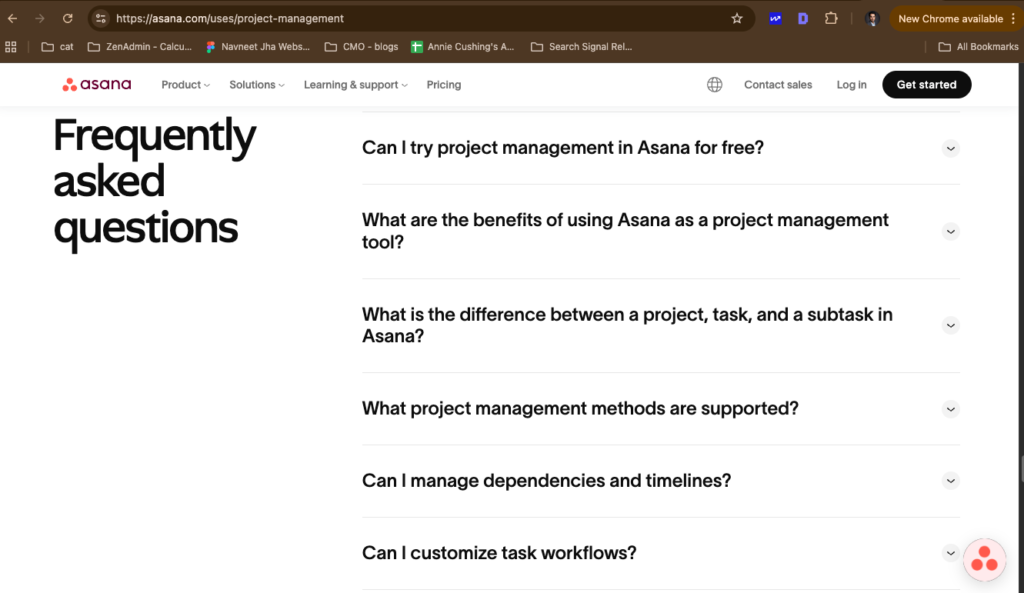
Their standalone FAQ page at asana.com/faq has been cited as a best-in-class structured data example. The results speak for themselves. Asana holds position #1 for “agile methodology” (34,000 monthly searches), position #1 for “SWOT analysis,” position #1 for “Eisenhower Matrix,” and a top-5 position for “executive summary example” (19,000 monthly searches). These aren’t niche long-tail queries. They’re high-volume terms searched by the exact buyers Asana wants in their funnel.
Asana’s Emerging Advantage in AI-Generated Search Results
Asana didn’t build a GEO strategy. They built a dominant traditional SEO presence, and AI visibility followed. That sequence matters because it tells you something important about what actually drives citation in large language models.
Asana routinely appears in AI answers about project management tools, and its online footprint explains why. When asking Google’s AI Overview “What is the best project management software for small teams?”, Asana appeared alongside Trello, ClickUp, Monday.com, and Wrike, mirroring the page-one organic results almost exactly.
Perplexity recommends Asana independently. Ahrefs found that ChatGPT cites Asana’s own “best project management software” content as a direct source.
Three mechanisms drive this.
1. Brand Consensus Across Every Surface AI Models Read
Across Asana’s website, Capterra, Reddit, and third-party review sites, the same core description of the product repeats consistently. That repetition isn’t accidental, it’s consensus. When AI models encounter the same brand story told the same way across dozens of independent sources, they surface that brand with confidence.
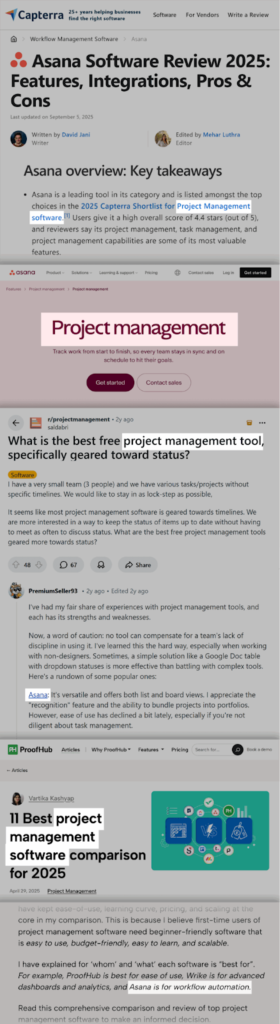
Asana maintains optimized profiles on G2, Capterra, and TrustRadius, and keeps a well-maintained Wikipedia page. These aren’t vanity listings. According to Goodie’s study of 5.7 million B2B SaaS citations across LLMs, Reddit and G2 are the top two most-cited domains. Showing up there, consistently and accurately, is table stakes for AI visibility.
2. Domain Authority That AI Models Use as a Trust Signal
With a Domain Rating of 90 and backlinks from Google, Apple, Microsoft, Amazon, and Wikipedia, Asana carries the entity-level authority that LLMs use to validate recommendations. Gartner and Forrester recognition adds another layer. Research from SEMAI reinforces this: brands with strong G2 and Capterra profiles are 3x more likely to be cited by ChatGPT, and brands with active Quora and Reddit presence see 4x higher citation rates.
3. Structured Content That Gets Extracted Directly
Asana’s definitional pages on SWOT analysis, Agile methodology, and the Eisenhower Matrix are exactly the type of clean, authoritative content that LLMs extract during training and retrieval. Their self-authored “best project management software” lists, where Asana positions itself first, are cited by ChatGPT as recommendation sources. The content was written for Google. It works just as well for GPTs of the world.
4. The One Deliberate AI Move They’ve Made
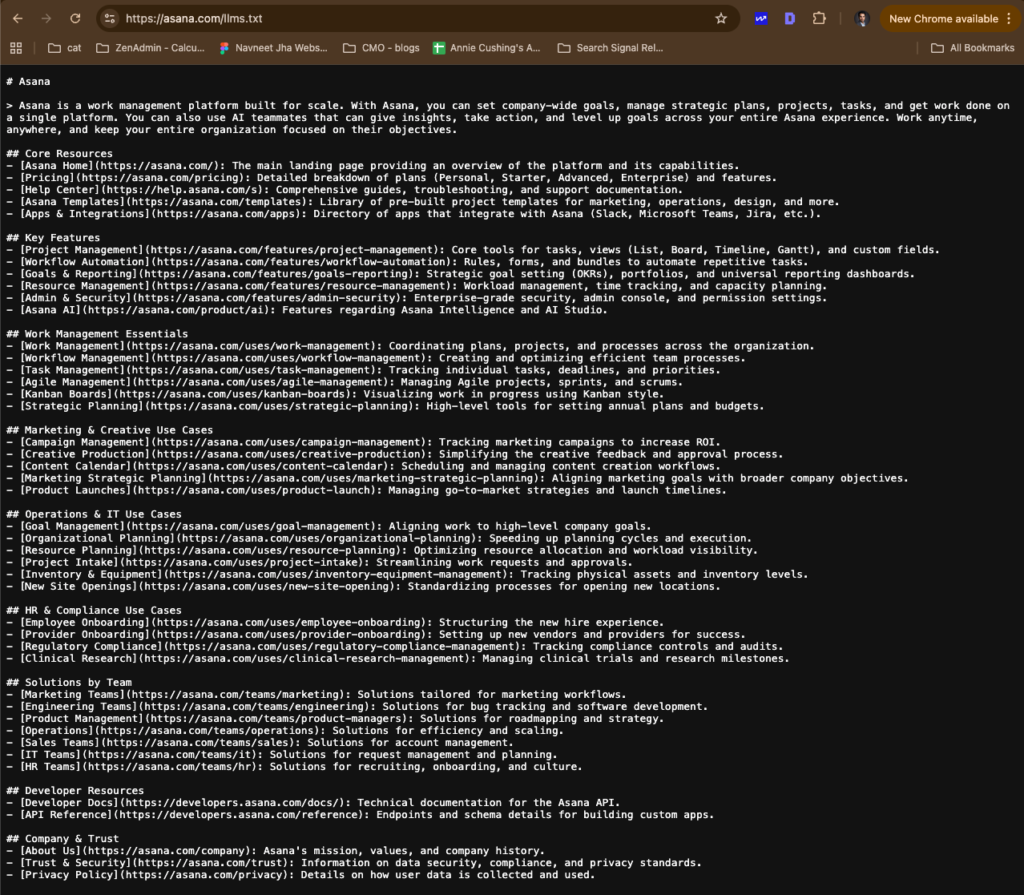
Asana has added an llms.txt file to their site, a structured file specifically formatted for LLM consumption. It’s a small but telling signal that they’re paying attention to how AI systems crawl and interpret their content.
The deeper point is this: as AI-generated answers reduce click-through rates on traditional search results, Asana’s strategy ensures their brand appears in the answer itself. Clicks may decline. Brand exposure doesn’t. Their AI visibility isn’t a separate channel, it’s the downstream reward for a decade of building authority the right way.
What Any SaaS Company Can Learn From Asana’s Playbook
Asana’s results aren’t the product of a single clever tactic. They’re the compounding output of a strategy that’s been executed consistently across content, architecture, international expansion, and brand presence. Most SaaS companies can’t replicate the full system overnight. But they can start with the parts that move the needle fastest.
1. Own the Frameworks Your Buyers Already Use
Asana doesn’t write about Asana. It writes the definitive guide to SWOT analysis, the Eisenhower Matrix, OKR methodology, the mental models their buyers use every week before they’ve opened a single productivity tool. That approach builds trust early, captures demand before it becomes product-specific, and positions Asana as the tool that puts these frameworks into practice.
Any SaaS company can run the same play. Identify 10 to 20 frameworks your ICP uses regularly. Find the ones with meaningful search volume and weak existing coverage. Then write the best resource on each, and link it naturally back to your product. You’re not interrupting the buyer’s research process. You’re becoming part of it.
2. Invest in Fewer, Deeper Articles
The data here is unambiguous. Asana’s 144 resource guides achieve an 11.1% SEO success rate. Their 1,092 blog posts achieve 2.1%. Resources outperform the Blog by roughly 5x per page.
The instinct at most SaaS companies is to publish more. Asana’s results suggest the opposite: publish less, go deeper, and be more deliberate about which topics deserve a full-length guide. A well-structured 2,500-word resource on a high-intent topic will outperform ten 600-word blog posts for years.
3. Build Programmatic SEO Into Your Content Architecture Early
Asana’s 65 template pages generate 8.5% of organic traffic. Their 200+ integration pages capture high-intent queries from users already embedded in adjacent tools. Their comparison pages own the decision moment. All of it follows standardized structures that can be built efficiently and scaled without reinventing the wheel each time.
If your company has repeatable content patterns, templates, integrations, use cases, locations, industries, you should be building programmatic pages around them. The unit economics are far better than one-off editorial content.
4. Don’t Sleep on Multilingual SEO
Asana’s Spanish content drives over 2 million monthly organic sessions. Mexico alone generates 676,000 visits per month. Most B2B SaaS competitors haven’t invested seriously in non-English content, which means the competitive bar in those markets is significantly lower. For companies already seeing international traffic in their analytics, multilingual SEO is one of the highest-return, lowest-competition bets available.
5. Make Your Brand Positioning Consistent Everywhere
Asana appears in AI-generated answers because the same story about Asana repeats across their website, G2, Capterra, Reddit, and Wikipedia. That consistency creates the consensus signal LLMs use to surface brands confidently. It’s the closest thing to a shortcut in generative engine optimization that currently exists, and it costs nothing beyond deliberate positioning work.
The Gaps Worth Noting
Asana’s strategy isn’t perfect. Their Core Web Vitals scores are poor across the board, likely costing them mobile rankings they’d otherwise hold. Their blog carries over 1,000 posts generating minimal SEO return content bloat that dilutes crawl equity. There’s no email nurture sequence following ebook downloads and no retargeting infrastructure to recapture the organic traffic they work so hard to earn. And despite growing dependence on AI-driven search channels, they have no proactive GEO strategy beyond the llms.txt file.
These aren’t small oversights. They’re real gaps. For Asana, they represent work left on the table. For competitors, they represent an opening.
Build Your Own Organic Moat
Asana didn’t reach 4M+ monthly organic visits by accident. They built a system and then they ran it consistently for years.
Most SaaS companies are still publishing blog posts hoping something sticks. The gap between that approach and what Asana has built isn’t budget. It’s a strategy.
That’s where Contensify comes in. We’re a B2B SaaS content and SEO agency that builds long-term search visibility systems covering content strategy, SEO, GEO, and AI visibility across the platforms your buyers trust.
Whether you’re starting from scratch or trying to fix a content engine that isn’t pulling its weight, we help you build the kind of organic presence that compounds over time.
70% of B2B buyers research independently before they ever talk to sales. If you’re not visible early, you’re not in the consideration set. We make sure you are.
We work with a limited number of SaaS clients each year. If you’re serious about getting content, SEO, and GEO right, let’s talk.