The primary determinant shaping B2B customers’ buying choices is pricing.
However, many B2B SaaS enterprises often neglect to adopt a strategic approach when designing their pricing pages.
This guide will provide insights on creating a compelling B2B SaaS pricing page strategy.
What is a B2B SaaS pricing page?
A B2B SaaS pricing page is a web page on a company’s website that provides information about the various pricing plans and options for their software product. It typically includes details about different subscription or licensing plans, such as pricing tiers, billing cycles, and each plan’s specific features or services.
Key elements commonly found on a SaaS pricing page include
- Pricing Tiers
- Details about the billing cycle (monthly, annually)
- Accepted payment methods
- Breakdown of features available in each pricing tier
- Free Trial or Demo
- Contact Information
- Testimonials (for the extra push)
- Pricing FAQs
Why is a B2B SaaS pricing page essential in 2026?
A Software as a Service (SaaS) pricing page is essential for several reasons, playing a crucial role in the success and sustainability of a SaaS business. Here are some key reasons why a well-designed pricing page is important:
1. Overview of pricing structure
The pricing page outlines the different plans available, their associated costs, and the features included in each plan. This information is crucial for potential customers as it provides a clear understanding of what they can expect in terms of value at different price points.
2. Make purchase decisions easier for customers
By presenting a clear and detailed pricing structure, the pricing page makes the purchase decision-making process easier for customers. They can assess their specific needs, budget constraints, and the features offered in each plan.
This transparency instills confidence in customers, helping them make informed decisions without the need for prolonged interactions with sales representatives.
3. Make it easy for customers to compare different plans
The pricing page facilitates easy comparison between the various plans offered by the SaaS company. Customers can evaluate features, limitations, and costs side by side. This comparison empowers customers to choose the plan that best aligns with their requirements, ensuring they get the most value for their investment.
4. Improves SEO and search
A well-optimized pricing page contributes to better search engine visibility. When potential customers search for SaaS solutions or specific features, having a well-structured pricing page can improve the company’s search engine rankings.
This is because search engines often prioritize pages with relevant and organized information, contributing to the overall visibility and discoverability of the SaaS product.
Recommended read: The Ultimate Guide to B2B SaaS SEO
5. Facilitates upselling and cross-selling
Customers, while reviewing their current plan, may be enticed by additional features offered in higher-tier plans. This encourages them to consider upgrading, thereby increasing the average revenue per user and maximizing the value the customer receives.
6. Showcases value proposition
It allows the company to highlight key features, benefits, and unique selling points associated with each pricing tier. This not only attracts potential customers but also reinforces the value of the product to existing ones.
7. Supports marketing efforts
The pricing page allows marketers to highlight promotions, discounts, or limited-time offers, attracting new customers and encouraging existing ones to explore additional features. Strategic messaging on the pricing page can effectively communicate the company’s competitive advantages, contributing to overall marketing success.
Recommended read: Understanding Customer Journey Marketing Map and its Stages
How to create an effective B2B SaaS pricing page (2026)
Here are some key considerations and tips to help you design an effective B2B SaaS pricing page strategy.
1. Understanding your target audience
Before creating a pricing page, it’s crucial to thoroughly understand your target audience. As part of the B2B SaaS pricing page strategy, identify the specific needs, pain points, and preferences of your ideal B2B customers and conduct market research to gather insights into industry trends, competitor offerings, and customer expectations.
Also, seek direct feedback from your current customers to understand their experiences and what factors influence their purchasing decisions.
2. Explore different pricing strategies
Several pricing strategies can be employed for SaaS products, and the choice often depends on factors like the target market, the perceived value of the product, and the business model.
As part of the B2B SaaS pricing page strategy, customize enterprise plans, incentivize annual commitments, and explore dynamic pricing for optimization. Tailor your approach to your target market, iterate based on feedback, and align your strategy with overarching business goals.
3. Create your pricing plans/ structure
Design clear and compelling pricing plans or structures based on the insights gained from understanding your audience and exploring different pricing strategies. Consider different tiers or packages that cater to varying customer needs and budgets.
Some of the common B2B SaaS pricing models to consider while creating a B2B SaaS pricing page strategy are:
| Subscription-Based | – Recurring fee (monthly or annually). – Different pricing tiers with varied features. |
| Freemium Model | – Basic features are offered for free. – Premium features are available through a paid subscription. |
| Usage-Based Pricing | – Charges based on usage metrics (e.g., number of users, data storage, API calls). |
| Tiered Pricing | – Different packages or tiers with varying functionality. – Customers choose based on needs and budget. |
| Per-User Pricing | – Charges based on the number of users accessing the software. – Common for collaboration and productivity tools. |
Present this information in a table format on your pricing page, making it easy for potential customers to compare features, limitations, and pricing at a glance.
4. Mention various features you want to highlight
As one of the effective pricing strategies of SaaS, the pricing page explicitly lists the features associated with each pricing tier. A pricing page must include:
- Included features
- Ideal for
- Pain points
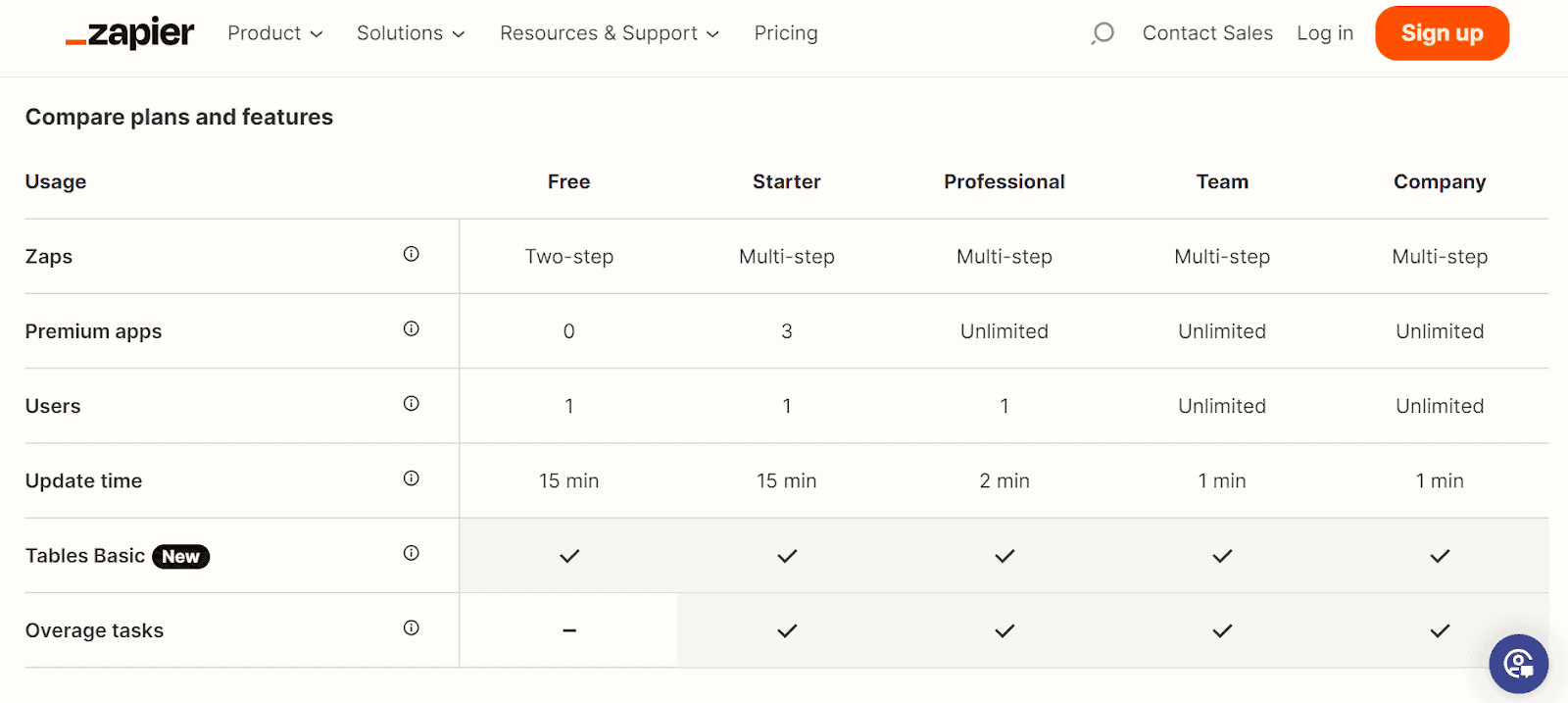
- Feature comparison
- Support information
- If applicable, highlight the scalability of your solution.
For example:
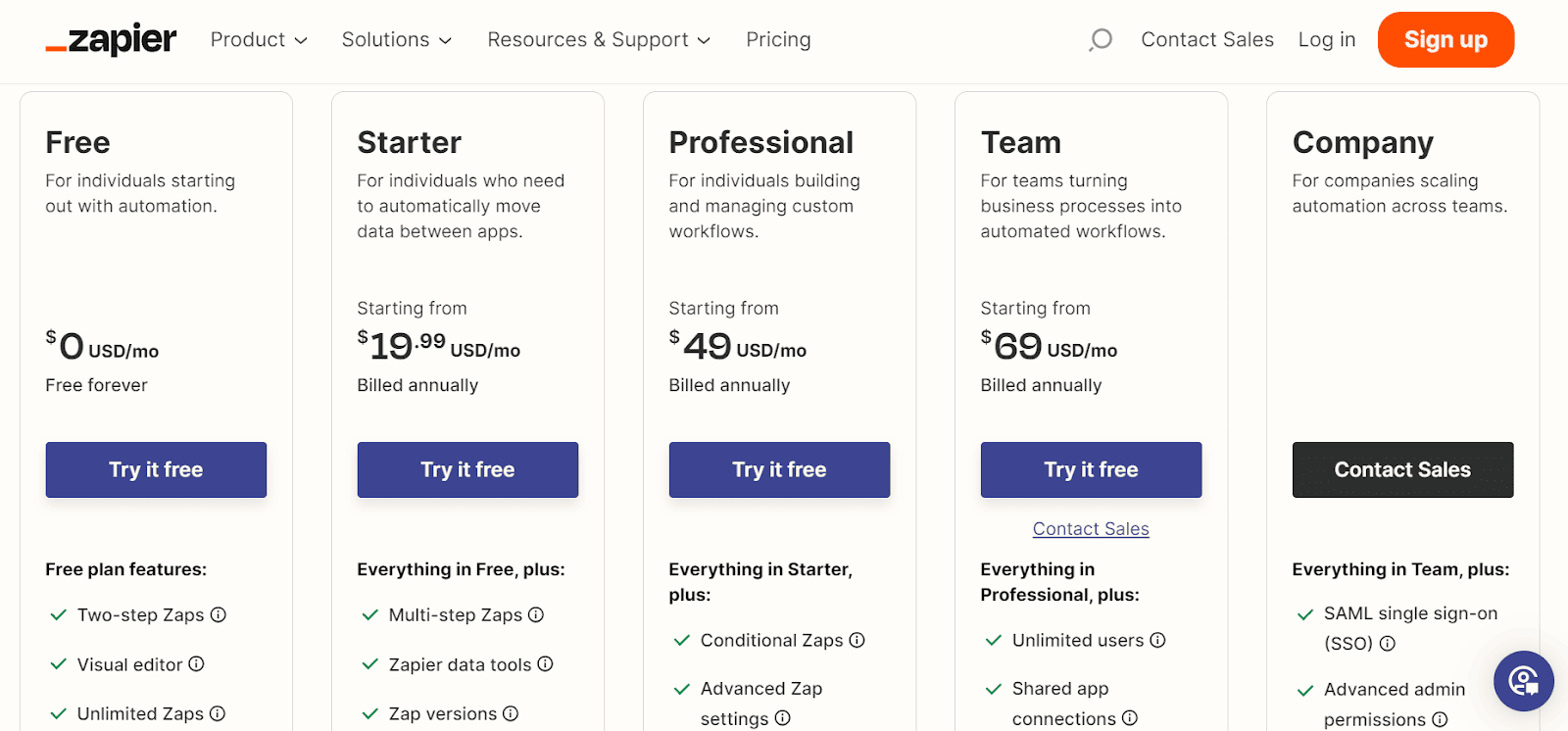
Use concise and persuasive language and also, consider incorporating tables, and visuals, such as icons or graphics, to make the information more engaging and easy to digest. For example
5. Create an intuitive layout/ page flow
While designing SaaS pricing pages, an intuitive layout works wonders. An intuitive layout ensures that visitors can easily navigate your pricing page and understand the information presented.
While executing the B2B SaaS pricing page strategy, make sure to:
- Follow a logical flow, starting with a clear headline that communicates your value proposition.
- Arrange pricing tiers in a visually appealing way, and use a consistent design throughout the page.
- Group related elements together, and guide visitors through the decision-making process with a clear path from initial information to making a purchase.
6. Include elements such as social proof
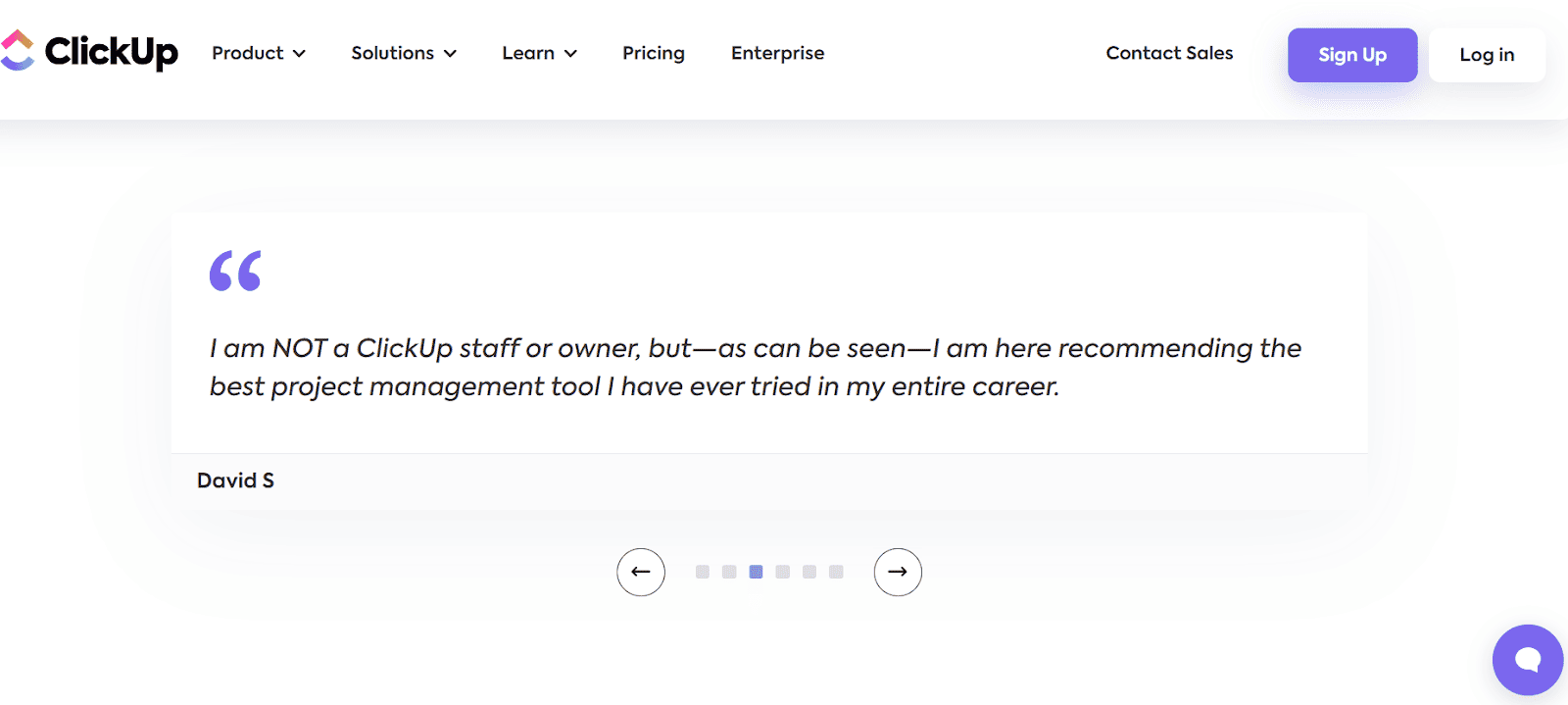
Social proof, such as customer testimonials, case studies, or logos of well-known clients, adds credibility and is a part of impactful B2B SaaS pricing page strategy.
Incorporate these elements strategically on the pricing page to showcase the positive experiences of other businesses that have benefited from your product. This can build trust and influence potential customers in their decision-making process.
For example
7. Highlight key elements
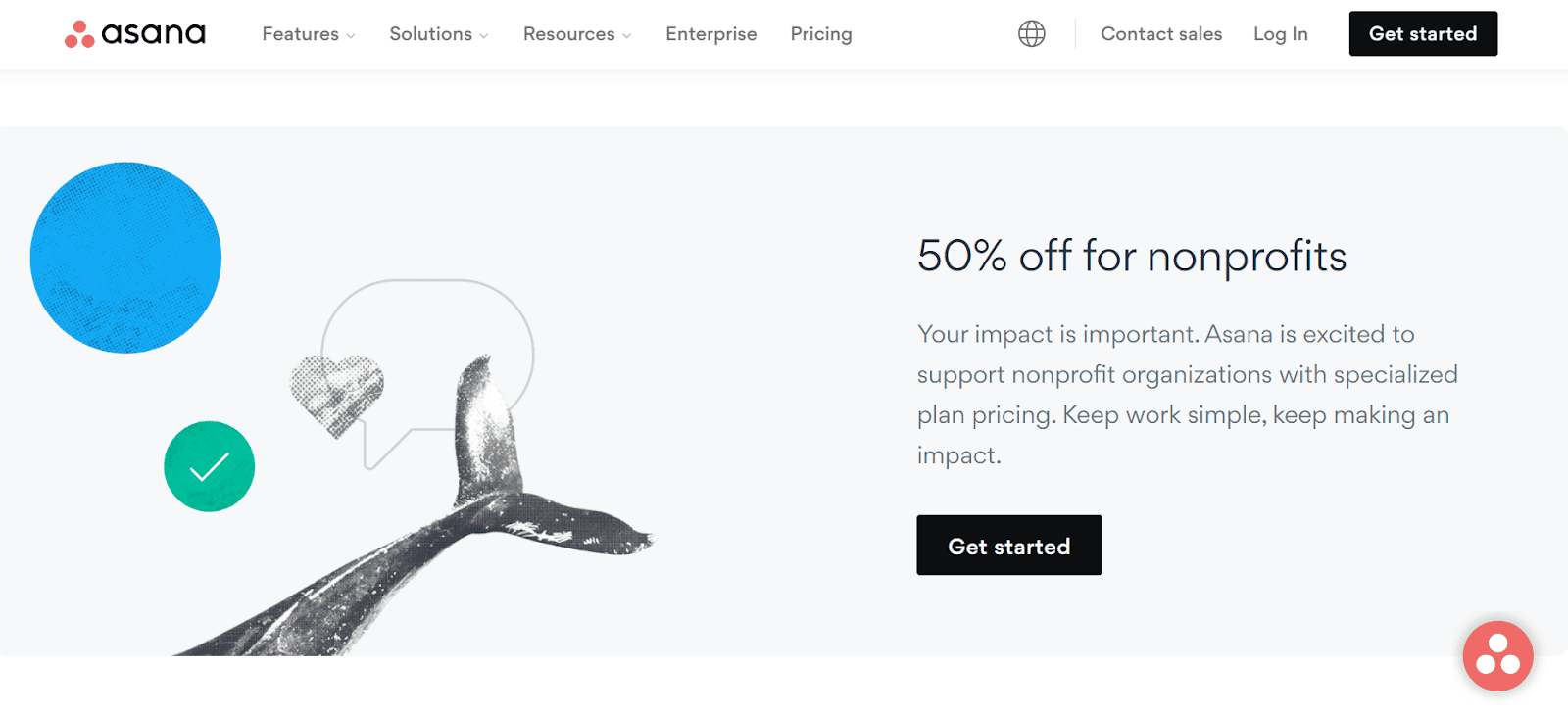
Emphasize key elements that drive conversions, such as Call-to-Action (CTA) buttons, free trial options, and any discounts or promotions.
Communicate the availability of free trials or discounts to encourage sign-ups and conversions. Place CTAs strategically at various points on the page, guiding visitors to take the desired actions.
8. Extra factors for optimizing SaaS pricing page
Some other key elements to focus on while optimizing SaaS pricing page are:
- Craft a compelling headline that communicates your unique value proposition and captures the audience’s attention.
- Give each pricing tier a name that guides users toward a decision and reflects the specific benefits and functionalities associated with that tier.
- Encourage annual payments by providing an option to toggle between monthly and annual billing. Communicate the benefits, such as reduced costs and improved Annual Recurring Revenue (ARR).
- Include a FAQ section to address common queries and provide additional information about your pricing options.
- Provide currency conversion information for buyers worldwide, ensuring transparency and accommodating customers using different currencies.
B2B SaaS pricing page examples
Here, we explore three standout examples—Scribe, HubSpot, and Hotjar—unveiling the elements that make their pricing pages exemplary in the B2B SaaS landscape.
1. Scribe
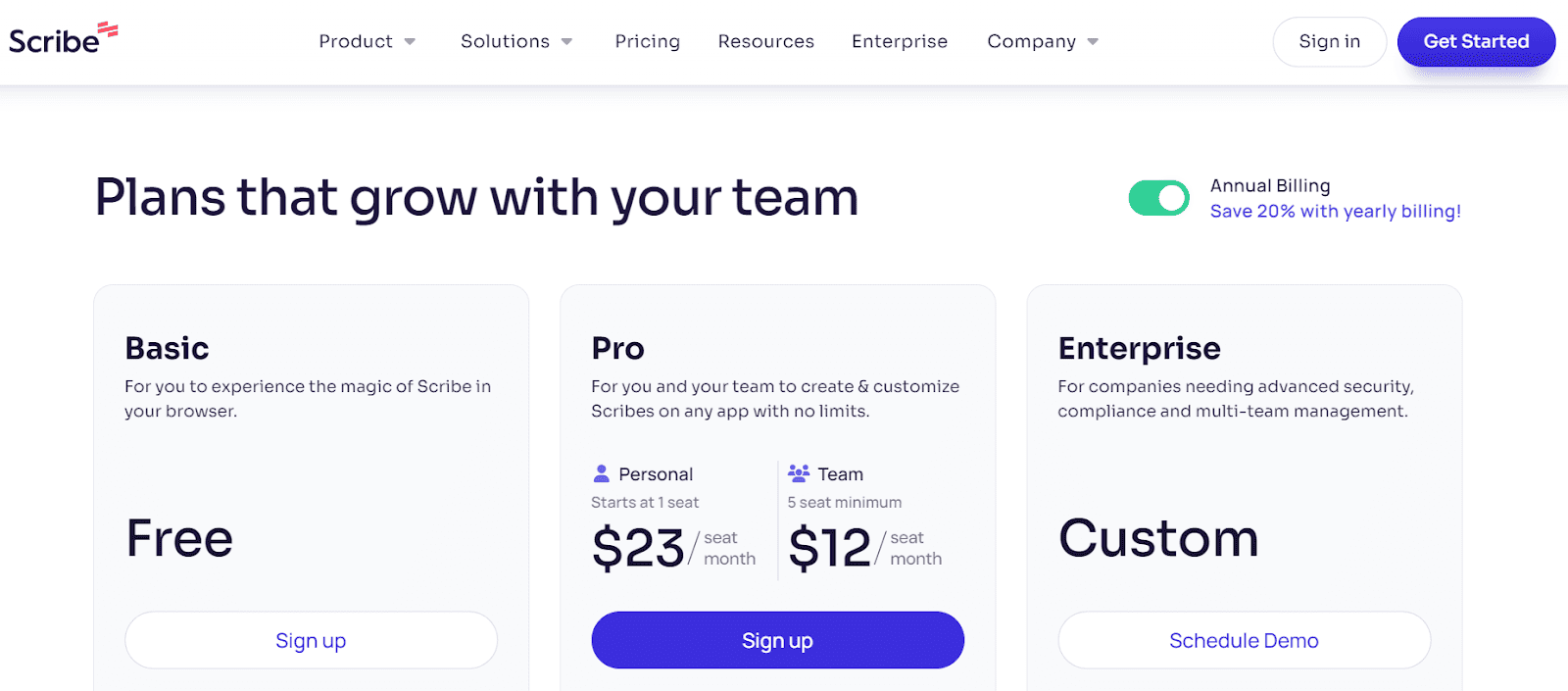
Scribe is a browser extension and desktop app that turns any process into a step-by-step guide and specifically stands out for its pricing page, offering plans that seamlessly scale with team growth.
Scribe’s pricing structure, combined with its feature-rich plans and transparent FAQs, simplifies the decision-making process, ensuring affordability and flexibility for diverse organizational needs.
On the Scribe pricing page, the Basic plan, free of charge, introduces users to Scribe’s browser magic, and The Annual Billing option provides a 20% cost-saving benefit.
2. Hubspot
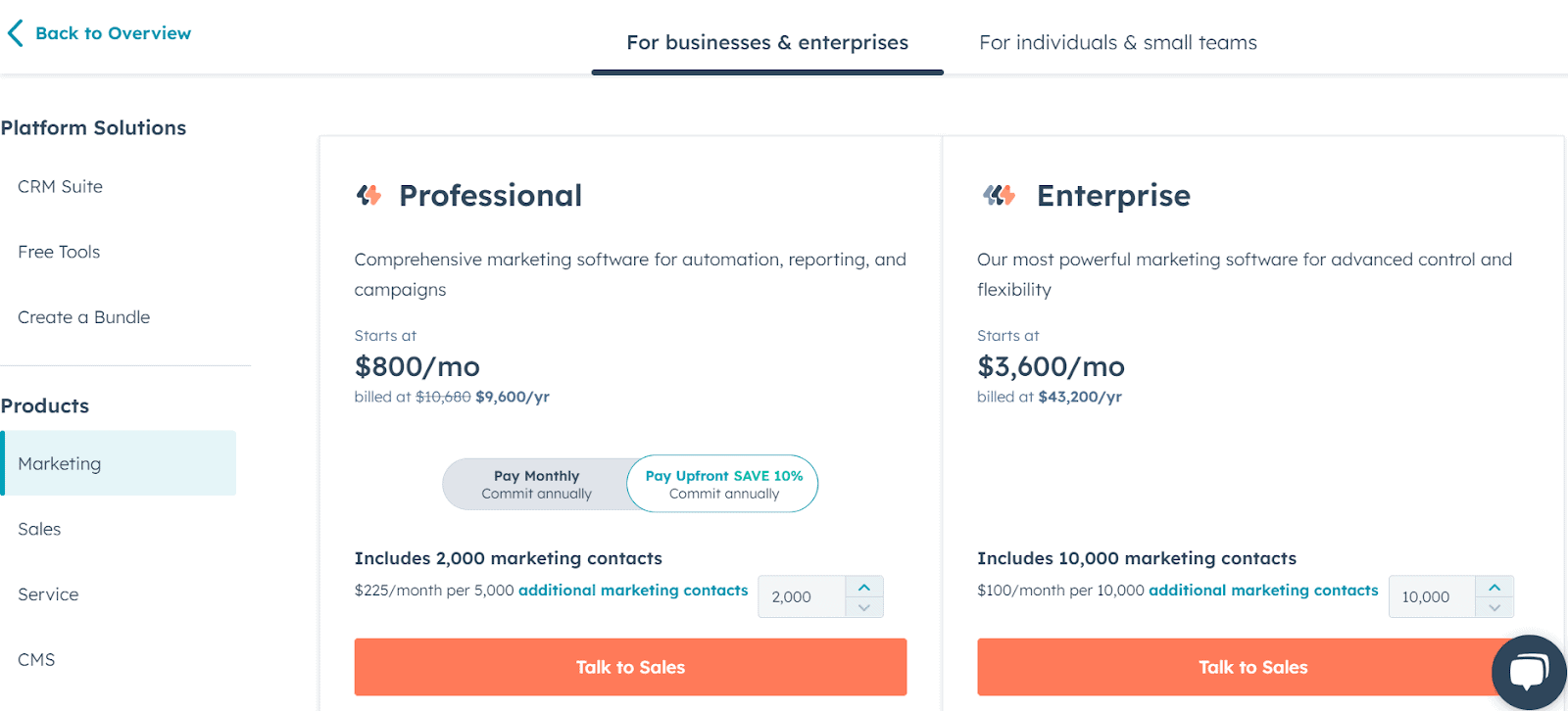
HubSpot‘s SaaS pricing page layout stands out for its comprehensive and transparent approach. Tailored for businesses and individuals, it offers clear pricing structures for Marketing Hub, catering to diverse needs.
The platform seamlessly presents features, pricing, and add-ons, empowering users to calculate costs effectively. With a user-friendly interface, detailed feature breakdowns, and success stories, HubSpot’s pricing page provides clarity and confidence for potential customers.
The inclusion of a variety of plans and add-ons allows for scalability, making it one of the best choices for businesses of all sizes.
3. Hotjar
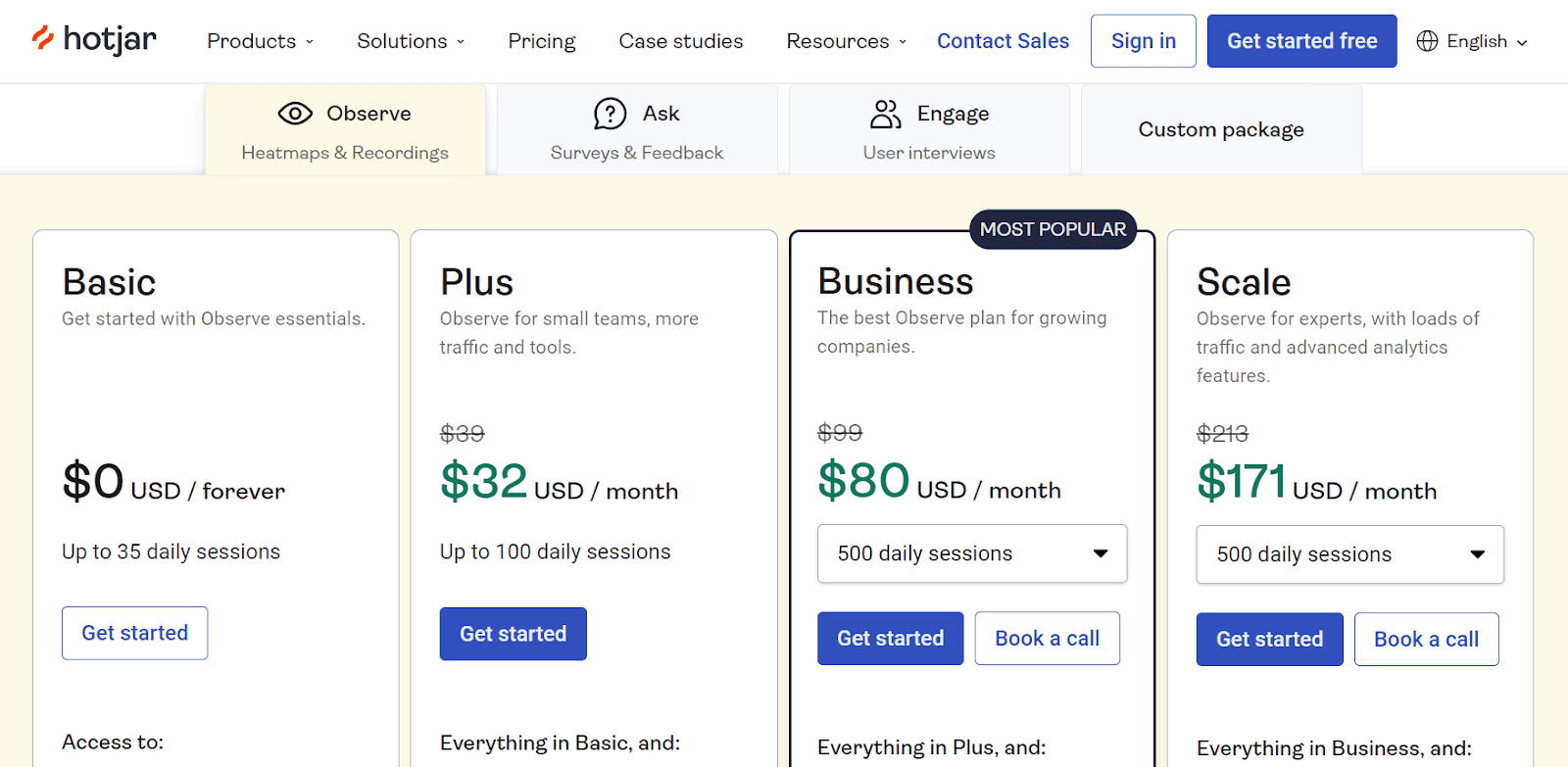
Hotjar’s SaaS pricing page excels with its user-friendly layout, featuring a seamless progression from free to premium plans for its Observe product. The pricing tiers are clearly defined, and the “FAQs” section is thoughtfully categorized, providing an organized and efficient way for users to find answers.
The breakdown of features and limits in a tabular format makes it easy for potential customers to compare and understand the value each plan offers, contributing to Hotjar’s effective communication and transparency.
Want to create your pricing page?
If you’re looking to enhance your pricing page strategy, optimize content, or develop overall content marketing strategies, look no further than Contensify.
Our team of B2B Content Marketers and SEO professionals is focused on helping you understand who your target audience is and identify the specific needs, pain points, and preferences. We do this by aligning the marketing, sales, and support teams to create comprehensive audience definitions and content strategies that are focused on them.
Our success stories speak for themselves—our content receives love and drives results.
Reach out to us today to create content that engages, educates, and converts!