If you’re building out a workspace solution or a productivity tool for any industry, segment or role, you have a lot of competition to go up against.
Over the years, there have been several players who have built out the best of solutions for specific use cases. But only a few have sustained success – and one of them is Notion.
In this blog, we’re going to break down the content marketing and SEO strategy that Notion has used to carve out a unique space for itself in a crowded market.
What is Notion?
Notion is an all-in-one workspace designed to help individuals and teams organize information, collaborate efficiently, and manage projects seamlessly. It combines note-taking, databases, task management, wikis, and collaborative tools into a single platform, allowing users to customize workflows to fit their needs.
Today, Notion is widely used by startups, enterprises, educators, and content creators, making it a popular tool for productivity and knowledge management.
One of Notion’s key differentiators is its modular approach, enabling users to build workspaces tailored to their specific requirements using blocks, templates, and integrations. This flexibility has contributed significantly to its adoption across different industries.
Why Are Discussing Notion Content Marketing and SEO?
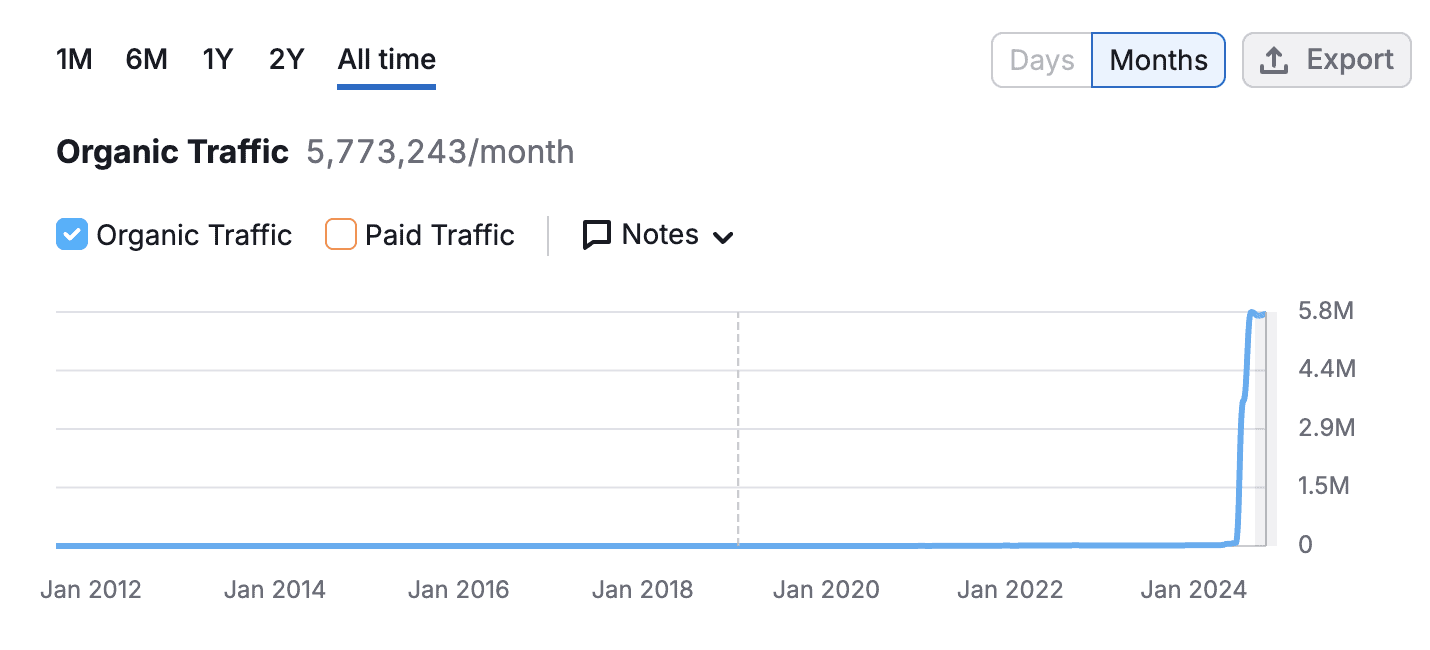
Over the last few years, Notion has built an impressive content marketing and SEO strategy that fuels its organic growth.
As an all-in-one workspace and productivity tool, Notion competes in a crowded market, yet it consistently ranks for high-value keywords, attracts millions of visitors, and converts users through content.

So if you’re a B2B SaaS founder or marketer looking at getting started or scaling your content strategy, Notion’s approach offers actionable insights. This breakdown covers:
- Notion’s keyword strategy and the types of keywords they target.
- Content formats they use to engage and educate their audience.
- Distribution channels that amplify their reach.
- Examples showcasing their content in action.
In a hurry and want to get started with content marketing? Reach out to us for content marketing and SEO audit.
Notion’s Keyword Strategy: Balancing Product & Use -Case Intent
Notion follows a multi-layered keyword strategy. This helps them target different types of search intent to attract, educate, and convert users. Their keyword approach includes:
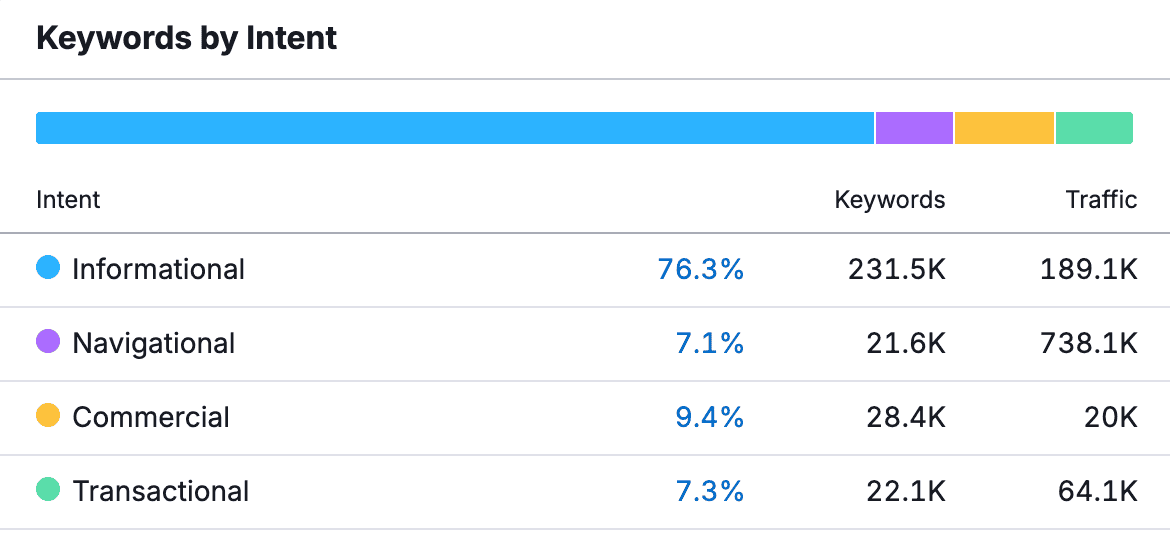
1. Product-Led Keywords (Direct Intent)
These are keywords related to Notion’s core features and functionalities. By targeting these, Notion ensures users actively looking for solutions find their platform. Here are some examples:
- “Notion project management”
- “Notion database tutorial”
- “Notion CRM template”
2. Use-Case Keywords (Pain-Point Driven)
Instead of just pushing their product, Notion ranks for problems that their platform solves. This approach attracts potential customers who might not know about Notion yet but are looking for solutions. Here are some examples:
- “best note-taking apps for teams”
- “how to organize work projects online”
- “remote team collaboration tools”
3. Comparison & Alternative Keywords
These keywords capture high-intent users evaluating options. Ranking for these terms allows Notion to position itself against competitors while influencing purchase decisions. Here are a few of them:
- “Notion vs Evernote”
- “Best Notion alternatives”
- “Notion vs Confluence for documentation”
4. Template & Community Keywords
Notion leverages templates as an SEO asset by ranking for specific templates users search for. This not only drives traffic but also converts visitors into active users by offering them ready-to-use solutions. Here are a few examples:
- “Notion meeting notes template”
- “Notion to-do list template”
- “Notion goal-setting template”
Content Formats: A Multi-Faceted Approach
Notion doesn’t rely on a single content format. Instead, it combines educational, SEO-driven, and community-powered content to attract and retain users. Here’s how:
1. Long-Form Blog Content
Notion’s blog is optimized for both SEO and user education, covering topics like:
- Productivity & workflow tips
- Team collaboration best practices
- Deep dives into Notion features & use cases
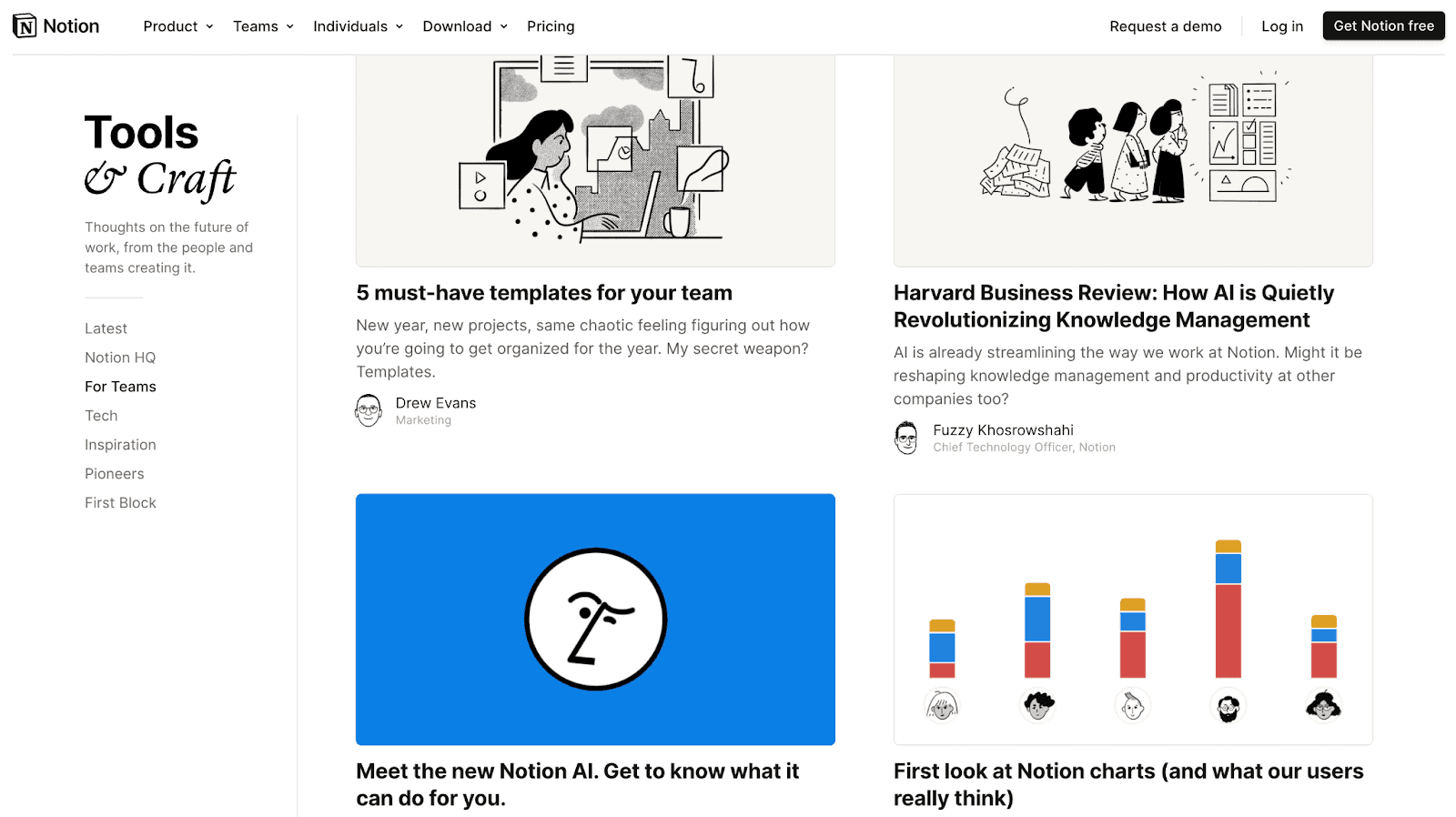
Example: Their blog post on “How to Build a Second Brain in Notion” ranks for multiple knowledge-management-related keywords.
2. Notion Help Center & Documentation
Their help center articles rank well for feature-related queries and serve as both SEO content and user onboarding material.
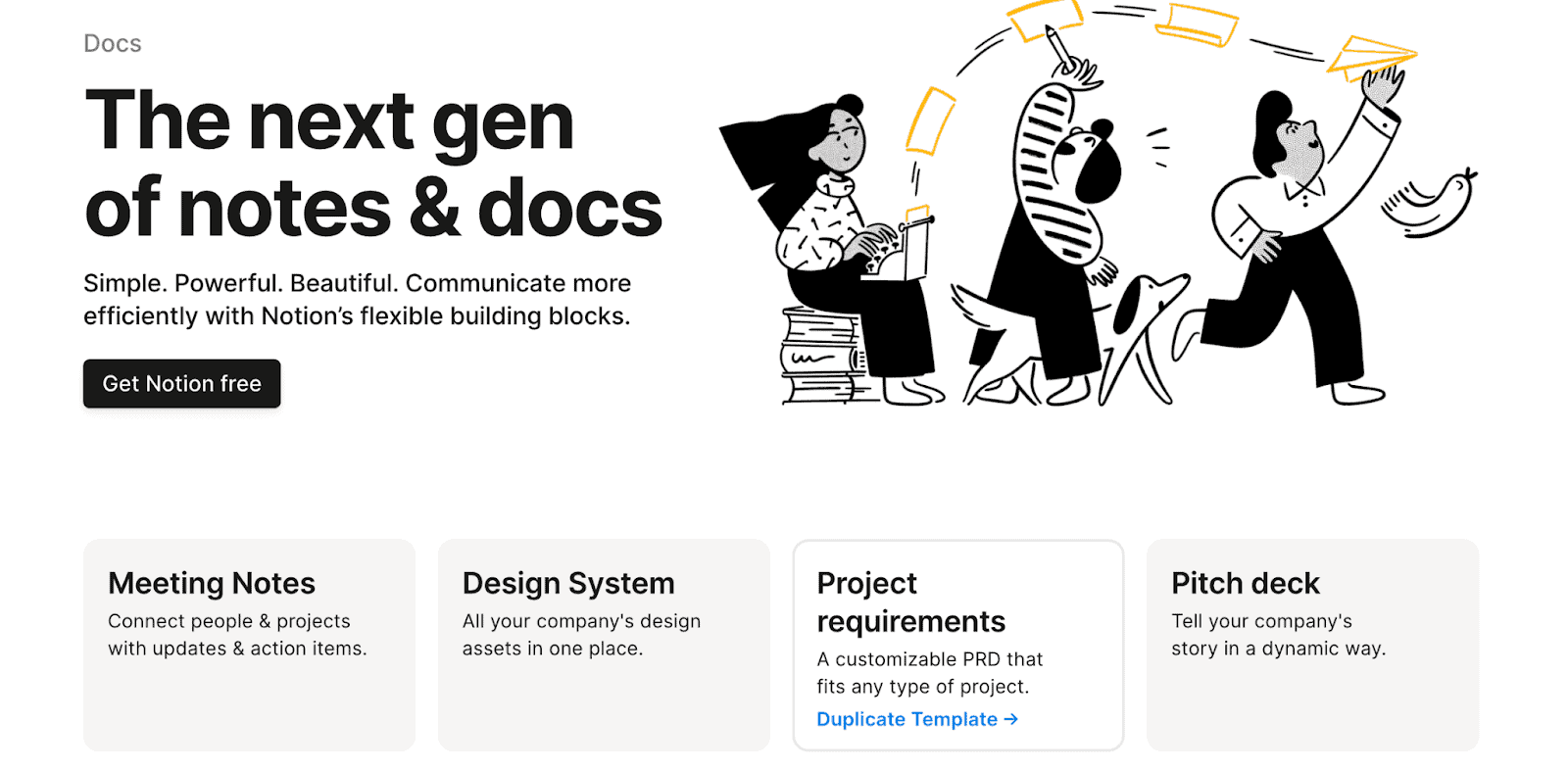
Example: “How to use Notion’s database views” ranks high for functional search queries.
3. Templates & Use-Case Landing Pages
Each Notion template has its own SEO-optimized page, targeting niche search queries.
Example: The “Notion Content Calendar Template” page ranks for content planning-related searches and drives signups.
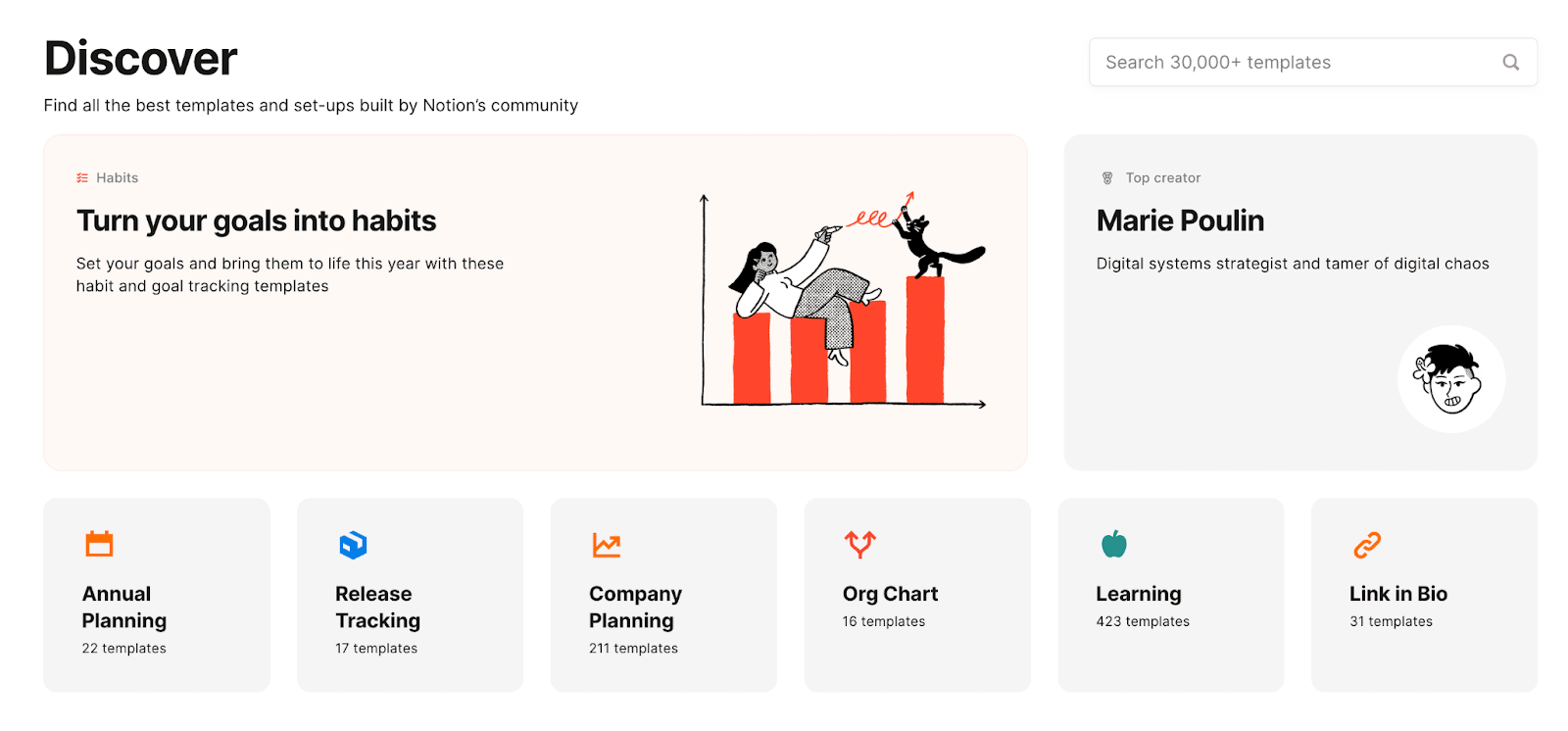
Here are some examples of their target segment and use case pages:
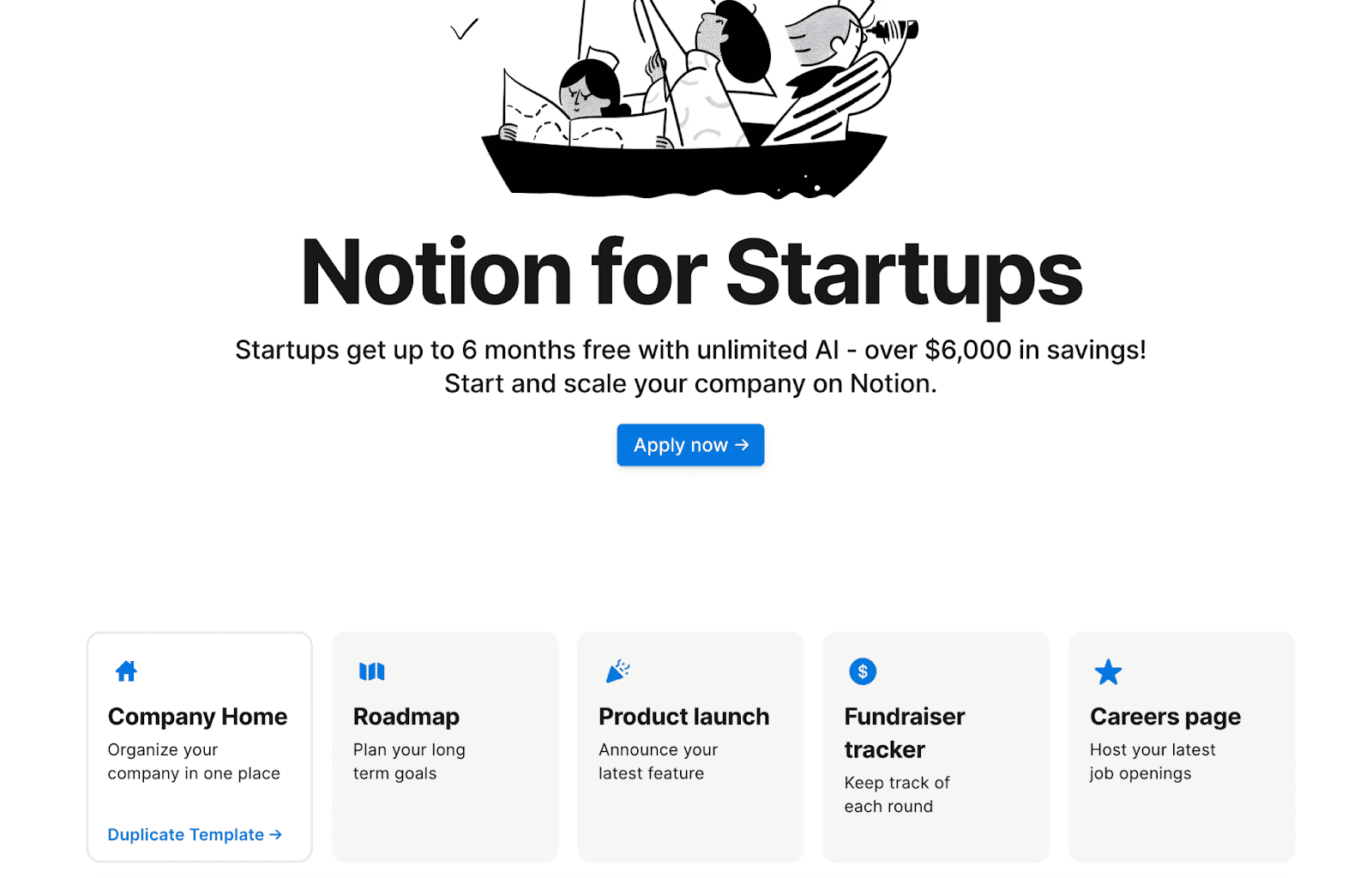
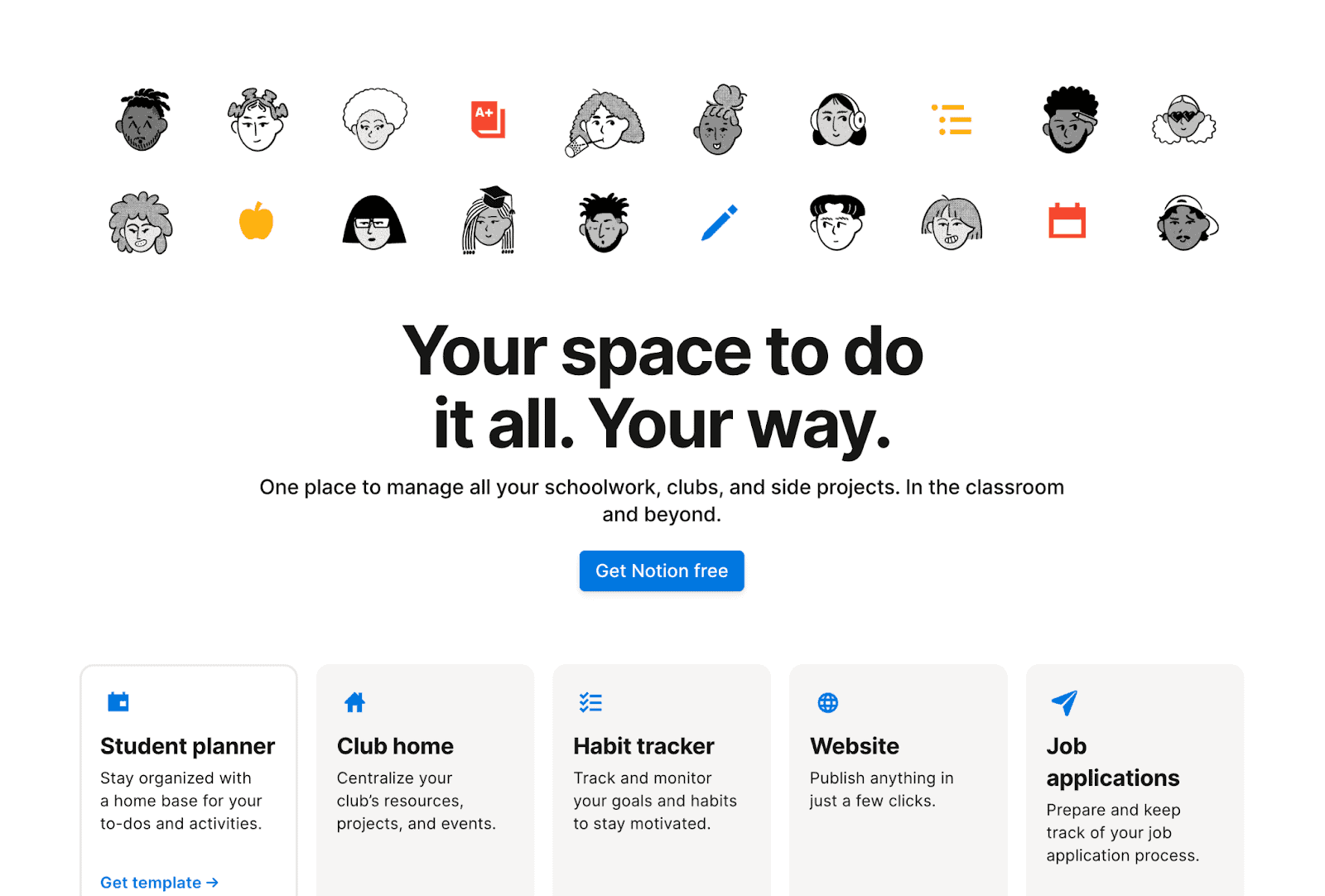
4. Community-Generated Content
Notion’s community-powered content (user guides, templates, and shared workflows) amplifies organic traffic without requiring heavy content production from Notion itself.
Example: The “Notion Template Gallery” is indexed by Google and continuously generates organic traffic through user-generated submissions.
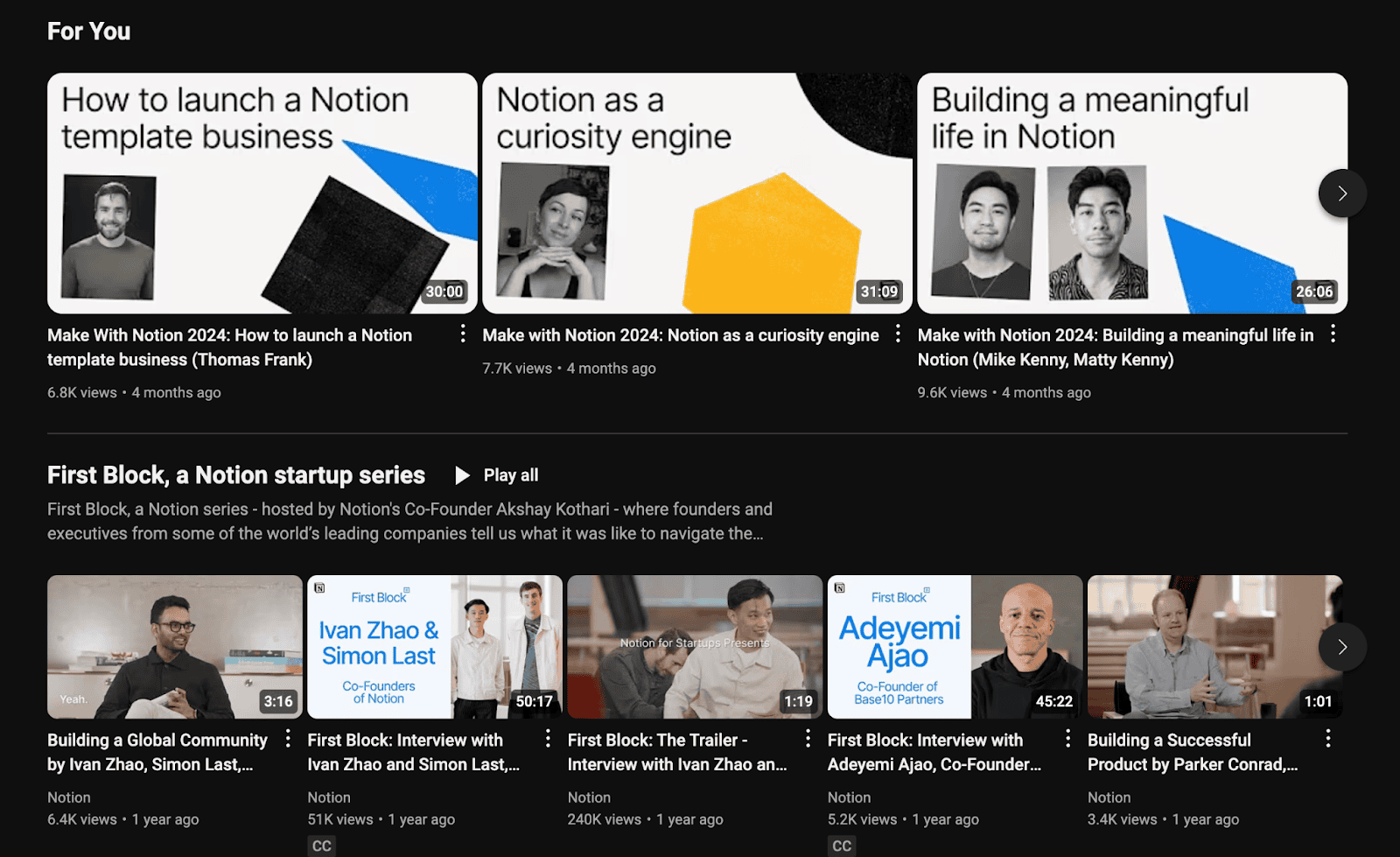
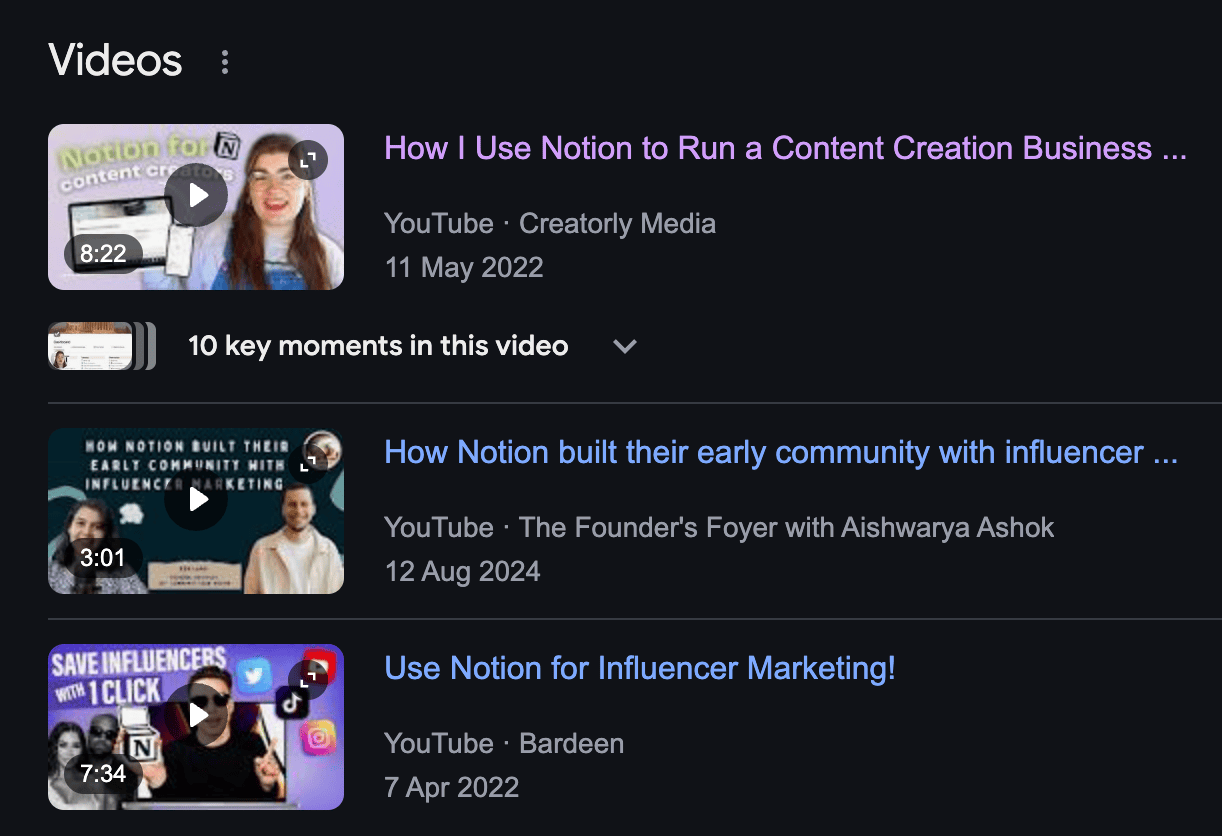
5. YouTube Tutorials & Video SEO
Notion dominates video search by publishing tutorials, walkthroughs, and customer stories on YouTube. These videos also appear in Google search results.
Example: “How to Set Up a Dashboard in Notion” ranks on both YouTube and Google’s video snippets.
Content Distribution: Expanding Reach Beyond Search
Beyond SEO, Notion amplifies its content through multiple distribution channels. This helps them take their content to where the target audience is most active, driving higher levels of engagement through awareness.
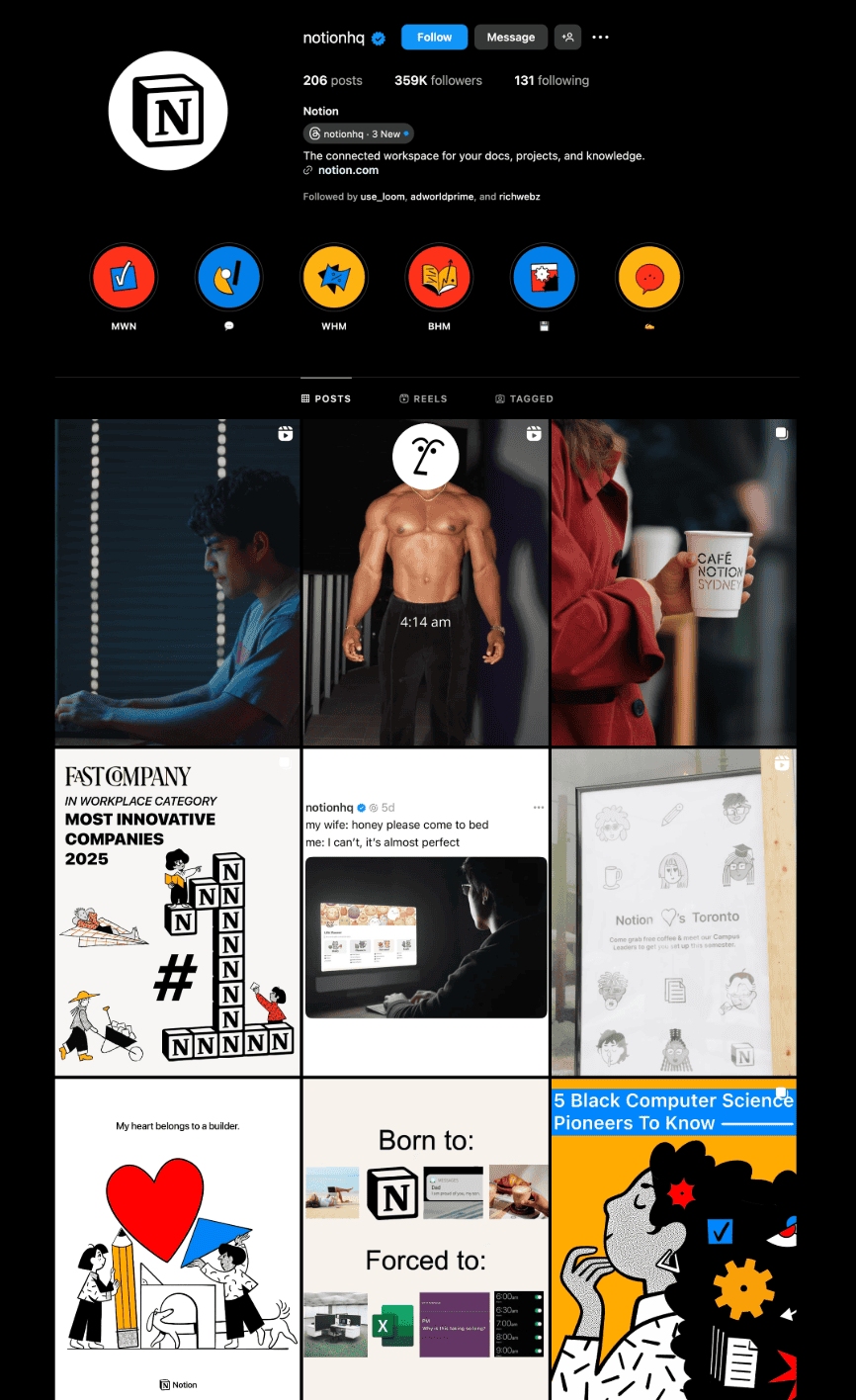
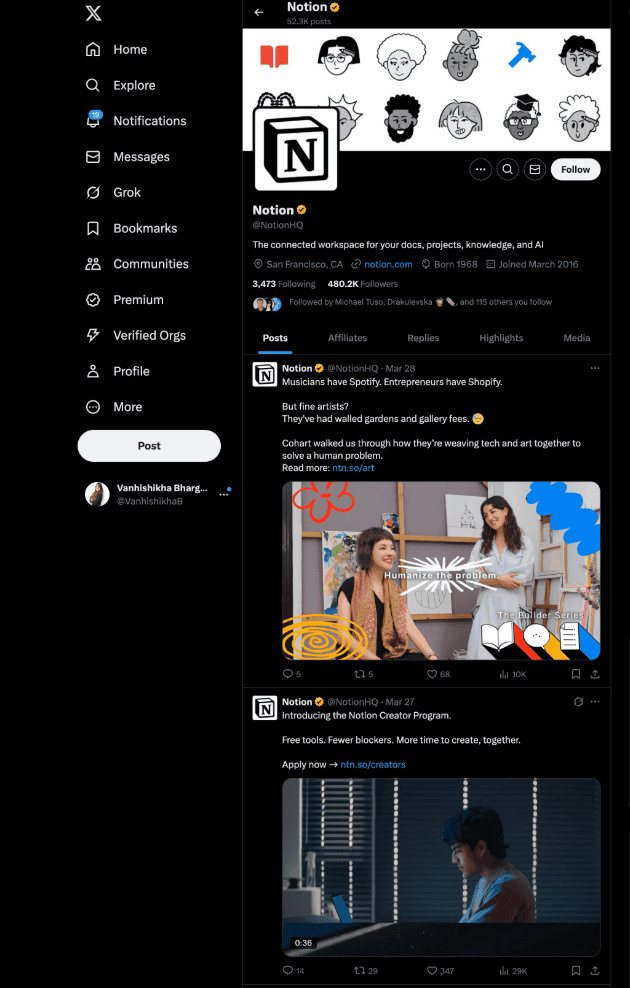
1. Social Media (Twitter, LinkedIn, TikTok)
- Sharing product updates, user-generated templates, and behind-the-scenes insights.
- Engaging with the Notion community using #MadeWithNotion.
- Using LinkedIn to reach B2B teams and decision-makers.
- Leveraging TikTok for bite-sized productivity hacks and feature showcases.
PS. Want to use Notion for social planning your social media content? Read this blog.
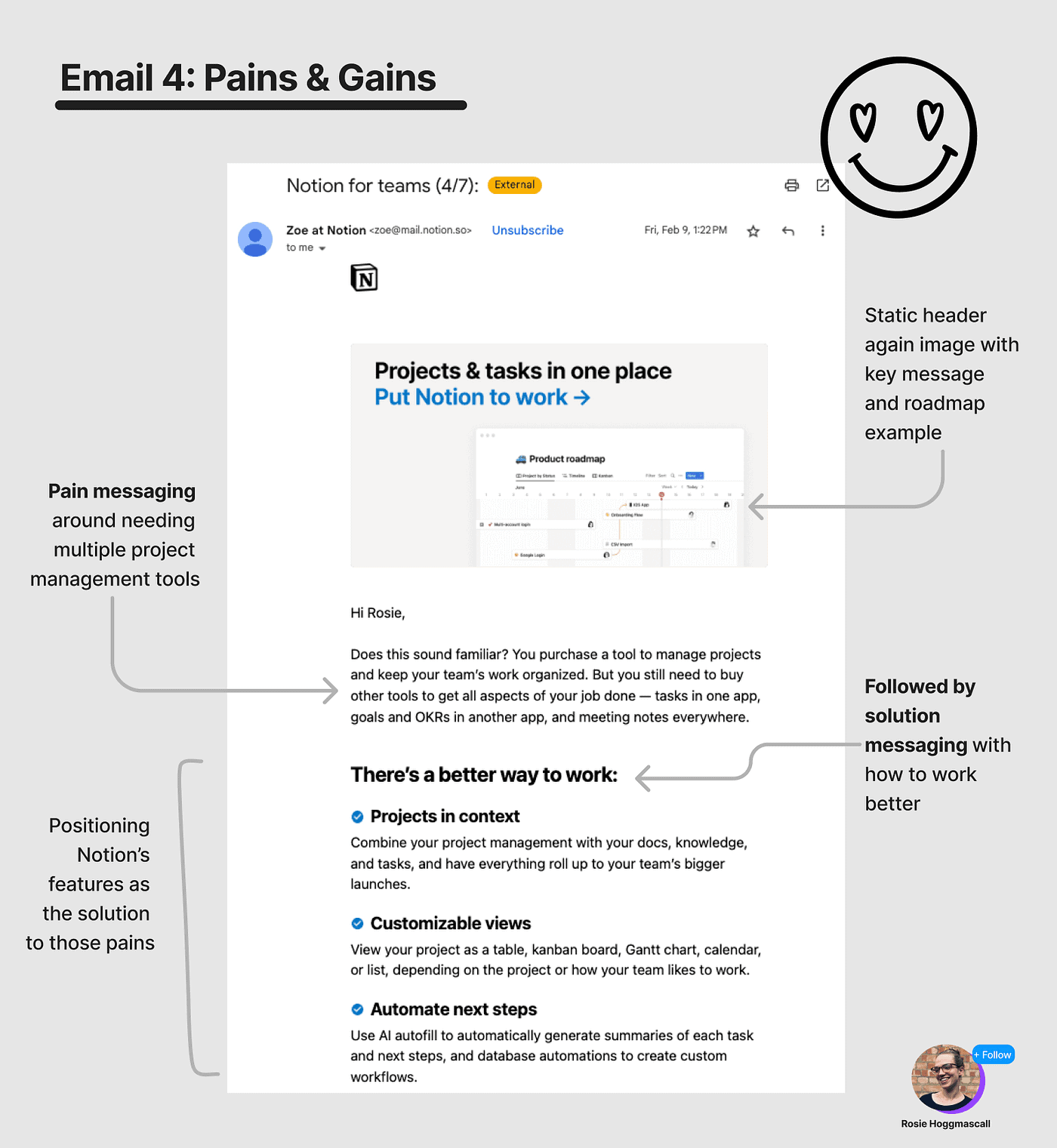
2. Email Marketing & Newsletters
- Notion sends productivity tips, feature releases, and curated templates to its user base.
- Email marketing acts as a content redistributor, driving users back to their blog & templates.
- Newsletters highlight community contributions, helping Notion maintain an engaged audience.
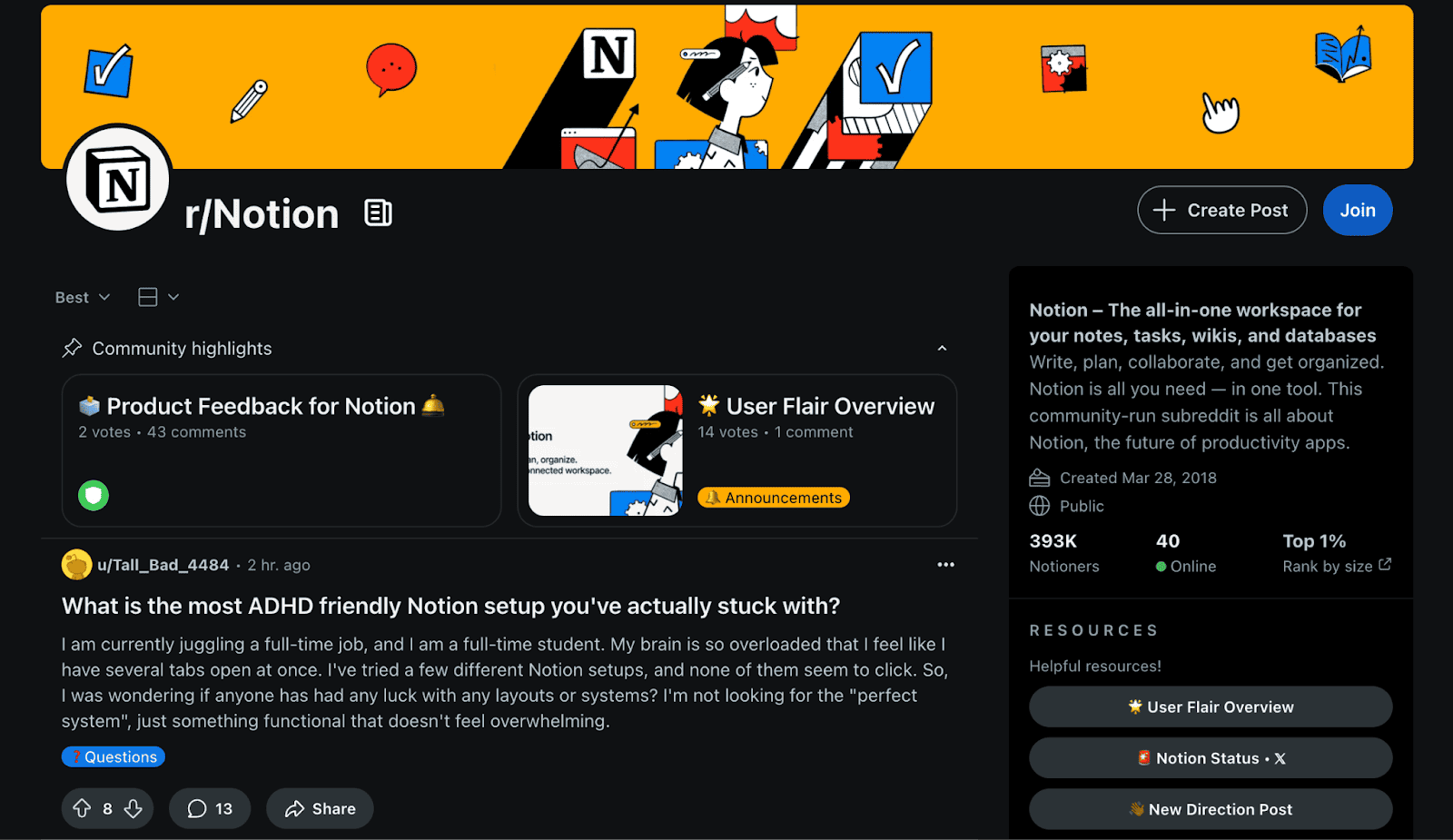
3. Reddit & Community Engagement
- Active participation in r/Notion and other productivity-related subreddits.
- Engaging with Notion power users who share guides and workflows.
- Hosting AMAs (Ask Me Anything) and discussions to connect directly with users.
4. Partnerships & Influencer Collaborations
- Notion collaborates with influencers and YouTubers to expand brand awareness.
- Features in articles from major publications like TechCrunch and Fast Company.
- Partnering with SaaS tools and creators to co-promote relevant content and integrations.
Key Takeaways for B2B SaaS Founders & Marketers
If you’re in the same space or segment as Notion, here are some key takeaways for your content marketing and SEO strategy:
- Target Multiple Keyword Types: Balance product-led, use-case-driven, and competitor-based keywords for maximum reach.
- Leverage Multiple Content Formats: From blog posts to templates and video tutorials, diversify your content strategy.
- Use Your Community as an SEO Asset: Notion’s user-generated templates and community forums create content at scale.
- Distribute Content Beyond Search: SEO is powerful, but amplifying content through social media, email, and partnerships accelerates growth.
- Optimize for Retention, Not Just Traffic: Notion’s content doesn’t just attract users—it onboards and retains them through education and templates.
Conclusion
Notion’s content marketing and SEO strategy is a masterclass in organic growth for B2B SaaS brands.
By deeply understanding their audience, strategically targeting high-intent keywords, and using multi-channel content distribution, Notion continues to scale its presence without relying heavily on paid acquisition.
If you’re building a SaaS product, taking inspiration from Notion’s strategy can help you grow your organic reach, build a strong community, and drive long-term retention.
And if you need help, we’re always there.
Let us help you set up an organic growth channel using content marketing and SEO – contact us today.