Content marketing is one of the biggest growth levers for FinTech brands, and only a few of them have done it as effectively as PayPal.
A leading digital payments platform, PayPal serves approximately 438 million active accounts across 200 markets worldwide and processes over $1.5 trillion in payment volume annually. The company has consistently grown its user base and merchant adoption through strategic content initiatives.
PayPal’s content strategy demonstrates how content can go beyond blogs and newsletters to shape brand perception, drive adoption, and build long-term loyalty.
This article is a deep dive into PayPal’s content framework across diverse market segments.
What is PayPal?
PayPal is a global digital payments platform that helps individuals and businesses worldwide make secure online transactions through its comprehensive ecosystem of payment solutions.
This FinTech offers a complete suite of digital payment solutions that include online payment processing, mobile payments, peer-to-peer transfers, business payment gateways, point-of-sale systems, working capital loans, and cryptocurrency services to both merchants and individuals.
To fuel this growth, PayPal relies on a content strategy that simplifies complex financial topics, strengthens trust among payment ecosystem stakeholders, and deepens customer relationships.

The 6 key content hubs of PayPal
PayPal’s audiences span individual consumers, small businesses, enterprise merchants, and developers. This diverse ecosystem requires multiple content touchpoints to deliver targeted value across user segments.
To cater to all their audiences, PayPal creates content around digital payments, financial inclusion, business growth, security, and FinTech innovation.
These are distributed through the following content hubs:
1. Business resource center (BRC)
PayPal’s Business Resource Center is the central hub for businesses of all stages to find expert advice, best practices, leading tools, and more. The BRC covers business growth strategies, payment optimization, operations management, marketing tactics, and industry insights.
What are they for?
The BRC provides resources across multiple categories, such as tools that can help drive sales and optimize operations, payment insights that can drive conversions, business commerce solutions for enterprises and local businesses, and marketing tactics that can attract, convert, and drive loyalty.
These articles target high-intent business keywords like “content marketing ideas,” “social media marketing strategy,” and “how to create a marketing strategy,” and pair them with PayPal’s business solutions to drive conversions.

2. PayPal developer community blog
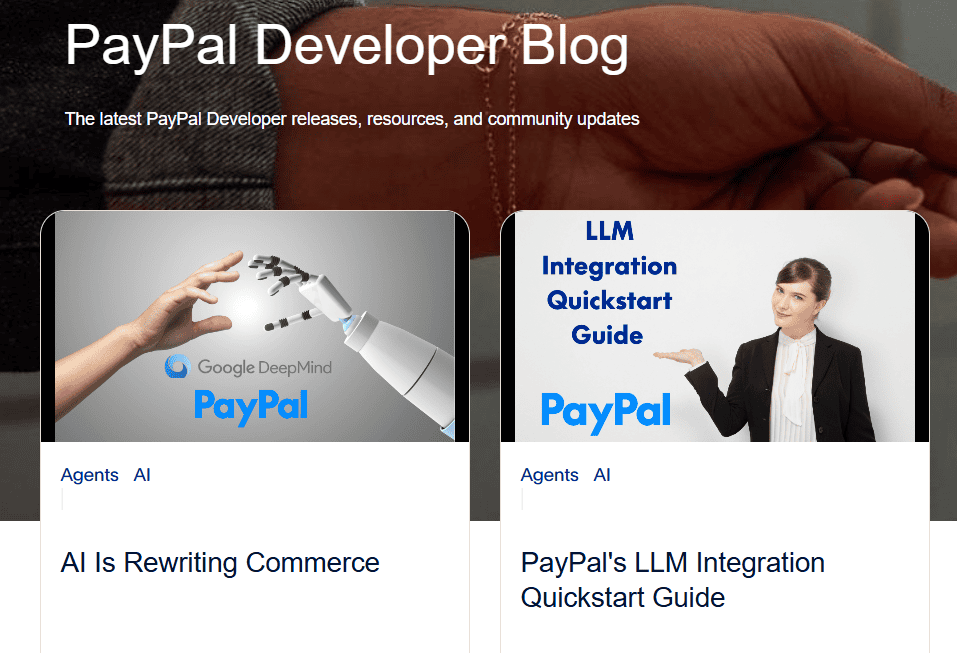
PayPal’s Developer Community Blog delivers “The latest PayPal Developer releases, resources, and community updates” covering topics like AI, technology announcements, and learning resources.
What makes it unique?
PayPal has created this community hub to help developers around the globe with payment integrations. Developer blog’s content includes technical tutorials, API guides, integration workflows, product announcements, and developer tools.
Recent content covers emerging technologies like Building on the earlier releases of PayPal’s MCP server, developer hackathons, agentic AI systems, and practical guides for subscription services and donation integrations.
3. PayPal newsroom
PayPal maintains an official newsroom that features company announcements, product launches, partnership news, and executive thought leadership. The content includes press releases, executive interviews, and PayPal’s expertise.
What’s the benefit?
The newsroom serves as the primary source for company announcements, product launches, partnership news, and executive thought leadership. It works alongside investor relations content to maintain transparency and drive brand awareness during major announcements.

4. Customer success stories and case studies
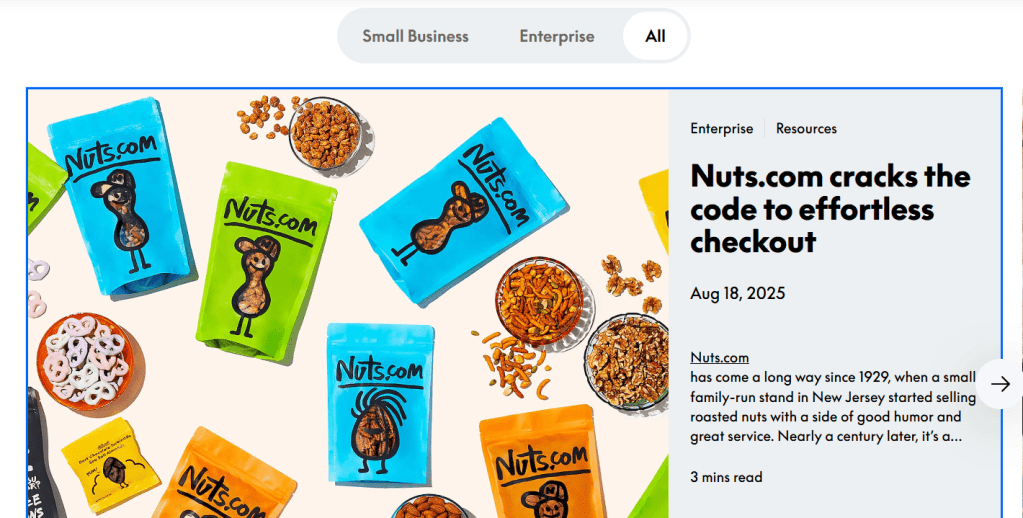
PayPal’s customer stories and case studies are a part of BRC but are highly effective. These stories show the product in action across various industries. Companies can learn from real-world implementation workflows and increase their revenue.
What are they for?
These stories serve as bottom-of-funnel content that helps prospects understand practical applications and the ROI potential of PayPal across different business models and industries.
5. Help center and support guide
PayPal maintains comprehensive help resources covering account management, payment processes, security features, and troubleshooting guides across both consumer and business segments.
What’s the benefit?
Help content captures high-intent search traffic from users looking for specific PayPal functionality, while documentation supports developer adoption and platform integration.

6. Developer documentation & APIs
PayPal maintains comprehensive developer resources, including API documentation, SDKs, code samples, and integration guides. This technical content hub serves the developer community building payment solutions.
What makes them developer-friendly?
Documentation includes interactive code examples, sandbox environments, and step-by-step integration tutorials. PayPal optimizes these resources for technical search queries like PayPal API integration, payment gateway SDK, and checkout implementation guide.

PayPal’s best-performing content formats
Content optimization is a key pillar of PayPal’s content strategy. The company continually refines content across different formats to educate users about the latest developments in the payments ecosystem and to drive adoption of its financial products and services.
Here are the standout formats in PayPal’s content marketing strategy:
1. Technical developer tutorials
PayPal creates excellent and detailed technical content, including feature updates, subscription implementation guides, and integration tutorials. These content pieces combine educational value with practical implementation guidance.
Examples include:
- Add a Donate Button with PayPal’s Donate SDK – This guide shows developers how to integrate PayPal’s Donate SDK into their website, allowing users to make donations without leaving the site.
- Integrate Subscriptions to Bill Customers Regularly – This tutorial features how to leverage catalog Products, subscriptions APIs, and JavaScript SDK to create seamless recurring payments.
2. Business growth educational content
PayPal publishes actionable business content that covers marketing strategies, social media tactics, and comprehensive business development guidance. These articles position PayPal as a business growth partner, not just a payment processor.
Examples include:
- Social Media Marketing Mix
- Market your business on social media
- Online Marketing Strategies for Small Business
3. Product announcements and feature updates
PayPal regularly announces new features and improvements, such as “PayPal’s remote Model Context Protocol (MCP) server,” new SDK releases, and platform enhancements. Each announcement focuses on developer and merchant benefits, besides explaining its technical specifications.
Some examples to look at:
4. Industry thought leadership
PayPal uses industry expertise and global stature to create and publish content on payment trends, FinTech innovations, and the evolution of digital commerce. Some of the recent content it published explores emerging technologies like “agentic AI systems” and cryptocurrency implementations.
Examples of thought leadership articles:
5. Interactive developer resources
PayPal offers interactive tools that include GitHub Codespaces integration, VS Code extensions, and comprehensive API collections that provide hands-on learning experiences for developers.
Examples to explore:
6. Event-driven content
PayPal leverages events like PayPal Dev Days and Global PYUSD Portal Hackathon to create engaging content that brings together developer communities and showcases platform capabilities.
Examples include:
How PayPal optimizes for keywords naturally
PayPal doesn’t chase keywords by stuffing them into content. It earns rankings by aligning with user intent, structuring content for discoverability, and connecting education with solutions. Its approach blends SEO best practices with genuine utility, which makes its content both search-friendly and customer-centric.
- Intent-driven hubs: PayPal builds dedicated content hubs (e.g., Business Resource Center, Developer Docs) that target informational, transactional, and technical keywords across user segments.
- Evergreen explainers: Articles like “What is a POS system?” and “What is an eCheck?” target high-volume definitional queries, structured to capture featured snippets and long-tail searches.
- Seamless product linking: Informational content naturally guides readers toward PayPal’s solutions through contextual links, FAQs, and related resources, making the journey feel relevant rather than forced.
- Skimmable, SEO-ready structure: Clear headings, FAQs, checklists, and TOCs make content easy to scan for both users and search engines, boosting SERP visibility.
- Freshness and localization: PayPal regularly updates its content and makes region-specific adaptations to ensure it stays relevant, competitive, and visible in diverse markets.
Conclusion
PayPal’s content marketing strategy is a strong example of how established industry leaders use content marketing to maintain relevance and drive product adoption across different customer segments.
The company strategically balances technical depth for developers with practical business guidance for merchants, all while reinforcing consistent messaging around innovation and reliability.
Its approach is carefully designed to reach different stakeholders in the payment industry through the right mix of content formats and distribution channels.
As a result, PayPal continues to strengthen its leadership in digital payments, attracting new developers and merchants to its platform consistently.
Want a similar plan for your business?