When content takes center stage, brands rise above the noise by offering consistent value.
That’s precisely what Todoist did to stand out in a saturated productivity app marketplace.
Todoist is a task and project management application used to organize daily tasks, set reminders, track project progress, and more.
Zapier names Todoist as one of the top to-do list apps of 2025.
So what turned a simple tool like Todoist into a top-of-mind brand?
This guide will break down the tool’s exact content marketing framework from strategic TOFU pieces to handy guides that helped them make millions in revenue.
The 5 key content hubs and pillars
Todoist’s content encompasses a wide range of topics and themes, including productivity tips, home organization, and digital well-being.
These are distributed across major content hubs like:
1. Blog posts
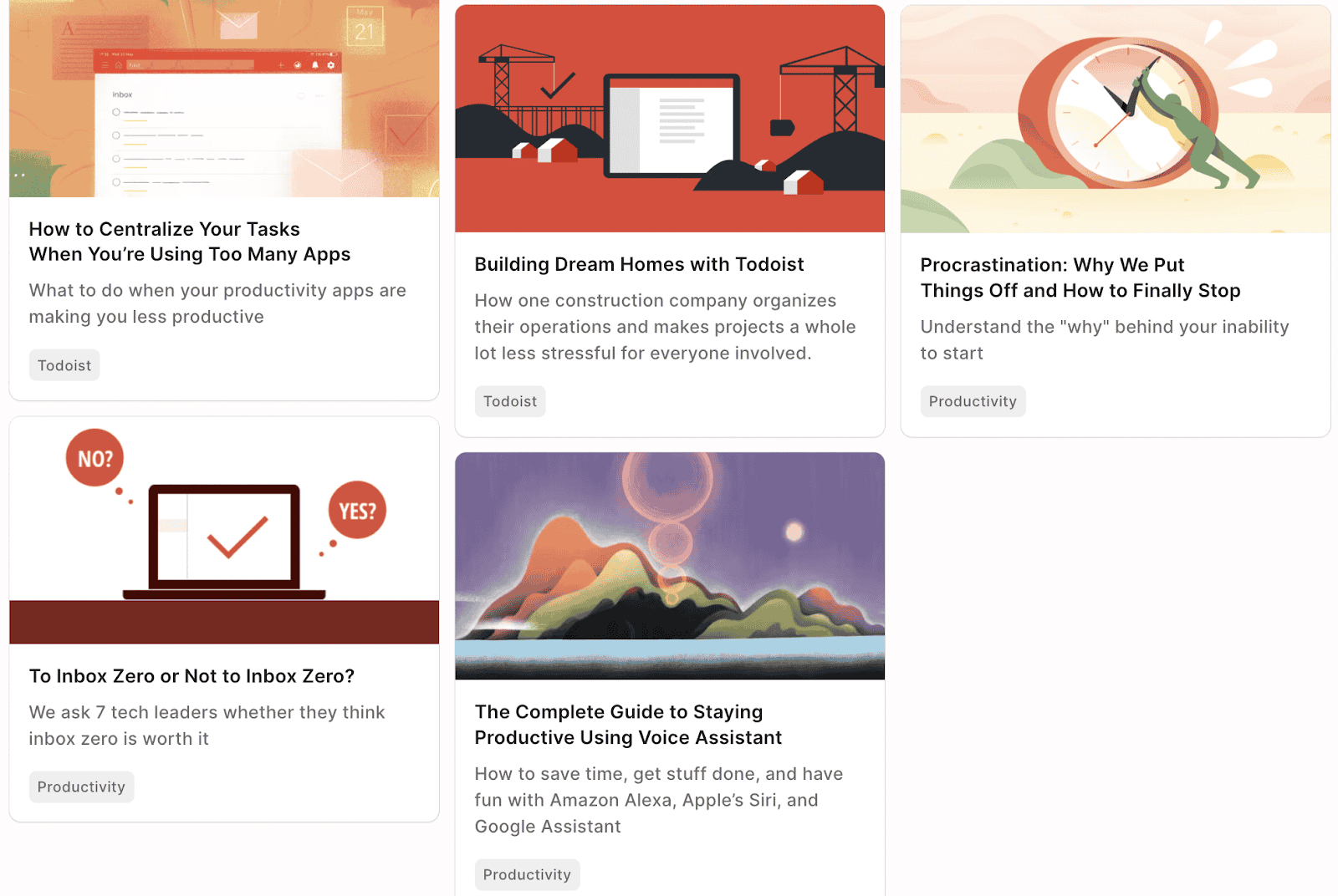
A major share of Todoist content involves long-form product-led blog articles across topics for reader education and conversion.
The content is broken into micro content pillars on topics like Productivity, Collaboration, Todoist usage, Goals, etc.
What are they for?
The focus is to address pressing user queries, provide actionable tips to stay organized using Todoist, and portray expertise using thought leadership pieces.
2. Templates
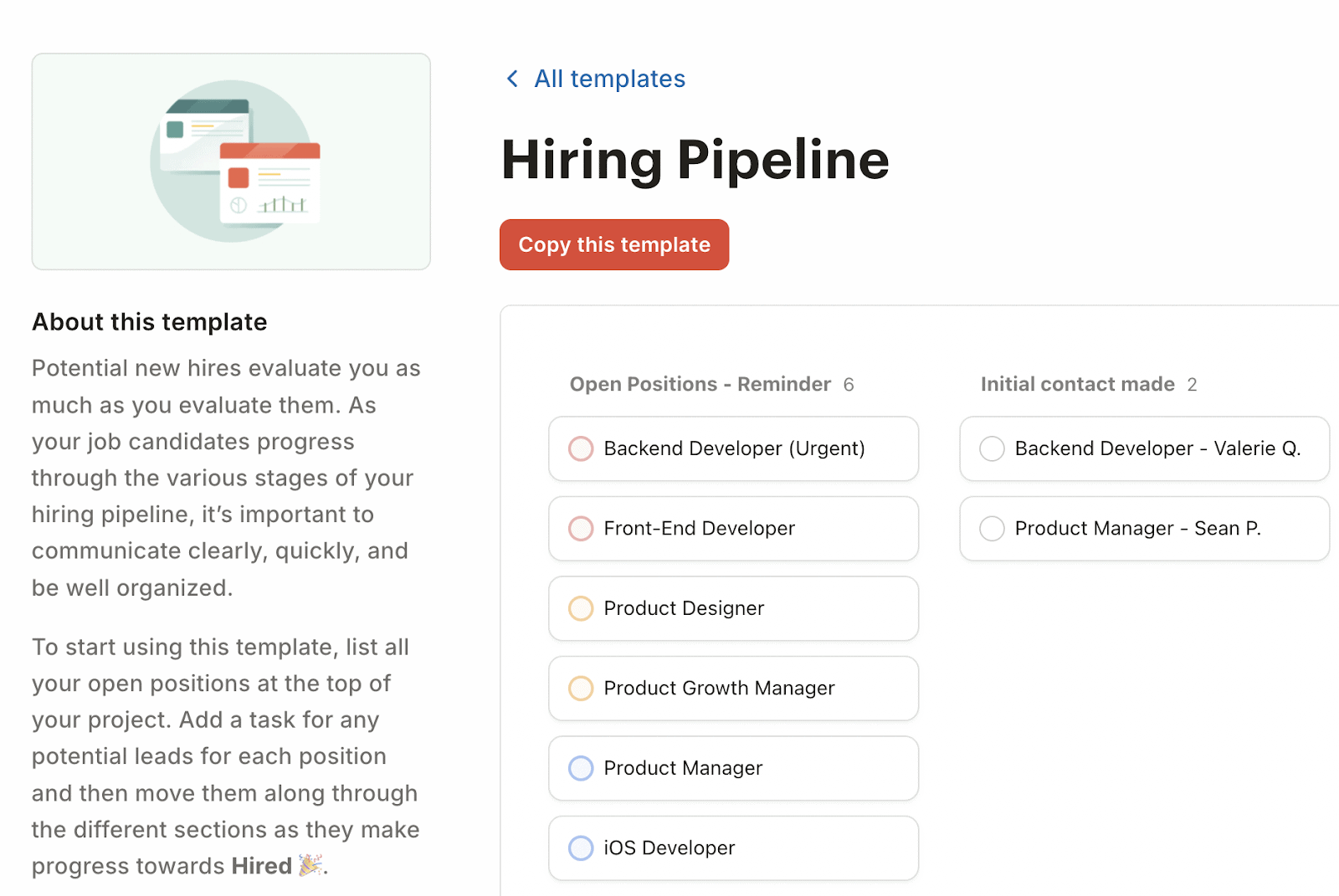
Todoist offers hundreds of curated, ready-to-start task templates for time and task management professional/personal use cases. These are SEO-friendly with mini descriptions on each of them.
What are they for?
Todoist’s free templates serve as an instant headstart into using the app without going through elaborate help guides or needing technical support. Just search with specific keywords to find the right template for your use case.
3. “Getting Started” guides and help docs
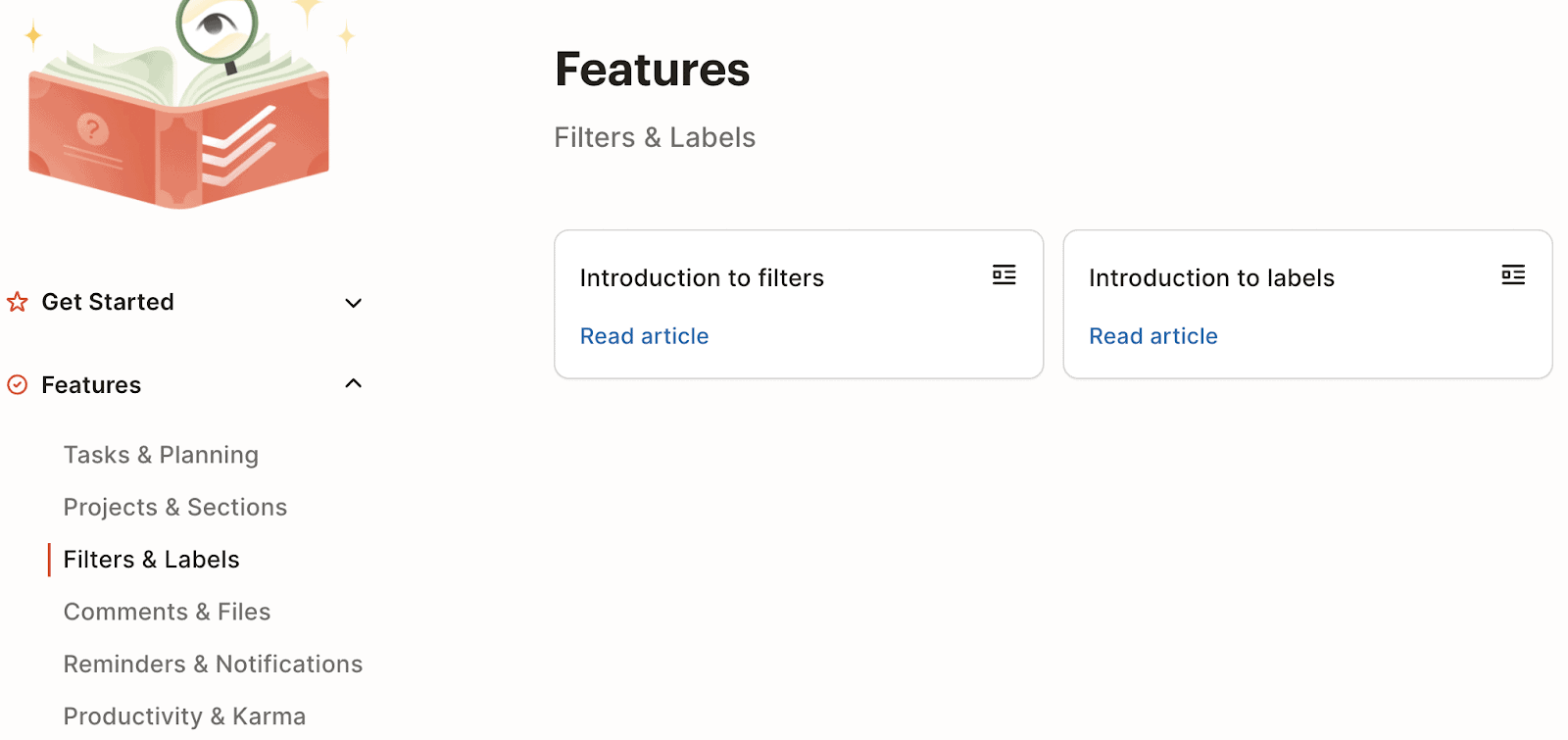
Todoist’s comprehensive list of helpful guides is useful for everyone from beginners who are new to task management to users fine-tuning their projects or optimizing workflows.
What are they for?
Detailed and straightforward SEO-optimized guides to get well acquainted with the tool, troubleshoot potential issues, automate and integrate with other platforms, and more.
And what makes it unique?
Unlike those generic step-wise “how to” guides, Todoist groups help articles into intuitive categories, such as “Productivity,” and “Time Tracking.” Each guide includes contextual examples and interlinks to relevant blog posts for further deep-dive.
4. Productivity quiz
This one’s for the overwhelmed users lost in finding the right productivity method.
Todoist’s productivity quiz is a unique take on offering new users hyper-personalized recommendations to get started with the tool.
What’s it for?
It’s a super-short six-question quiz that records your answers to recommend a time management or productivity method.
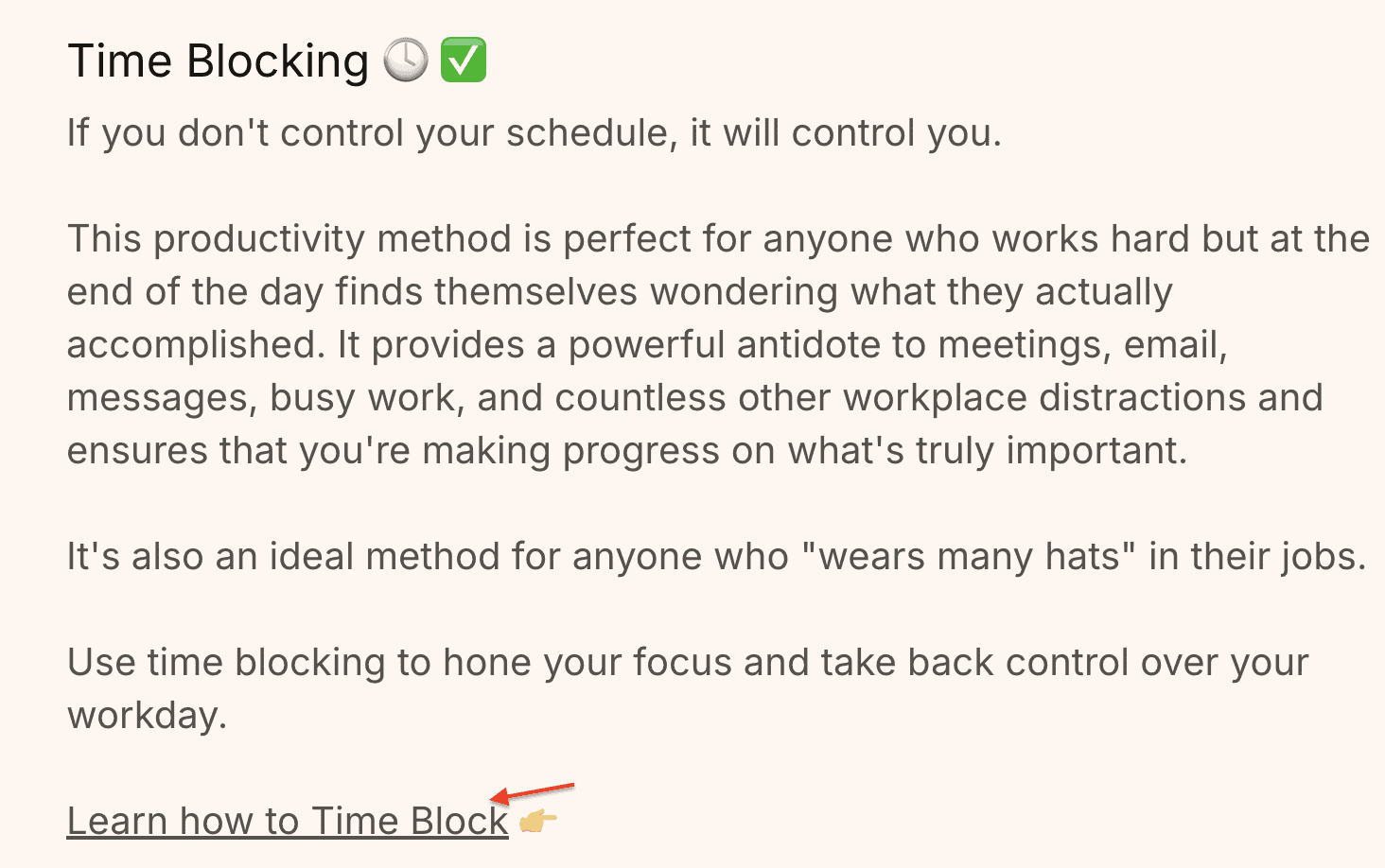
Once recorded, it auto-suggests a productivity tactic and lets you explore an in-depth long-form article on the suggested topic, as shown below:
5. Reddit community
Todoist has an active 70k-member Reddit community where discussions surround topics like app tricks, updates, opinions, etc.
What’s it for?
Todoist staff as well as users are free to share their opinions and announce updates on this page:
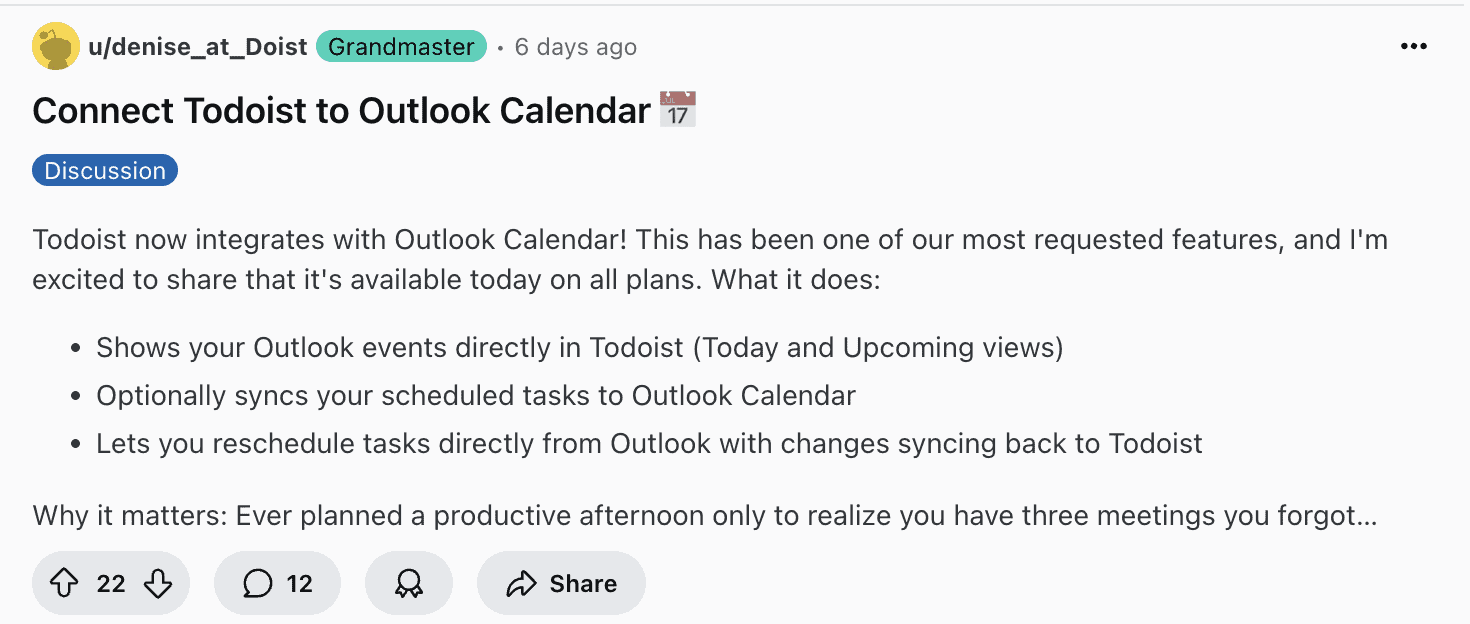
Using Reddit for SEO and pushing content is a win-win for both the Todoist team and the users. For instance, the Todoist marketing team can use Reddit to understand their target audience’s concerns, while the users can get their concerns addressed in less time.
Todoist’s best-performing content formats
Todoist intends to reach its different audience segments through a variety of content formats. For example, quick Instagram Reels with Todoist tips for younger social media users or deep-dives with blog posts for project management professionals.
Here are the top formats that dominate Todoist’s content marketing strategy:
1. Long-form blog articles
Todoist’s “Inspiration Hub” is a goldmine of deeply researched and strategic long-form articles around productivity, time management, remote work support, and more.
These high-ranking, SEO-friendly articles are fluff-free and extremely value-driven with a major share of long-tail keywords. These posts offer exceptional advice while showcasing the tool in action.
Some examples of this format are:
- The Art and Science of Delegation: How to Delegate: Targets corporate professionals who’d like to clear some tasks off their routines. This in-depth article breaks down the science behind delegation and the exact framework to follow with Todoist.
- The 8 Biggest Mistakes to Avoid When Applying For a Remote Job: Targets desperate in-office employees looking to switch to remote work. This comprehensive article acts as a one-stop guide to landing a remote job along with advice from top leadership who use Todoist to stay on top of things.
2. Todoist guides
Optimized for SEO, these complete guides are a step above help docs. They infuse storytelling and handhold with thoughtful advice while taking you through a step-by-step Todoist process for a particular use case.
Some examples of this format are:
- 7 Real-Life Todoist Setups to Steal: Real-time screenshots with exceptional first-hand advice to help readers explore the top Todoist setups.
- The Manager’s Guide to Todoist: This one’s an extensive Todoist walkthrough for team leaders and managers with versatile use cases across the management.
3. Instagram posts
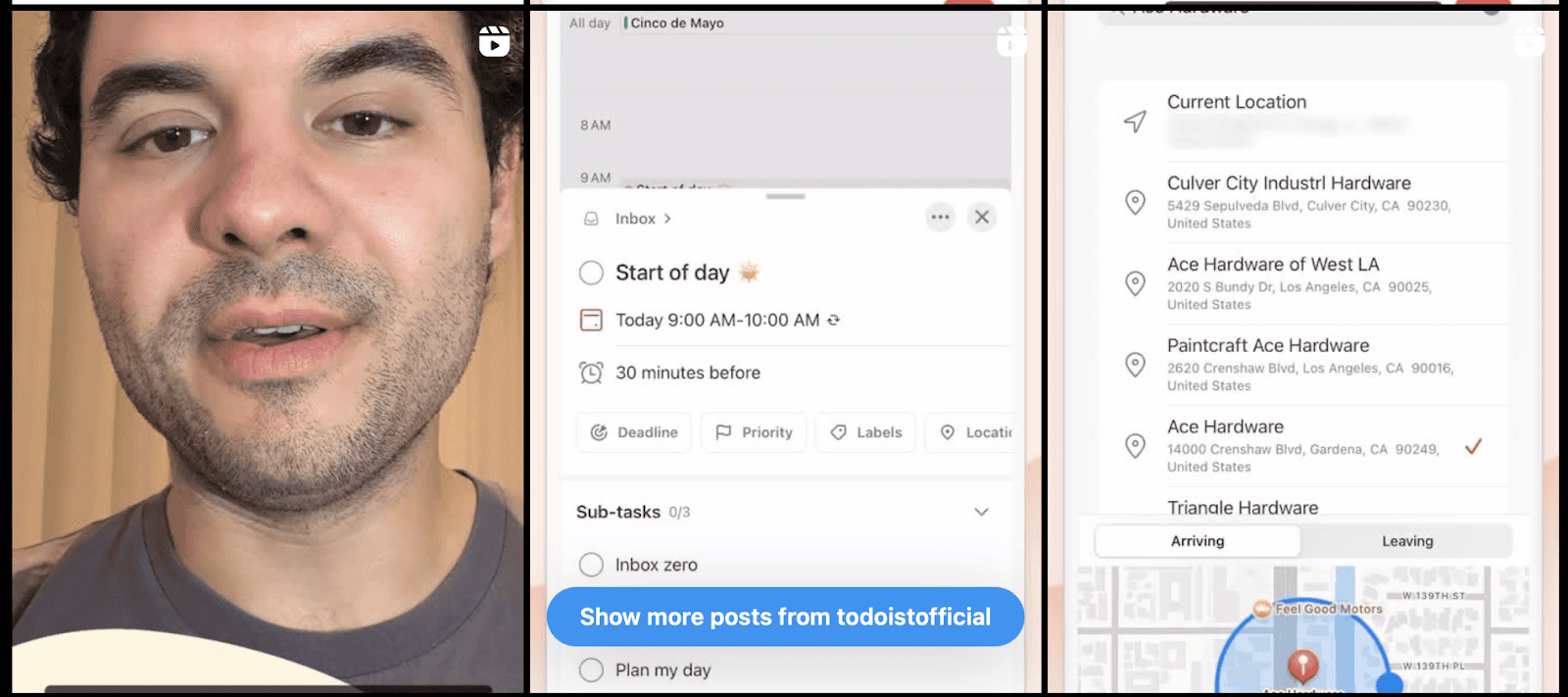
Todoist further strengthens its brand presence and aims to reach diverse audience segments with attractive Instagram Reels and carousels. Without hard-selling the product, it offers genuine productivity tips on various user pain points to encourage interaction and sharing.
For example, a 30-second Reel on a Todoist “trick” for impulsive buyers helps them set up an essentials tracker on the app to track spending on non-essentials.
4. YouTube tutorials
Videos in content marketing are reshaping how brands educate their target audiences, and Todoist’s YouTube strategy is proof.
Todoist shares frequent product and feature walkthroughs and productivity tips on its YouTube channel of about 46k subscribers. These are great for visual learning and let viewers get a quick demo of the tool’s best features.
5. Newsletters
Blog highlights, feature updates, productivity advice, tool offers, and more are shared or redistributed as email newsletters to the app’s 170k subscribers. This is an excellent strategy to push awareness content, and eventually, retain users and gain re-engagement.
Todoist’s SEO strategy audit
The secret behind Todoist’s increasing user base and viewership lies in its intent-driven SEO strategy and strong topic clusters.
Here’s a peek into their SEO approach:
Balancing TOFU, MOFU, and BOFU pieces
While TOFU (top-of-the-funnel) content gets people through the door, MOFU is used to nurture them, and finally, BOFU converts them. Todoist aligns its SEO strategy perfectly between these blog posts while heavily relying on TOFU – awareness-driven, educational but product-led content, as shown below:
| Funnel Stages | TOFU | MOFU | BOFU |
| Count | 126 blog posts | 30 blog posts + Quiz | 25 blog posts + Help docs + Templates |
| Examples | My 23 Go-To Productivity Tools for Remote WorkHow to Learn Anything with the Feynman TechniqueHow to Build Trust in the Remote “Workplace” | The Manager’s Guide to Todoist Using Todoist to Successfully Manage the Symptoms of ADHD | “Hey Siri, add a task to my Todoist”How to Use Todoist Effectively — The Complete Guide |
| Benefits | Search-friendly and easy to optimizeExcellent potential to boost organic traffic Educates readers while subtly pushing the product or its features | Soft-sells the toolNurtures prospect interest Builds trust by offering help and showcasing authority | Niche targetingHighlights tool features to enable conversionPushes urgency |
Primary content distribution channels
Like most SaaS, Todoist follows a multi-channel content distribution approach to reach its target ICP across funnel stages.
But here’s how they do it differently:
1. Social media channels
As seen above, Todoist’s content marketing strategy is not limited to its website. Feature updates, tool tricks, productivity advice, and more are circulated as:
- Micro content within the Reddit community as announcements and threads
- Attractive Instagram Reels and Stories
- YouTube explainer videos via customer stories and product walkthroughs
For example, the blog post “The Art and Science of Delegation: How to Delegate (With Advice from 11 Leaders)” is repurposed as a YouTube Short:

2. Influencer collaboration
Todoist partners with influencers to boost its content visibility and increase sign-ups, which further helps reach more relevant audiences.
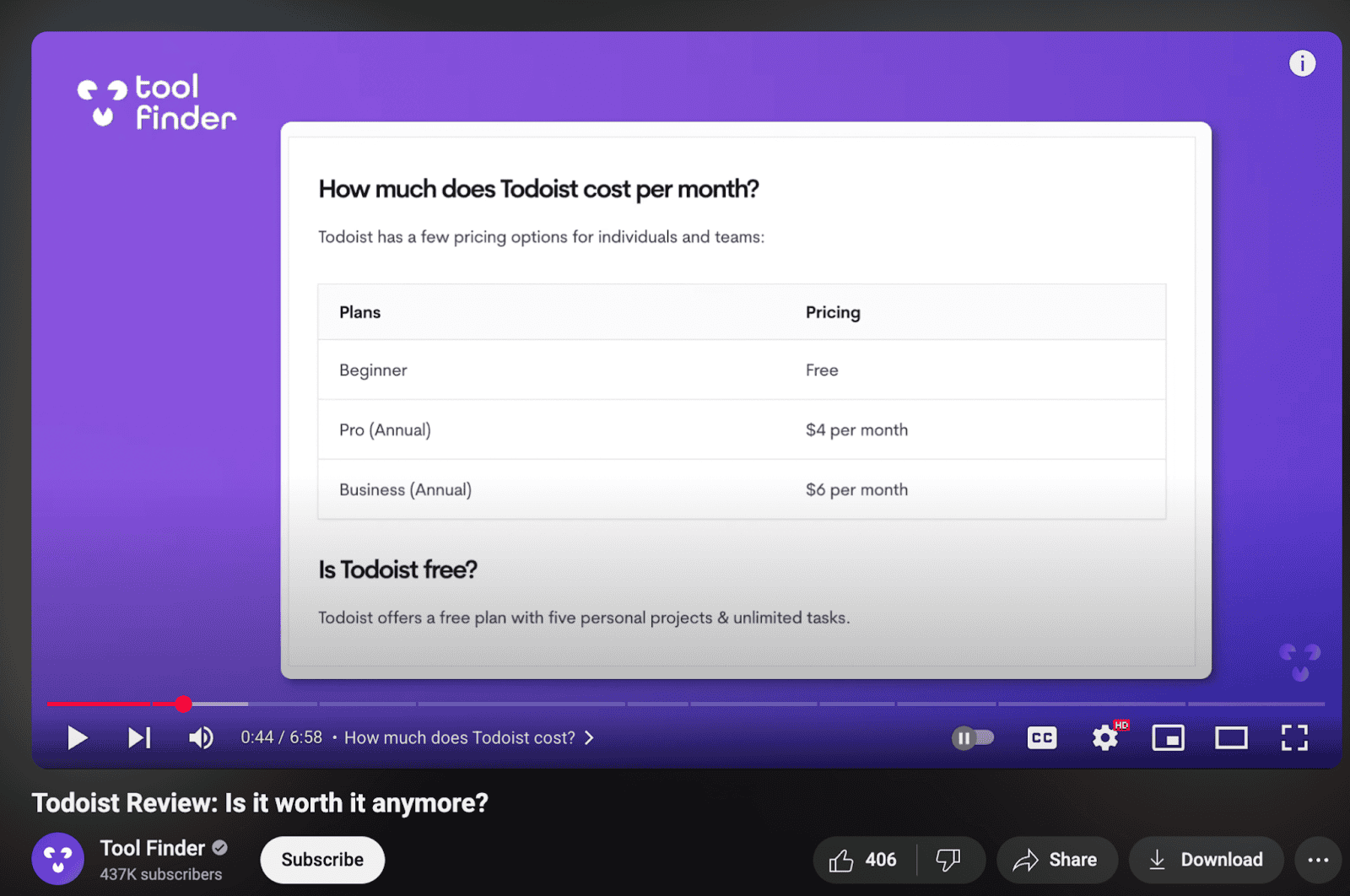
Here’s an example collaboration with the “Tool Finder” YouTube channel which reviews Todoist and offers an exclusive sign-up deal:
3. Newsletters to its 170k subscribers
Frequent newsletters go out to Todoist subscribers which are mainly blog posts repurposed as productivity or time management nuggets to inspire action. These are more personalized sequences based on user behavior or interests.
Key tactics you must learn from Todoist’s content marketing strategy
Here’s your ultimate content marketing takeaway the Todoist way:
- Creating useful content for a niche market and not just a wide audience segment: Todoist publishes a wide range of niche MOFU blog articles, such as “Manager’s guide to using Todoist,” or “The Freelancer’s guide to using Todoist,” instead of a generic guide that most SaaS brands use.
- Strong content clusters: Todoist has built a strong foundation with its topic clusters around its best use cases. These are SEO-optimized to attract organic, relevant traffic and use long-tail keywords to target real-time user questions.
- Naturally weaving in the product with content: Todoist has a vast content library with articles on the most pressing and common user queries and naturally weaves in a Todoist feature that can address them. This way, you educate readers about the problem and offer them a solution.
- Use of long-tail keywords: Despite lower search volumes, Todoist’s SEO strategy for blogs focuses on the use of long-tail keywords targeting hyper-specific target audiences. Example keywords include “How to complete your own annual review,” and “How can I stay connected with the remote team.”
- Tapping into unconventional social media channels like Reddit: Todoist’s Reddit community is a constantly active portal to distribute content, perform market research, get feedback, and address user queries.
Wrapping up
The core idea behind Todoist’s content marketing strategy is to focus on content quality over quantity.
Instead of pleasing search engines with just SEO, Todoist makes content marketing and SEO work in tandem by making inspiring content that various target ICPs can connect and engage.
Want such a user-focused content marketing strategy to grow your organic reach?
We can help.