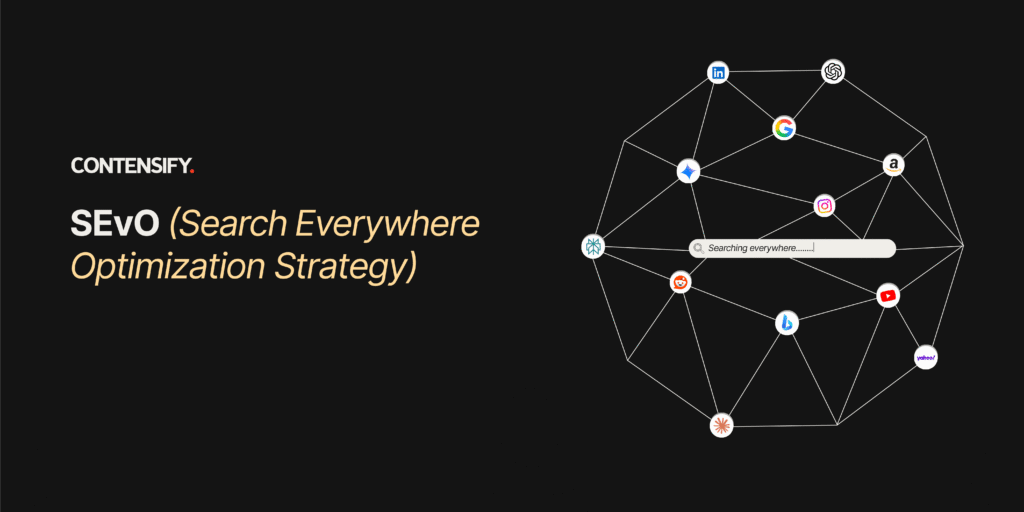
Search is no longer limited to Google, and your audience isn’t relying on a single platform. They look for answers on LinkedIn, Quora, Reddit, marketplaces, app stores, and AI tools, often moving across several of these platforms within a single search journey.
This shift changes how visibility works. Discovery is fragmented, multi-platform, and shaped by intent at different stages of the decision process.
You may not be able to show up everywhere, but you can show up where buying decisions are influenced. That requires focus and a structured approach to presence.
In this blog, you’ll learn 10 practical ways to build a search everywhere optimization strategy that strengthens your visibility across the platforms that matter most.
What Is Search Everywhere Optimization?
At first glance, this might sound similar to SEO. But it isn’t.
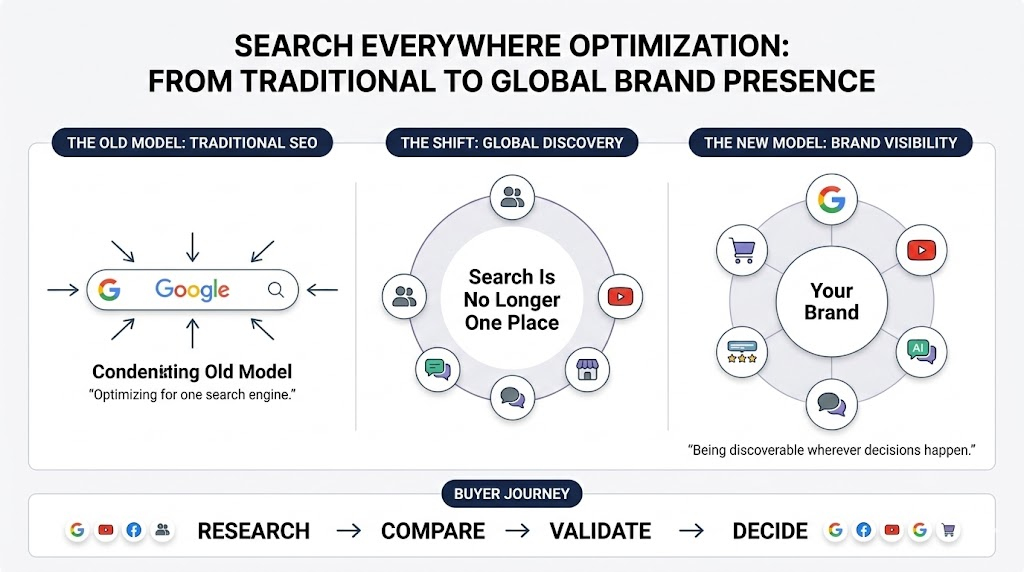
Traditional SEO has largely focused on optimizing for Google rankings. Search Everywhere Optimization takes a broader view. It’s about ensuring your brand shows up wherever your ideal customer is actively looking for answers, alternatives, or product comparisons.
That could be inside community discussions, review platforms, video content, marketplaces, or AI-generated responses. The focus isn’t just ranking on one search engine; it’s being discoverable across the environments where real evaluation and decision-making happen.
Why Search Everywhere Optimization Matters Today
People research in proportion to perceived risk. A $5 purchase might involve one quick search. A $10,000 software decision can involve 20-30 touchpoints across search engines, review sites, social platforms, video content, and AI tools.
This behavior is rooted in loss aversion, the tendency to feel potential losses more strongly than equivalent gains. When the stakes are high, buyers over-research to avoid making the wrong decision.
That has direct implications for marketers. If you’re not visible on the platforms buyers use to reduce risk, you lose credibility and influence before a sales conversation even begins.
10 Ways to Build Your Search Everywhere Presence
Here are 10 practical ways to strengthen your visibility across the platforms:
1. Start With Audience Research, Not Platform Trends
Many teams make the mistake of choosing channels first and shaping content later. “We need to be on TikTok” or “Let’s invest more in YouTube” sounds proactive, but it’s often disconnected from how decisions are actually made.
Instead, start with evidence.
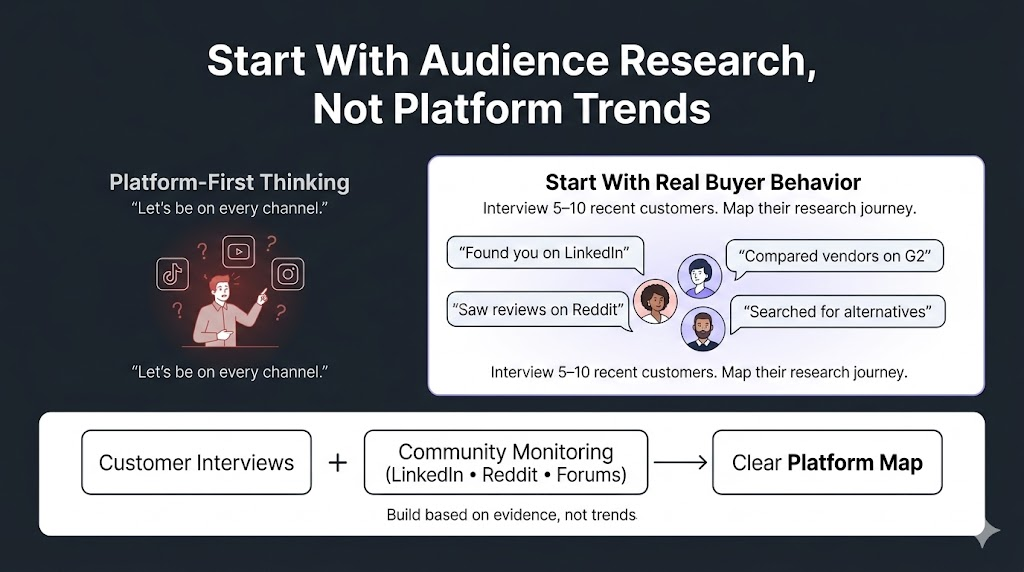
Interview 5-10 recent customers and ask them to walk you through their research process, like:
- Where did they first discover you?
- What did they search?
- Which platforms did they consult before shortlisting vendors?
- What influenced their final decision?
This gives you a real platform map built from people who converted. In parallel, monitor LinkedIn discussions, Reddit threads, and niche industry communities. Recurring questions and recommendation requests reveal where intent surfaces naturally.
2. Map Intent Pillars, Not Just Keywords
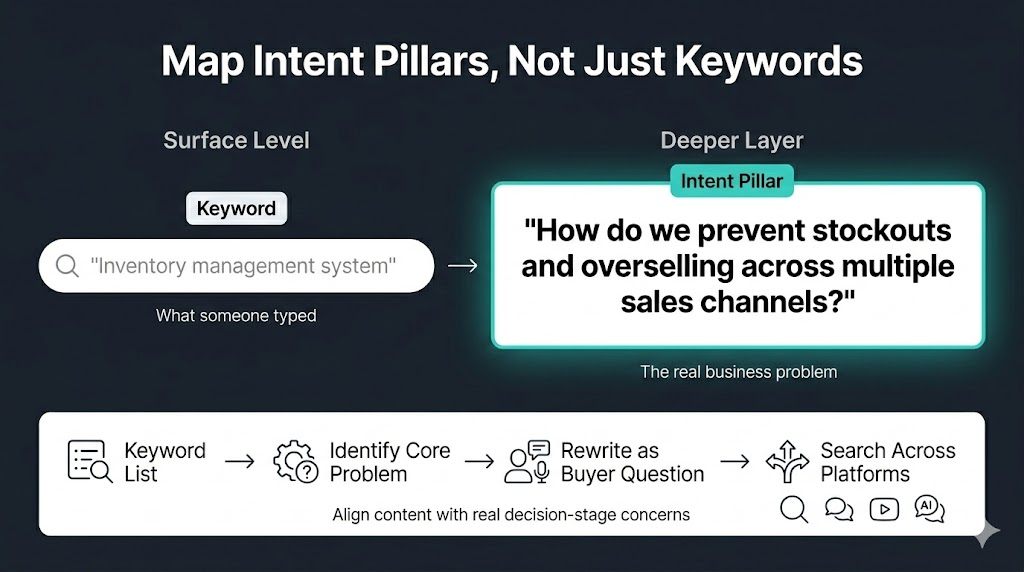
A keyword tells you what someone typed. An intent pillar explains the business problem behind it. For example, “Inventory management system” is a keyword.
The real intent might be: How do we prevent stockouts and overselling across multiple sales channels? That underlying question should shape your strategy.
To build intent pillars:
- Start with your keyword list.
- Ask what core problem each keyword represents.
- Rewrite it as a clear buyer question.
- Search that question across platforms to see where conversations are happening.
You’ll often find the same intent discussed in different formats across multiple channels. Organizing around intent pillars ensures your content aligns with real decision-stage concerns, not just search terms.
3. Identify Where Each Conversation Actually Lives
After defining your intent pillars, determine where those discussions are actually happening.
Search each core question across Google, YouTube, Reddit, Quora, Instagram, and other relevant platforms. Look for recent content, active threads, and meaningful engagement. The goal is to see where the topic is being explored.
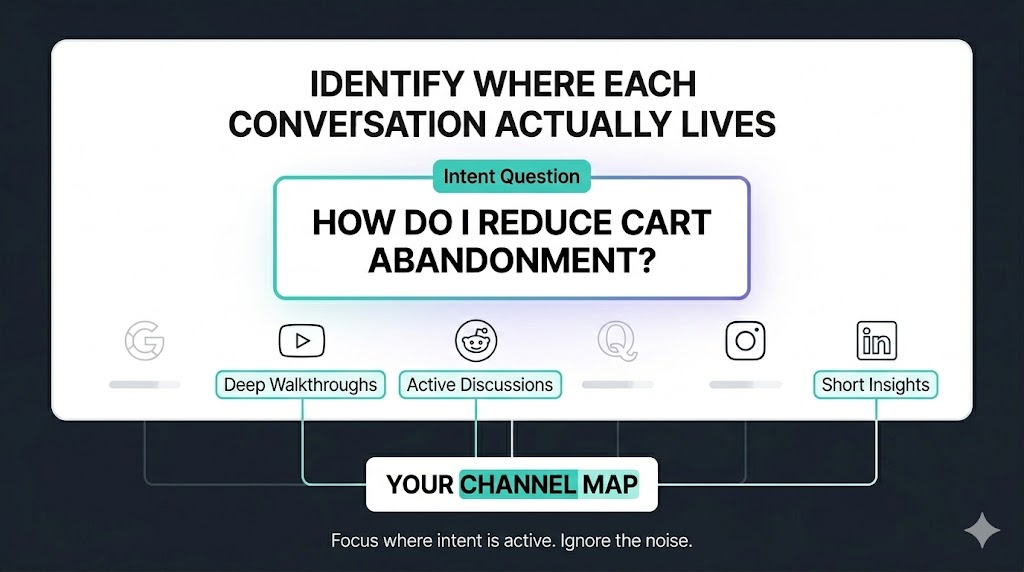
For example, if the intent is “How do I reduce cart abandonment?” you may find in-depth walkthroughs on YouTube, practical discussions on Reddit, and short insights shared on LinkedIn, while other platforms show little activity. That pattern becomes your channel map.
This process also helps you eliminate noise. If a conversation isn’t active on a platform, don’t force it. Focus your effort where real intent and engagement already exist.
4. Prioritize Branded Search as Your Core Visibility Metric
Platform metrics show reach. Branded search shows intent. When someone types your company name into a search bar, they’ve moved beyond general research. They’re evaluating you specifically. That’s the shift that matters.
Track branded queries in Google Search Console and monitor trends over time. Look beyond total clicks, focus on consistent growth in searches that include your brand name.
Queries like “[your brand] reviews” or “[your brand] alternatives” are high-value signals. They indicate shortlist behavior. If you own those pages and shape the comparison, you influence the decision instead of leaving it to third parties.
If your Search Everywhere efforts are working, branded demand should increase. That’s the metric that reflects real preference, not just visibility.
5. Optimize Social Content for Search, Not Just Virality
Most social strategies focus on short-term performance, like maximizing views, likes, and engagement in the first 24–48 hours. That approach prioritizes algorithm momentum, but it rarely builds lasting visibility.
Search-driven social content takes a longer view. Instead of chasing early spikes, it’s designed to resurface when someone actively searches for a solution weeks or months later. Platforms like TikTok, Instagram, and YouTube now function as search engines. Content that matches search behavior continues working long after it’s published.
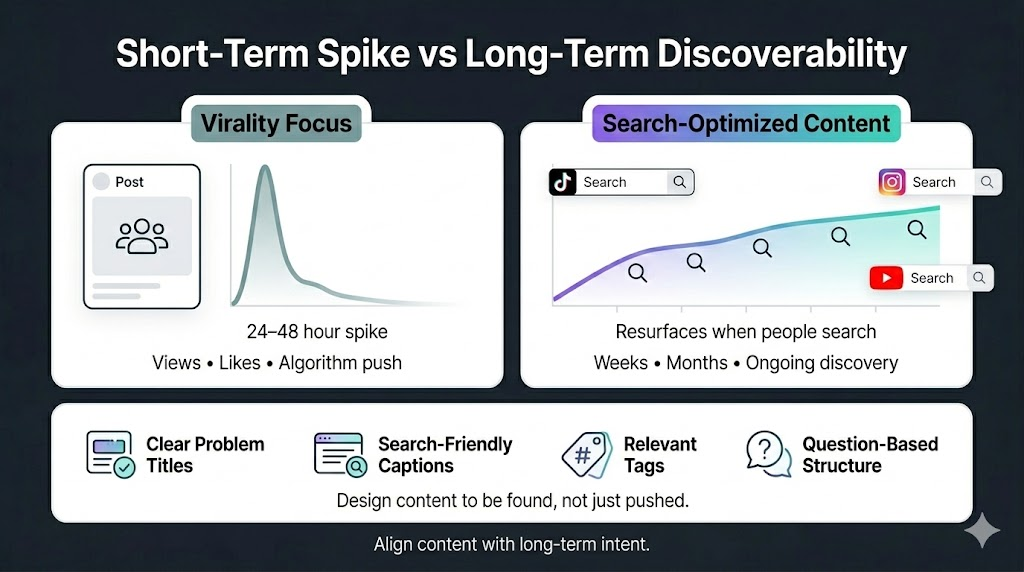
To extend the shelf life of your posts:
- Use clear, problem-focused titles instead of vague hooks
- Include natural search phrases in captions and descriptions
- Add relevant tags and keywords aligned with real queries
- Structure content around specific questions your audience asks
6. Partner With Agencies or Creators to Scale Content Volume
Search Everywhere requires consistent, multi-platform output. Most internal teams can’t sustain that volume alone. The limitation isn’t expertise, it’s bandwidth.
That’s where agencies and creators come in. Agencies can provide process, production capacity, and distribution systems. Creators bring platform fluency, audience trust, and a native voice. Used correctly, both expand your coverage without overloading your team.
The structure should remain strategy-led. Your team defines the intent pillar, the key question to answer, core positioning points, and platform context. Execution, whether through an agency workflow or a creator’s voice,
Start small. Work with a focused group of partners, test formats, evaluate quality and downstream impact, then scale what consistently drives meaningful visibility and brand-driven demand.
7. Own Emerging Conversations Before They Peak
Traditional SEO waits for search volume. By then, competition is established.
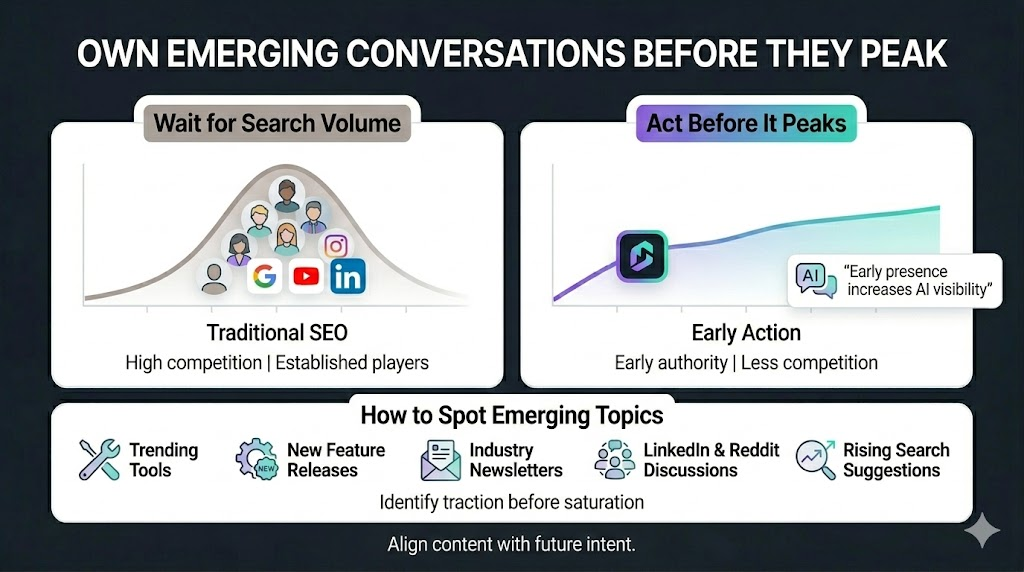
Search Everywhere requires earlier action. Identify topics that are gaining traction before they become saturated. Monitor trending tools, new feature releases, industry newsletters, and recurring questions in LinkedIn and Reddit discussions. Platform search suggestions and rising queries are early signals of growing interest.
Early presence creates authority. In AI-driven search, models draw from sources that consistently cover a topic across platforms. Brands that contribute early, credible insight are more likely to be referenced as demand increases.
8. Design Your Strategy for AI-Generated Answers
AI tools like ChatGPT, Gemini, Perplexity, and Google’s AI Overviews are changing how people search. Users don’t just get links; they get summarized answers pulled from multiple sources.
That means ranking alone isn’t the objective anymore. Inclusion is.
AI systems surface brands that appear consistently across credible platforms. If your insights live only on your website, your visibility is limited. If they appear in articles, interviews, community discussions, comparison pages, and expert commentary, your chances of being referenced increase.
This is where LLM seeding becomes practical. Publish clear, structured content. Contribute perspectives in industry conversations. Ensure your positioning is repeated consistently across the platforms AI models draw from.
9. Break Down Internal Silos to Enable Cross-Platform Strategy
Search Everywhere loses impact when teams work separately. If SEO focuses only on rankings, social on engagement, and paid on conversions, the brand’s visibility becomes fragmented even when individual metrics look strong.
A coordinated approach connects insight and execution across functions. For example:
- SEO data should inform social topics and video scripts.
- Questions from social comments can improve product pages and FAQs.
- High-performing organic posts can be repurposed and tested as paid creative.
- Paid search queries can uncover new intent gaps for the content team to address.
When channels share data and direction, each becomes both a distribution engine and a research source.
10. Measure the Full Flywheel, Not Individual Channels
Attribution across Search Everywhere is rarely linear. A buyer might discover you on Reddit, validate through YouTube, and convert via a branded Google search. Isolating credit to one channel overlooks how influence builds over time.
Instead of measuring channels in isolation, track compounding signals such as:
- Growth in branded search queries over time
- Engagement trends across platforms, not just one channel
- Referral traffic patterns that show cross-platform movement
- Visibility and mentions in AI-generated responses
Adopt a simple monthly review rhythm. Monitor branded query trends, identify top-performing content across channels, and assess which platforms correlate with downstream actions such as direct visits or demo requests.
Attribution will never be perfect. But brands that build integrated visibility now create an advantage that becomes increasingly difficult to replicate later.
Conclusion
Search is no longer confined to one platform. Buyers research across multiple surfaces, validate through different sources, and form opinions long before they convert.
Winning requires a structured, cross-platform approach, grounded in intent, built on authority, and measured through branded demand.
At Contensify, we’ve spent over a decade helping SaaS brands show up not just on SERPs, but everywhere their ICP researches and evaluates solutions.
If you’re ready to build a Search Everywhere strategy that drives real visibility and demand, talk to our experts today.