Search has changed fast. AI now answers questions before users even click, and yet, listicles are ranking, surfacing, and getting cited more than ever.
It sounds counterintuitive. As algorithms get smarter and summaries replace blue links, you’d expect long-form essays or data-heavy reports to dominate.
Instead, structured, skimmable lists feed both traditional SEO and AI-generated results. They’re easy to parse, easy to quote, and easy to trust. So while the search landscape looks completely different in 2026, one format continues to outperform the rest.
That’s exactly why in this blog, we’ll break down why listicles dominate SEO and AI search and why they deserve a clear place in your content strategy moving forward.
Why Listicles Continue to Outperform in Traditional SEO
Before we talk about AI-driven search, let’s ground this in what still matters: traditional SEO. Because long before AI summaries and answer engines, listicles were already outperforming standard blog formats, and they still are.
Here’s why listicles continue to outperform in traditional SEO:
1. They Match Exactly How High-Intent Buyers Search
When someone types “best IT asset management software for enterprises,” they’re not looking for a definition of ITAM. They’re comparing vendors. Queries that start with “best,” “top,” “X tools,” or “X ways to” signal commercial intent; these are buyers actively evaluating options, not casual readers skimming for information.
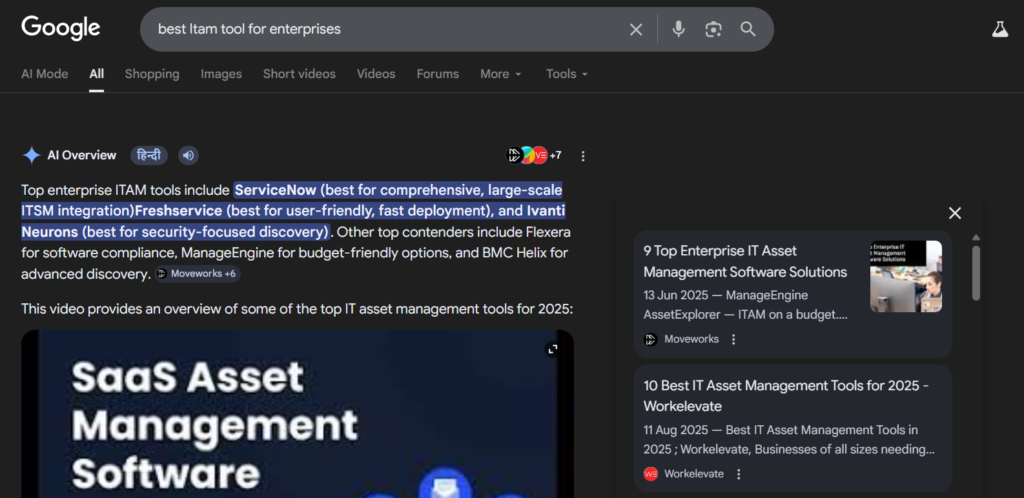
Listicles don’t just rank for these searches; they’re the natural answer format. A query like “top ITAM tools in 2026” practically demands a structured list. Clear options. Quick comparisons. Decision-ready information. Search engines favor that alignment, and users expect it, which is exactly why listicles continue to win high-intent SEO traffic.
2. Engagement Signals That Google Can’t Ignore
Search engines don’t just rank content based on keywords; they measure what users do after clicking.
Do they stay?
Do they scroll?
Do they explore further, or bounce back to results in seconds?
Metrics like dwell time, scroll depth, and pogo-sticking behavior serve as feedback loops that indicate whether a page satisfied the intent or failed to do so.
Listicles structurally encourage completion. Clear subheadings create micro-commitments, which increase scroll depth. Numbered sections reduce cognitive load, making it easier for readers to stay longer.
Internal linking within list items drives deeper navigation. All of these signals are relevant, useful, and aligned with search intent, the behavioral patterns that Google’s algorithms reward.
3. Featured Snippet Real Estate Is Built for Lists
Look at most featured snippets, and you’ll notice a pattern: numbered steps. Ordered lists. Clear sequences. When Google pulls a “how to,” “best ways,” or “steps to” query into position zero, it’s essentially asking for a structured list. In other words, the algorithm is requesting a mini listicle.
To maximize snippet extraction:
- Use numbered H3 subheadings for each point.
- Keep each explanation under 40–50 words so it can be cleanly lifted.
- Start each section with a direct, standalone sentence that answers the query.
- Avoid burying the main idea in long paragraphs.
If Google can copy-paste your structure into a snippet without editing it, you’ve formatted it correctly.
4. One Listicle Targets Dozens of Keywords Simultaneously
A strong listicle isn’t optimized for one keyword. It’s structured like a cluster. Each H3 acts as its own ranking opportunity.
One section can rank for “IT asset lifecycle best practices,” another for “ITAM cost control strategies,” and another for “license compliance risks.” Same page. Multiple entry points.
Here’s the architecture:
- The primary keyword anchors the title.
- Each numbered section targets a specific sub-intent.
- Supporting lines capture long-tail variations naturally.
Instead of chasing one term, the page builds layered relevance, which is how a single listicle earns topical authority across dozens of related searches.
5. Numbers in Headlines Are a Click-Through Rate Weapon
Precision earns attention, and numbers make that precision visible. A headline such as “10 Reasons” clearly defines scope and effort, signaling exactly what the reader will receive. By comparison, “Reasons Why” lacks boundaries, which makes it easier to overlook.
That clarity reduces friction at the decision point, leading to stronger click-through rates. When a result consistently attracts more clicks, search engines interpret that behavior as relevance, and rankings often improve.
Why Listicles Are the Perfect Format for AI SEO
Here’s why listicles are the perfect format for AI SEO:
6. Every List Item Is a Ready-Made Citation Block for LLMs
LLMs scan for discrete, self-contained knowledge units they can extract and reuse. A well-structured list item delivers exactly that, pairing a clear label with a concise explanation that stands on its own.
Dense paragraphs often blend multiple ideas together, which makes extraction less precise. A numbered point, however, clearly defines where one concept begins and ends.
This is the core of Generative Engine Optimization. AI systems perform pattern matching similar to featured snippet extraction, but at scale. When each section functions as a clean knowledge block, it becomes easier for models to cite, summarize, and surface your content in AI-driven results.
7. Structured Content Gets Pulled Into AI Overviews
Google’s SGE and AI Overviews favor content that is clearly structured and easy to interpret. Numbered sections and defined subheadings signal hierarchy and organization, which increases the likelihood of inclusion in AI-generated summaries.
Structured formatting reduces ambiguity. When each point is clearly separated, the system can extract and synthesize information more reliably.
You can extend this advantage by adding an FAQ or HowTo schema to a listicle. The combination of visible structure and structured data markup expands the pathways for extraction, effectively increasing your visibility in AI-driven results.
8. Listicles Build the Topical Clusters AI Engines Use to Judge Authority
AI search evaluates domain-level expertise, not just single pages. It looks for consistent depth across related subtopics to determine authority.
A cluster of interlinked listicles creates that signal. For example, you might publish “Top AI Writing Tools,” “Best AI Image Generators,” “AI Automation Tools for Business,” “AI Tools for Data Analysis,” and “How to Choose the Right AI Software.” When these pieces link to one another, they form a structured topic map.
That interconnected coverage signals subject authority to both Google and LLMs, increasing the likelihood that your domain is treated as a reliable source within AI-generated results.
9. Voice Search and Conversational AI Answer in Lists
Ask Alexa, ChatGPT, or Perplexity a question, and the response almost always comes back as a list. Key options. Ranked tools. Step-by-step guidance. That pattern isn’t random; it’s the format conversational systems default to because it’s easier to deliver and understand.
For example, when I searched for “best AI tool for founders,” the results were a structured list of tools with short explanations. When I checked the cited sources behind the answer, one of them was a list-style article titled “5 AI Tools for Startup Founders in 2026.”
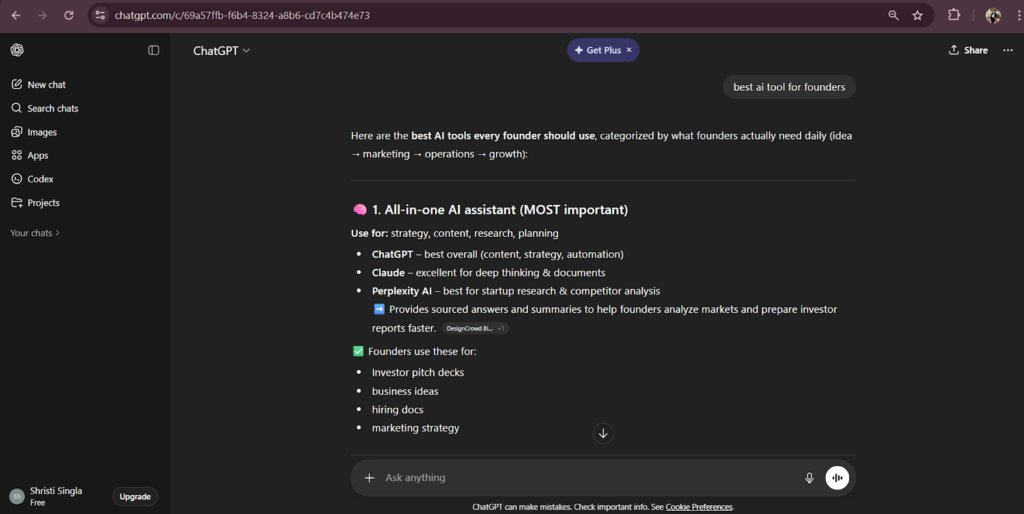
That’s the point. If your content is already structured as a clear list, you’re giving AI the exact format it prefers to extract, summarize, and present.
10. Easy to Refresh Quarterly = Freshness Signals at Scale
Freshness influences visibility. Both traditional search and AI-driven results prioritize content that appears current, especially for commercial and tool-based queries.
Listicles are uniquely easy to update. You can add a new tool, replace an outdated stat, reorder rankings, or remove a discontinued product without rewriting the entire page. The structure stays intact while the content evolves.
Most long-form guides require heavy edits to stay relevant. A listicle only needs modular adjustments. That makes it operationally efficient and scalable. You can maintain freshness signals across multiple pages with minimal editorial effort, protecting rankings while expanding coverage.
How to Write a Listicle That Ranks in 2026 (4 Non-Negotiables)
Here’s how to write a listicle that ranks in 2026:
Start With Search Intent, Not Just a Keyword
Before outlining, study the top five results for your target query. If they are list-based, the format is validated. If they are guides or tutorials, adjust your approach. Let the SERP dictate structure.
Write Each Point as a Self-Contained Knowledge Block
Ensure every section answers one clear question completely. Remove references that require readers to “see above” or depend on earlier context. If a point cannot stand alone, rewrite it until it can.
Optimize Your Subheadings as Searchable Phrases
Turn each H3 into a realistic search query. Replace vague labels with precise phrases someone might type. Specific language increases discoverability and expands ranking coverage within a single page.
Interlink Every List Item
Add at least one relevant internal link within each section. Link to supporting guides, deeper explanations, or related topics. This strengthens topical authority and improves both crawlability and user navigation.
Conclusion
Listicles aren’t a passing format. They align with how people scan information and how AI systems extract it. That structural alignment is why they continue to outperform across both traditional and AI-driven search.
Brands that recognize this shift and build content accordingly won’t just rank; they’ll become the source AI systems reference.
At Contensify, we bring over a decade of experience helping businesses build high-performance content strategies that drive visibility, authority, and measurable growth.