Yotpo has carved a niche for both itself and its customers in the marketing exosystem, particularly in customer retention and loyalty.
It turns reviews, loyalty programs, and referrals into powerful growth levers that drive trust and repeat purchases for its customers.
For itself, it has built a content marketing strategy that inspires confidence, showcases results, and positions Yotpo as the go-to retention marketing platform, earning a base of 21,000+ brands, including Steve Madden, Brooklinen, and Chubbies.
This guide reveals the exact content framework fueling Yotpo’s growth.
What is Yotpo?
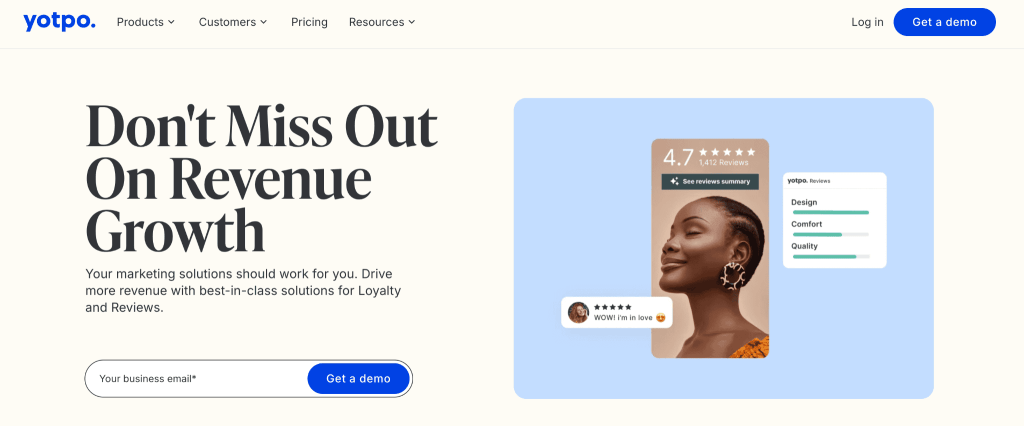
Yotpo, a powerful eCommerce marketing platform, offers customer content marketing and retention solutions that help brands create more personalized and high-converting customer experiences.
Its marketing solutions are a perfect fit for online retailers, DTC brands, and enterprise eCommerce companies, and some of the standout features this platform offers are customer reviews and ratings management, user-generated content (UGC) collection and display, loyalty and referral programs, SMS marketing automation, and email marketing tools.
With Yotpo, eCommerce businesses are successfully able to increase customer lifetime value, boost social proof, and create more engaging shopping experiences.
The 7 key content hubs and pillars of Yotpo
Yotpo’s primary audiences are eCommerce brands, digital marketers, and retention specialists who all consume various types of digital content. To reach these diverse segments, Yotpo has developed multiple strategic content hubs.
Here are the channels Yotpo chose to reach its audience:
1. Educational blog posts
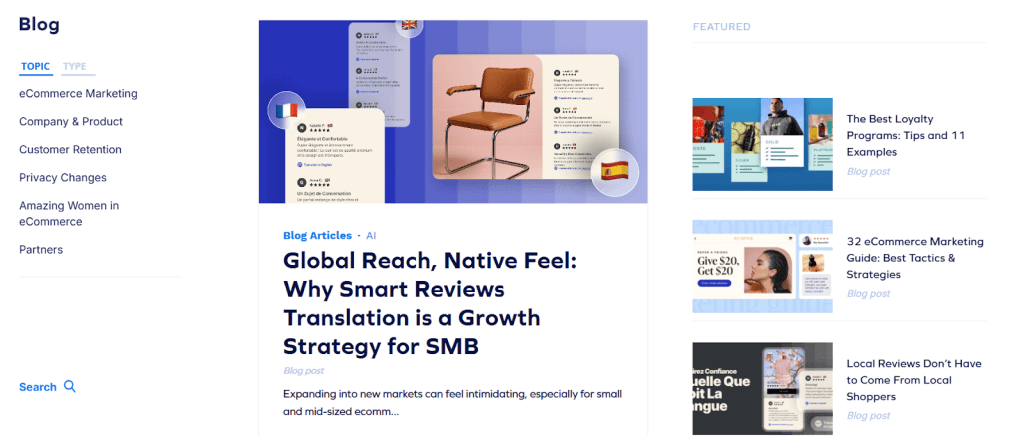
The blog is the cornerstone of Yotpo’s content strategy, with posts that feature diverse topics that educate readers on basic eCommerce concepts, winning marketing strategies, how to best use the Yotpo platform, and so much more.
What are they for?
They have further segregated their page into topics and types to help users easily consume the content they want to read. They have a mix of product-led posts, data insights, real examples, and actionable framework blogs placed alongside other formats like reports, courses, webinars, and case studies.
Yotpo focuses heavily on high-intent keywords like “eCommerce marketing funnel,” “customer retention strategies,” and “UGC marketing guide.”, targeting multiple funnel stages from awareness-building pieces about general eCommerce trends to consideration-stage content comparing different retention approaches.
2. Industry reports and benchmarks
Yotpo publishes comprehensive industry reports and benchmark studies that provide valuable data insights to eCommerce professionals. These reports analyze trends in customer behavior, review collection rates, loyalty program performance, and SMS marketing effectiveness.
What makes them unique?
Yotpo’s annual reports are based on real data from their platform or extensive research, validating their authenticity. They feature actionable insights that brands can immediately implement, positioning Yotpo as a thought leader in eCommerce retention.
These reports often become citation-worthy resources for other industry publications, driving significant referral traffic and backlinks.

3. Resource center and guides
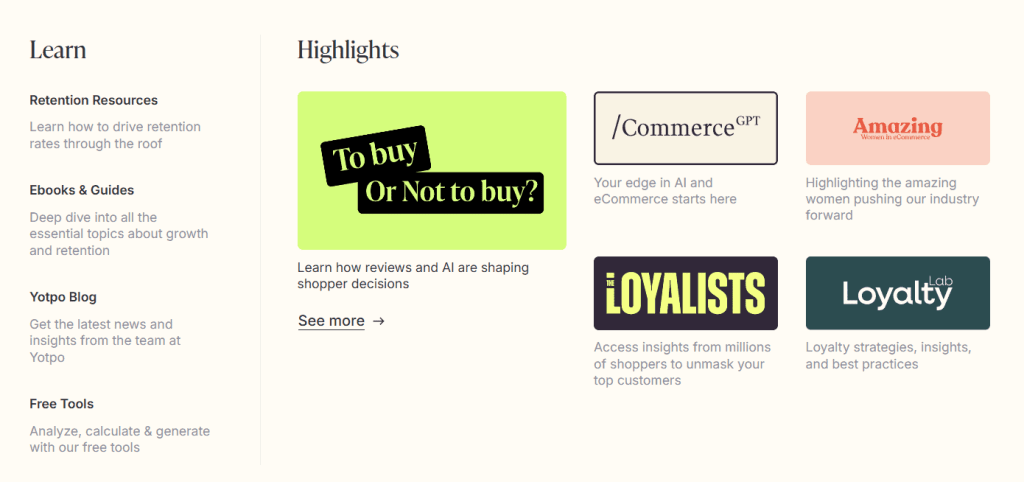
Yotpo maintains an extensive resource center filled with comprehensive guides, best practices, and strategic frameworks. This hub is a collection of retention resources, e-books & guides, as well as free tools, that cover everything from beginner guides on setting up review collections to advanced strategies for optimizing customer lifetime value.
What’s the benefit?
The resource center serves as a powerful lead magnet while establishing Yotpo’s expertise across all aspects of eCommerce retention. Each guide is designed to solve specific pain points that their target audience faces, with their solutions and content.
4. Customer success stories
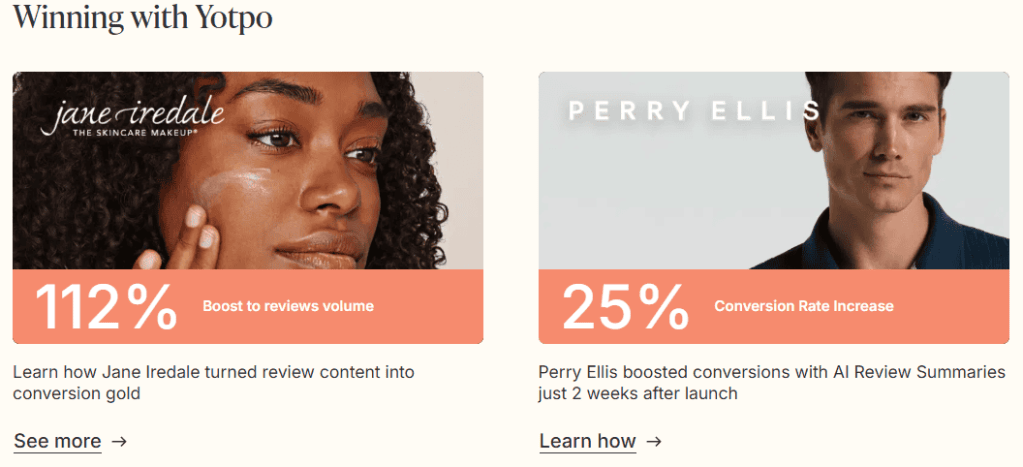
Yotpo showcases detailed case studies and success stories from brands across industries like DTC startups, enterprise retailers, and more. They have a dedicated section for case studies and customer success, where each story highlights specific challenges, implementations, and measurable results achieved using Yotpo’s platform.
What are they for?
These success stories serve as powerful bottom-of-funnel content, providing social proof and demonstrating real-world applications of Yotpo’s solutions. They target industry-specific keywords and pain points, making them highly relevant for prospects researching retention solutions.
5. Product education content
Yotpo creates extensive educational content around their core products: Reviews & UGC, SMS Marketing, Loyalty & Referrals, and Email Marketing. Each of their product pages includes feature explanations, impact creation, setup guides, use cases, product solutions, and optimization tips.
What’s the strategy?
This content serves dual purposes: educating existing customers to drive product adoption and attracting prospects searching for specific solutions. The content is heavily focused on practical implementation with step-by-step guidance.

6. Webinars and events
Yotpo regularly hosts webinars featuring industry experts, successful brand founders, and its own team members. Topics range from seasonal marketing strategies to deep dives into specific retention tactics.
What’s in it for them?
Webinars serve as high-quality lead magnets that also position Yotpo team members as industry experts. Past webinars are repurposed into blog content, social media posts, and email sequences, maximizing content ROI.
7. Help documentation and learning center
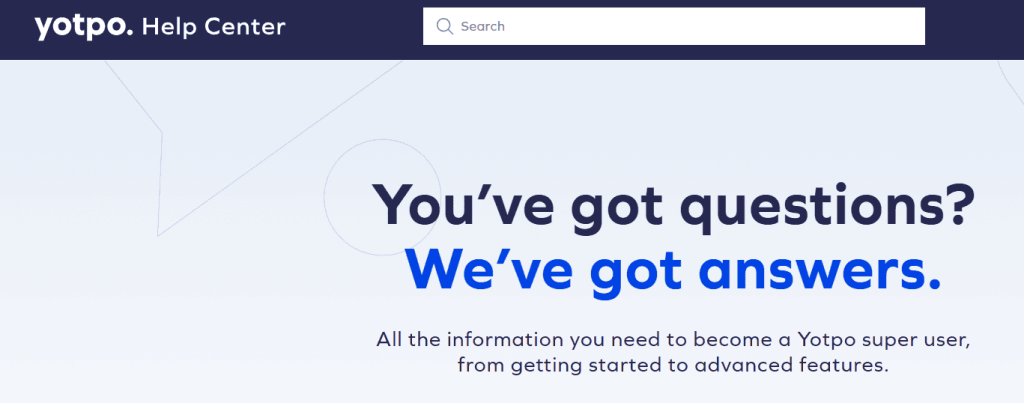
Yotpo maintains comprehensive help documentation that doubles as SEO-friendly content. These guides cover platform usage, troubleshooting, and optimization strategies.
What’s the benefit?
Help docs capture high-intent search traffic from both existing customers and prospects researching the platform. They target specific feature-related keywords and provide immediate value to searchers.
Yotpo’s best-performing content formats
Yotpo has a uniform strategy for creating, optimizing, and repurposing its content across all segments. This ensures it resonates with eCommerce professionals and helps them win.
Here are the standout formats in Yotpo’s content arsenal:
1. Data-driven long-form guides
Yotpo excels at creating comprehensive guides backed by platform data and industry research. These pieces establish topical authority and showcase deep expertise in eCommerce retention.
Most articles strategically weave in Yotpo’s narrative, demonstrating how their platform enables the strategies being discussed.
Examples of this format:
- “32 ECommerce Marketing Strategies“: It is a TOFU piece that targets broad eCommerce marketing keywords and subtly introduces Yotpo’s solutions throughout.
- “ECommerce Marketing Funnel Guide“: This is a detailed MOFU article that maps retention strategies to funnel stages, naturally positioning Yotpo’s connected platform approach.
2. Industry benchmark reports
Yotpo, using its platform data and extensive research, creates authoritative industry reports laden with unique insights that become go-to resources for eCommerce professionals.
What makes them powerful?
These reports establish Yotpo as a data authority while generating significant organic traffic through high-value, citation-worthy content. They’re perfect for link building and PR opportunities.
3. Strategic framework articles
Yotpo publishes in-depth articles that break down complex eCommerce concepts into actionable frameworks. These pieces target marketers looking for structured approaches to retention challenges.
Examples include:
- Customer lifecycle marketing frameworks
- UGC content strategy breakdowns
- Loyalty program optimization guides
4. Platform comparison content
Yotpo creates detailed comparison articles to practically show how and in what context they are better than alternatives. These pieces target high-intent prospects in the consideration phase, offering just the right kind of nudge they need to purchase Yotpo.
What’s the strategy?
Rather than purely promotional content, these comparisons focus on helping readers understand different approaches to eCommerce retention, naturally highlighting Yotpo’s unique advantages.
Examples include:
5. Customer story spotlights
Yotpo regularly features customer success stories that showcase real results and implementation strategies. Each story is crafted to demonstrate specific use cases and outcomes.
Why they work:
These stories provide authentic social proof and target industry-specific keywords. They’re particularly effective for bottom-of-funnel prospects seeking validation before the purchase.
6. Seasonal and trending content
Yotpo capitalizes on seasonal shopping events and trending topics in eCommerce, creating timely content that captures search traffic during peak periods.
Examples include:
How Yotpo Optimizes for Keywords Naturally
Yotpo’s SEO approach focuses on building comprehensive topic clusters around core themes. It does not target individual keywords in isolation.
Their natural keyword optimization strategy includes:
- Topic cluster development: Yotpo builds extensive content clusters around themes like “customer reviews,” “loyalty marketing,” “SMS marketing,” and “UGC strategies.” Every article they create builds on the pillar pages that make up content clusters.
- Intent-based content mapping: Each piece of content is created to match specific search intents like informational pieces for awareness, comparison content for consideration, and implementation guides for decision-making.
- Data-driven content: By incorporating platform data and industry statistics, Yotpo naturally ranks for data-related queries while establishing authority.
- Long-tail keyword focus: Yotpo targets specific, high-intent phrases like “how to increase customer lifetime value with reviews” or “SMS marketing best practices for eCommerce” and not broad terms.
- User-generated content integration: Yotpo leverages customer stories and case studies to naturally incorporate branded keywords and industry-specific terms.
- Funnel-stage optimization: Content is strategically optimized for different funnel stages. Here’s how they do it:
| Funnel stage | Content types | Keyword focus | Examples |
| TOFU | Educational guides, Industry reports, Trend articles | High-volume, informational keywords | “eCommerce marketing guide,” “customer retention statistics” |
| MOFU | Strategy frameworks, Comparison content, Webinars | Problem-specific, solution-aware keywords | “loyalty program strategies,” “UGC marketing platform comparison” |
| BOFU | Case studies, Product guides, Implementation content | High-intent, product-specific keywords | “Yotpo reviews setup,” “customer success stories” |
Conclusion
Yotpo’s content marketing strategy is grounded in their target audience’s needs, wants, and interests.
The content educates users about the eCommerce industry, helps them build winning retention strategies and customer experiences, and guides them on how to achieve these outcomes through Yotpo’s solutions.
Want a similar plan for your business?